Find your bearings
Small island. Very different coastlines.
Anguilla stretches roughly sixteen miles from the resort-lined West End toward Island Harbour and the quieter eastern coast. Most drives are short, but the map makes it easier to group beach days, dinners and boat departures by area.
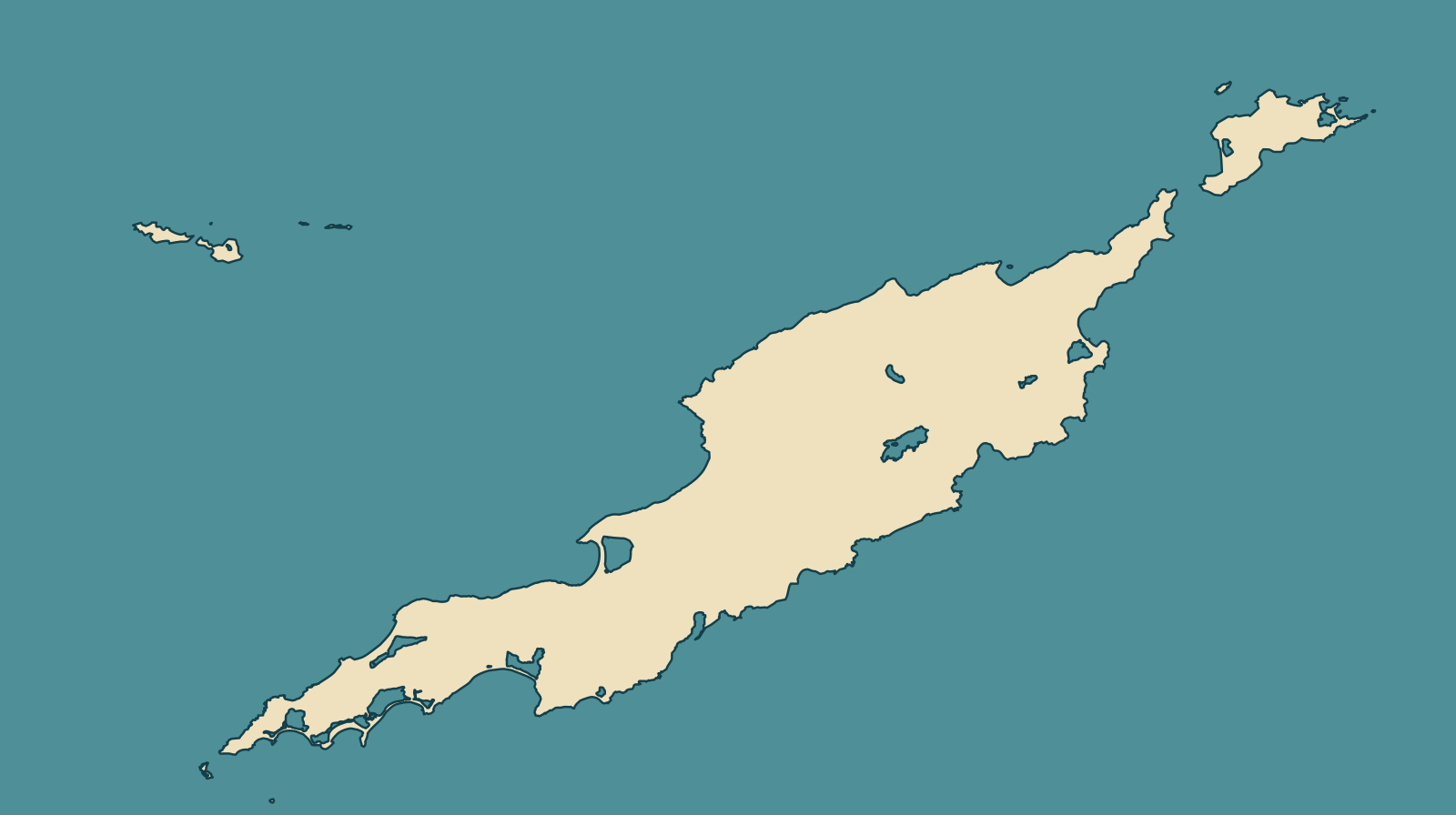 Atlantic OceanAnguilla ChannelDog IslandSeabirds & divingPrickly Pear CaysBoat dayScrub IslandShoal Bay EastBeachIsland HarbourFishing villageSandy IslandBoat daySandy GroundBoats & diningThe Valley · AXACapital & airportCrocus BayLittle Bay boatsMeads BayBeachRendezvous BayBeachBlowing PointFerry terminal
Luxury resorts, destination dining and long beach days.
Boats, local life, the airport and the shortest drives both ways.
Quieter beaches, Scilly Cay and a more unhurried rhythm.
Know Anguilla
Low-key by design. Exceptional by nature.
Anguilla is a flat, coral-and-limestone British Overseas Territory just north of St. Martin. At roughly 16 miles long and three miles wide, it trades rainforest and volcanic peaks for powder-white sand, clear shallow seas, uncluttered horizons and an unusually strong restaurant culture.
A brief history
Indigenous people lived here by about 2000 BC; later Arawak and Taíno communities called the island Malliouhana and left ceremonial sites at Big Spring and Fountain Cavern. English settlers arrived in 1650, and enslaved Africans were forced to work crops including cotton, tobacco and sugar before emancipation in 1834.
After a short-lived federation with St. Kitts and Nevis, the Anguilla Revolution began on May 30, 1967. Anguilla formally separated in 1980 and remains a self-governing British Overseas Territory.
What it is most known for
Thirty-three public beaches, calm turquoise water, discreet luxury resorts and more than 100 places to eat. Anguilla feels polished without becoming showy: service is warm, nightlife is intimate, and the island’s signature soundtrack is as likely to be live guitar at a beach bar as the sea itself.
Geography
The terrain is mostly low and dry, with scrub, salt ponds and sea cliffs rather than mountains. The Caribbean-facing south and west often feel calmer; the Atlantic-facing north and east can see more wind, swell and seasonal seaweed.
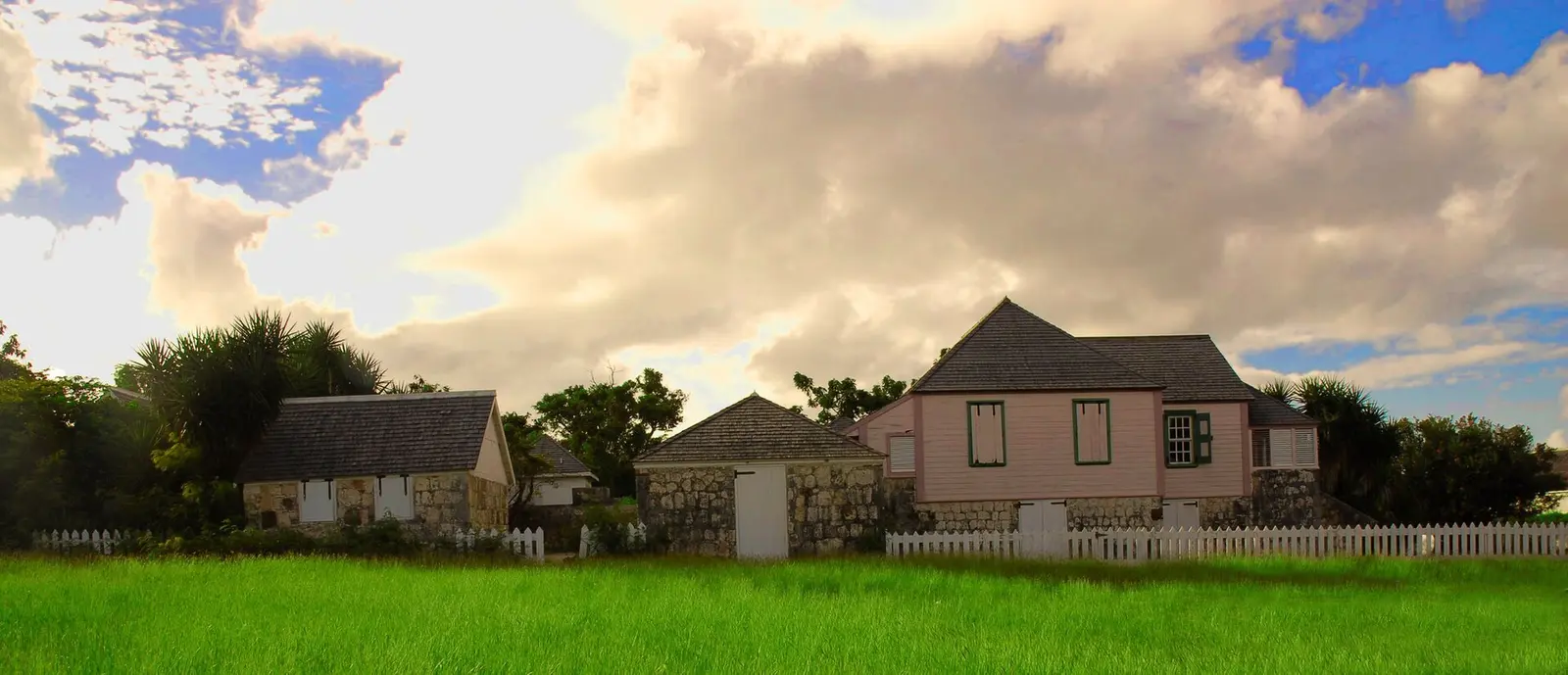
Wallblake House is one of the island’s oldest surviving plantation-era complexes. Visit with context: its graceful architecture and stonework sit within the much harder history of sugar and enslavement.
Josveek Huligar · Wikimedia Commons · CC BY-SA 3.0Plan your trip
When to go—and how long to linger.
December–April
Driest, breeziest and most dependable beach weather—with the highest room rates and strongest demand.
May–June
Warm water, fewer visitors and often better value. June begins Atlantic hurricane season, so insure the trip.
November
A pleasant shoulder month, but some restaurants and hotels reopen gradually after their annual closures.
Is Anguilla hurricane-safe?
No Caribbean island in the hurricane belt is hurricane-safe. The official Atlantic season runs June 1–November 30, with risk generally greatest from August through October. Anguilla regularly experiences hurricanes. For storm-season travel, choose flexible reservations, buy insurance that specifically covers named storms before one forms, and follow official forecasts.
Arrivals & island hopping
How to get to Anguilla.
Anguilla has its own airport, but many visitors arrive through St. Maarten and finish the journey by boat. The best route depends on your flight schedule, luggage and tolerance for one more transfer after a long travel day.
Fly into Anguilla
Clayton J. Lloyd International Airport (AXA) receives direct Miami service and regional flights from Caribbean hubs. This is the simplest arrival because you clear immigration once and land on the island, though schedules and fares can be less flexible than flying into St. Maarten.
The fewest transfers, late arrivals and travelers who find a well-timed connection.
Fly to SXM, then cross by sea
Princess Juliana International Airport (SXM) has the broadest flight choice. From there, reserve a shared or private airport sea shuttle to Blowing Point, or take a taxi across the border to Marigot for the public ferry. Build in a generous connection buffer and confirm the final sailing before booking your flight.
About 20–25 minutes on the water, plus immigration and ground-transfer time.
St. Martin ↔ Anguilla
Marigot, French St. Martin → Blowing Point, Anguilla
The scheduled public ferry runs daily between Marigot and Blowing Point and takes roughly 20 minutes. It is useful both as an arrival route and for an independent St. Martin day trip. Tickets from Marigot are currently purchased at the terminal, and a passport is required.
- Plan for: immigration at both ends, departure taxes and possible weather delays.
- Bring: your passport, cash for fares or fees, and proof of onward or return travel when requested.
- Day trip tip: verify the final return ferry before leaving Anguilla; missing it turns lunch into an overnight stay.
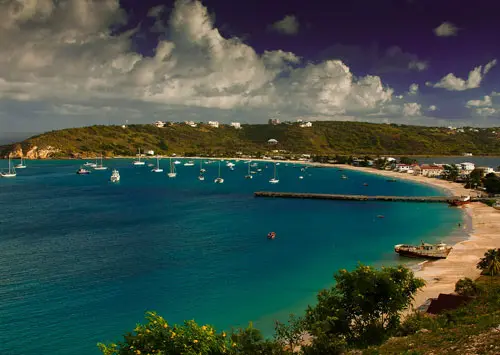
The island’s principal harbor combines customs and sailing logistics with beach bars, restaurants and one of Anguilla’s livelier waterfront settings.
UK Foreign & Commonwealth Office · Wikimedia Commons · OGL v1.0Choose your coast
Where to stay in Anguilla
There is no single “wrong” coast: the island is small enough to explore by car. Choose West End for ease and polish, the East for a quieter beach-led stay, or the center for local energy and shorter drives in both directions.
Best all-around luxury base
West End
The easiest choice for a first visit: exceptional beaches, the island’s densest cluster of destination restaurants, golf, spas, and polished resorts. It is farther from Island Harbour and the eastern cays.
- Nearby
- Meads, Maundays, Barnes, Long, Rendezvous & Cove Bay
- Consider
- Cap Juluca, Four Seasons, Malliouhana, Aurora, Frangipani, Carimar, Quintessence
Best for beach-first quiet
Shoal Bay & the East
Wake up beside Shoal Bay East and settle into a slower rhythm. It feels more local and secluded than the West End, with easy access to Island Harbour—but fewer fine-dining choices within a short drive.
- Nearby
- Shoal Bay East, Savannah Bay & nearby Island Harbour
- Consider
- Zemi Beach House, Shoal Bay Villas, Serenity Cottages
Best for music, boats & central access
Sandy Ground & Crocus Bay
A lively, practical base near Road Bay’s boats, beach bars, nightlife, and Little Bay excursions. You are well positioned between both ends of the island, though the setting is less private-resort serene.
- Nearby
- Road Bay, Crocus Bay & Little Bay by boat
- Consider
- La Vue and villas or small inns around South Hill and Crocus Bay
Thirty-three public beaches
The beaches worth building a day around.
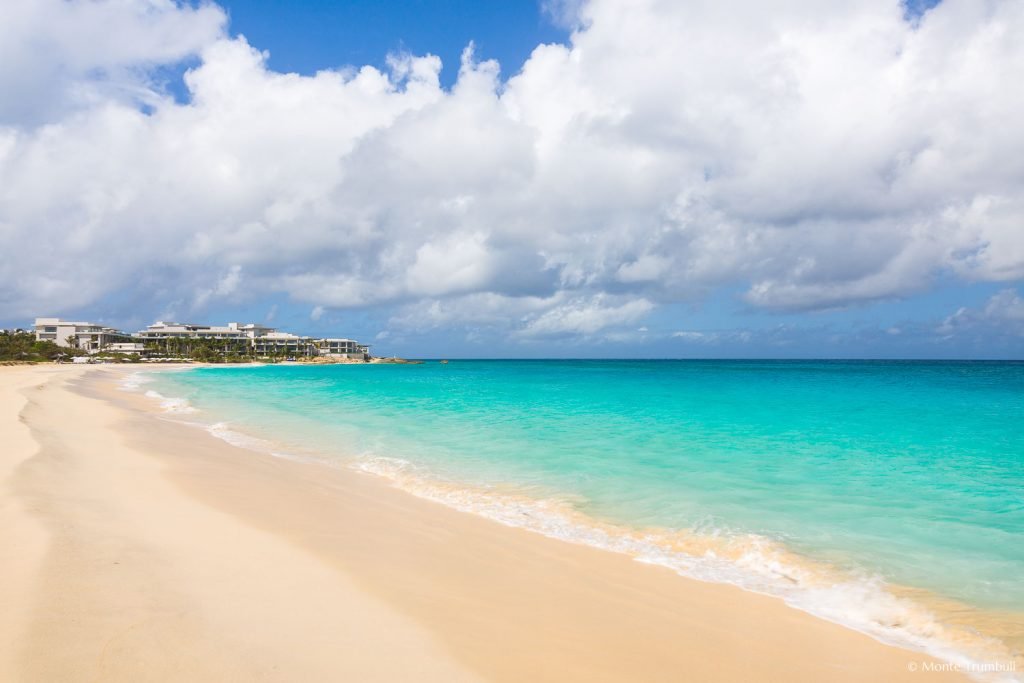
Meads Bay
Long, luminous and refined; a favorite for swimming, long walks, elegant resorts and excellent beachfront dining.
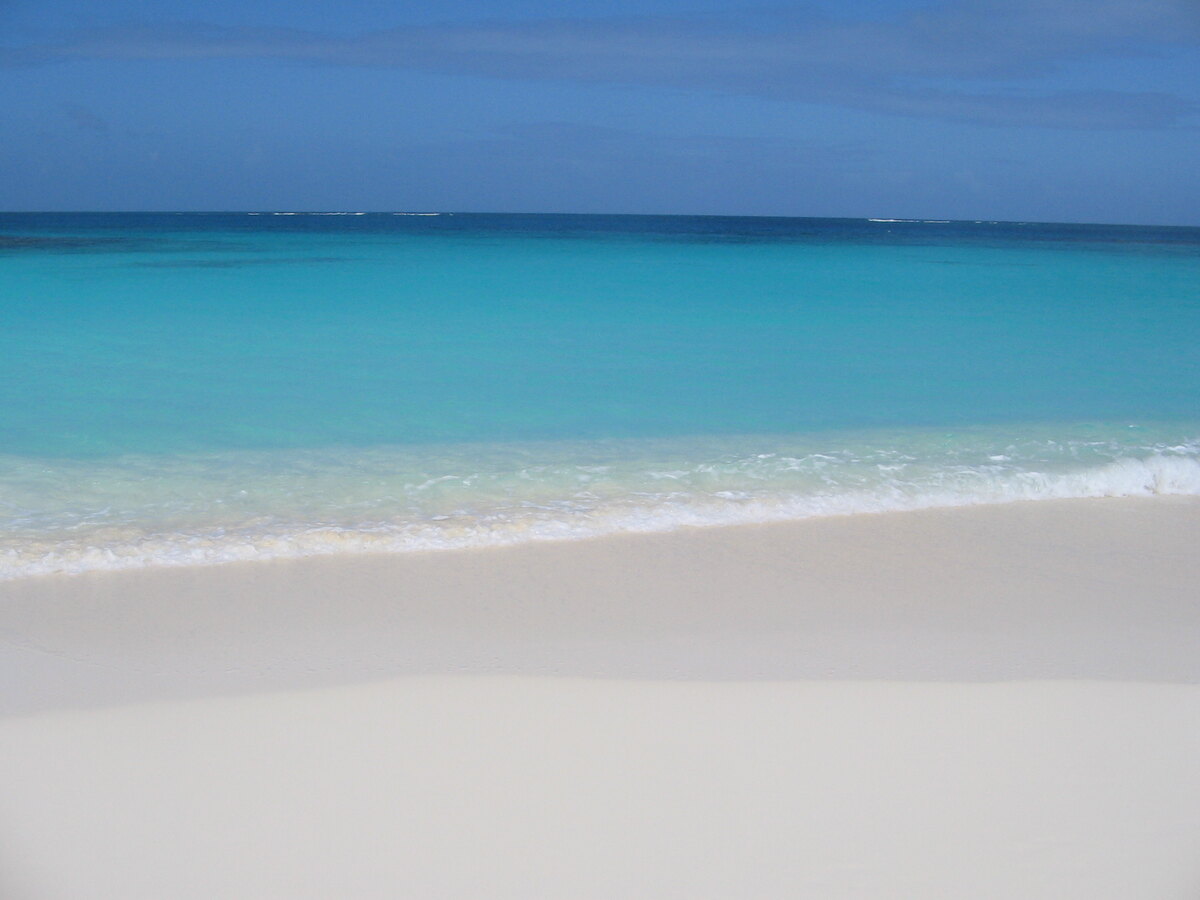
Shoal Bay East
The iconic two-mile sweep: bright sand, clear shallows, casual beach bars and easy reef snorkeling when the sea is calm.
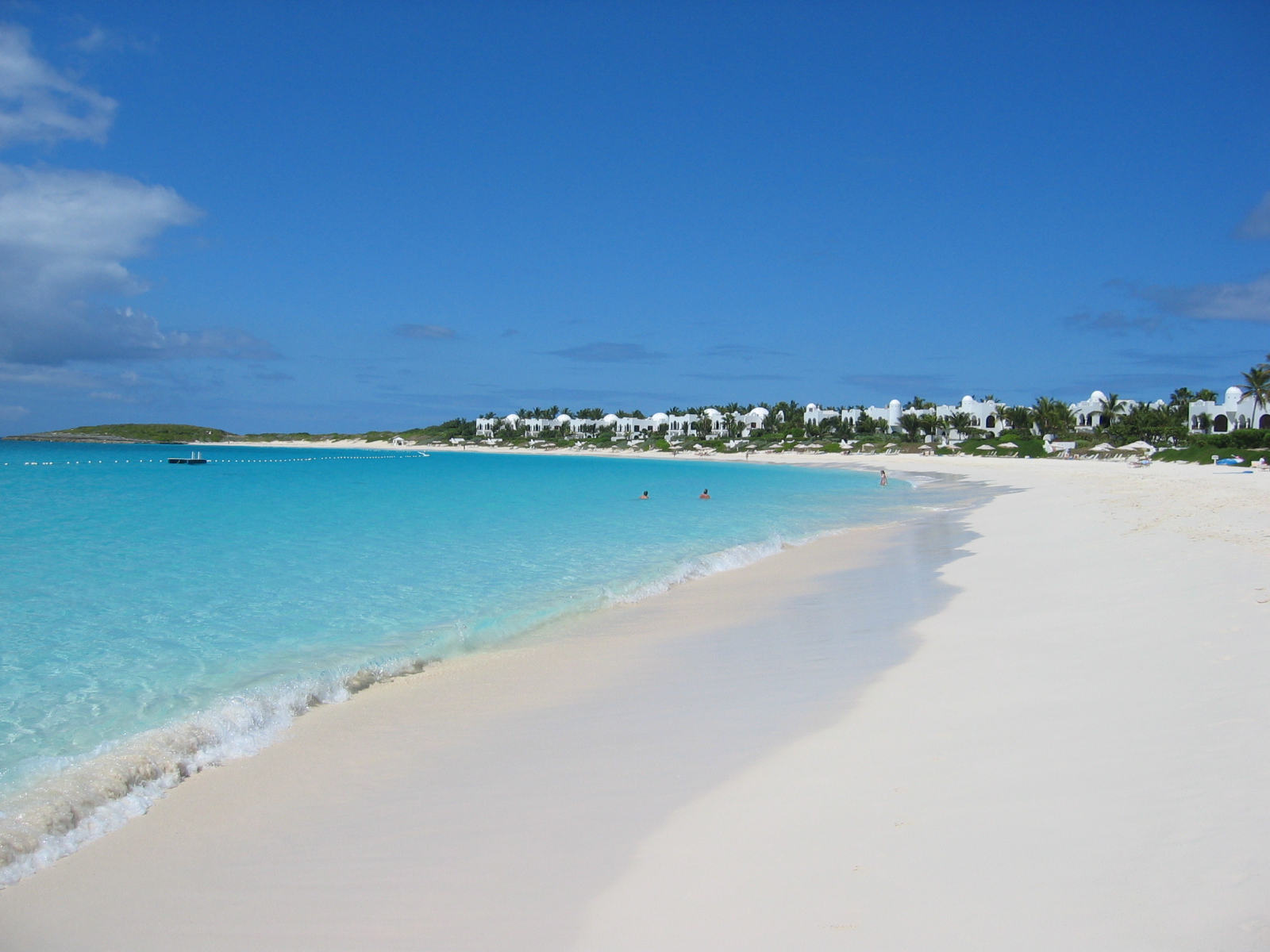
Maundays Bay
A graceful crescent with typically gentle water and Cap Juluca’s whitewashed architecture—especially lovely near sunset.
Rendezvous Bay
Wide-open views toward St. Martin, soft sand and room to exhale. A beautiful long-walk beach with an easygoing mood.
Little Bay
A tiny cliff-framed cove reached by boat or kayak. Go early, take water, and use a local operator.
Crocus Bay
Calm, convenient water for families, paddling and catching a boat to Little Bay; pair it with lunch at the water’s edge.
Mild–moderate regional outlook
Checked July 26, 2026
Regional trackers indicate mild-to-moderate conditions beginning in July, but beach accumulation changes daily with wind and current. Anguilla’s monitoring identifies the east/northeast and parts of the south—especially Savannah Bay, Mimi Bay, Sandy Hill Bay, Long Salt Bay and Shoal Bay East—as the more exposed coastlines. Meads, Long, Barnes and Maundays are useful west/northwest fallbacks, but no beach is guaranteed clear.
The experiences people book first
Anguilla’s most popular tours.
The island’s signature outings are intimate: a day on the water, a long lunch, or a guided look at the food and stories behind the beaches.
Sandy Island day
Take the short boat ride from Sandy Ground for a barefoot day of swimming, snorkeling and lunch on a tiny ribbon of sand.
Prickly Pear Cays
A longer offshore outing with clear water, reef snorkeling and time ashore. Half-day and full-day options vary by operator.
Anguilla by sea
Let the captain shape a beach-and-cay itinerary around the day’s wind and swell, often including Little Bay or an offshore cay.
Sunset sail
Cruise the south or west coast with St. Martin on the horizon—a relaxed, elegant choice for couples or a small group.
Island food & heritage
Pair local barbecue and johnnycakes with The Valley, salt ponds, Wallblake House and the villages of Anguilla’s eastern end.
Scilly Cay lunch
Cross from Island Harbour for a famously leisurely lobster lunch and rum punch. Confirm opening days and reservations first.
On & under the water
Reefs, wrecks, sails and swells.
Deep-sea fishing
Anguilla has a small but credible offshore-charter scene, usually departing from Sandy Ground or Blowing Point. Captains troll the drop-offs and open water for mahi-mahi, wahoo, tuna and occasional blue marlin or sailfish. It is a worthwhile half- or full-day option, though the island is not a tournament-scale fishing hub.
Best timing: Wahoo is generally strongest in the cooler winter months, mahi often improves from late winter into spring and billfish are possible in warmer water. Wind and swell matter more than the calendar on any specific day.
Scuba & snorkeling
Around 25 named dive sites sit across seven marine parks. Expect warm water, generally good visibility, reef fish, turtles, southern stingrays, eels and occasional reef sharks. Coral condition varies by site and storm history: use a conservation-minded operator, never stand on coral, and treat “healthy reef” claims as site-specific.
- Easy: Little Bay Reef, Sandy Deep Reef and the shallow wreck Catalyl H.
- Advanced: Ooster Deep, MV Sarah and deeper wreck or wall profiles.
- Other notable wrecks: Ooster Diep and Commerce; conditions decide access.
- Snorkel: Shoal Bay East, Little Bay, Crocus Bay and Prickly Pear on calm days.
Sailing
Road Bay at Sandy Ground is the principal yachting base and clearance point; Crocus Bay is the other established overnight option. Day stops can include Rendezvous Bay, Sandy Island, Prickly Pear Cays, Dog Island and Scrub Island, subject to weather, protected-area rules and permits.
- Check in/out: clear Customs and Immigration at Road Bay and confirm current cruising-permit, marine-park and departure requirements before moving.
- Anchorages: protection is wind-dependent and facilities are limited; Road Bay is the practical base, not a full-service marina.
- Provisioning: stock up before remote cay days. Best Buy and Albert Lake’s are commonly used markets; taxis or a rental car make larger shops easier.
- Local knowledge: charts, permit fees and overnight rules change. Confirm them directly with Anguilla Customs or a local charter operator on arrival.
Surfing
Anguilla is not a dependable surf destination. Most famous beaches are calm; Atlantic and storm swells can wake up Savannah Bay and occasionally Meads or Rendezvous, but windows are inconsistent, reefs and currents deserve respect, and there is little surf infrastructure. Bring flexible expectations—or choose kitesurfing, windsurfing, paddleboarding or sailing instead.
Culture & land
More than a beach chair.
Culture
Boat racing is the national passion, with races and celebrations concentrated from spring through summer. Music runs from string bands and soca to reggae and jazz; dominoes, community cookouts and beach bars remain part of everyday island life. Visit Wallblake House, the Heritage Collection Museum, Big Spring Cave, and Fountain Cavern when access is available. May 30 marks Anguilla Day; August brings the island’s major Summer Festival.
Hiking
Think coastal walks. Favorites include the cliffs and natural arch at West End, Katouche Valley with a guide, Windward Point’s stark eastern scenery, and beach-to-beach rambles. Trails can be unmarked, exposed and sharp underfoot: wear real shoes, carry water, start early, and use a guide for caves or isolated routes.
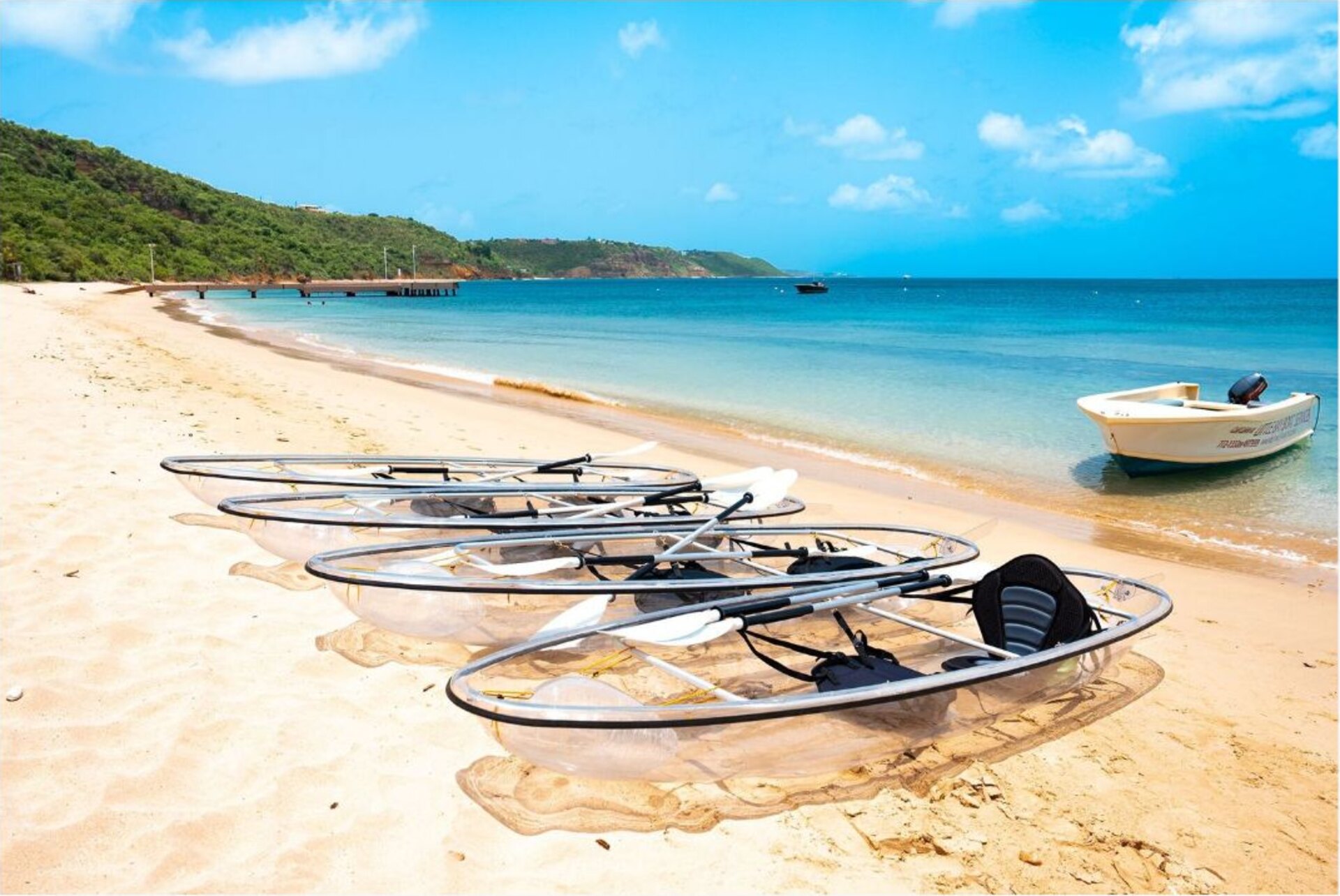
Crocus Bay is an easy place to swim, paddle or arrange the short local boat ride to cliff-framed Little Bay. The water is often clearest early, before afternoon wind develops.
Crocus Bay visitor information · Visit AnguillaThe annual calendar
Events worth shaping an Anguilla trip around.
Anguilla’s biggest visitor-friendly celebrations cluster between March and early August, moving from music and seafood to sailing and Carnival. Exact dates can shift, so confirm the current program before booking flights or ferries.
Usually March · Rendezvous Bay
Moonsplash Music Festival
Bankie Banx’s intimate beachfront festival brings reggae and Caribbean music to the legendary Dune Preserve.Easter weekend · Island Harbour
Festival Del Mar
Seafood, boat racing, music and family celebrations honoring Anguilla’s fishing heritage.Usually May · Island-wide
Anguilla Culinary Experience
Chef dinners, tastings and special events pairing Anguilla’s restaurants with visiting culinary talent.May 30 or observed date · Island-wide
Anguilla Day & Around-the-Island Boat Race
National celebrations centered on Anguillian identity, with the island’s signature full-course boat race as a highlight.Usually May · Anguilla waters
Anguilla Regatta
Traditional sailing and spirited competition celebrating the island’s beloved national sport.Late July–early August · Island-wide
Anguilla Summer Festival
Parades, pageants, soca, beach parties and dramatic boat races during Anguilla’s main Carnival season.Eat & sleep well
A small island with serious taste.
Anguilla’s cooking blends West Indian, African, British and French influence with fresh fish, lobster, crayfish, conch, curried goat, peas and rice, soups and barbecue. Reserve signature dinners in high season and always check seasonal opening days.
Veya, Blanchards, Jacala, Straw Hat or Hibernia
Mango’s, Tasty’s or Scilly Cay (boat-access; confirm opening days)
Blanchards Beach Shack, Sunshine Shack or an afternoon on Sandy Island
Ken’s BBQ, a Saturday soup stop, grilled fish, johnnycakes and Anguillian crayfish in season
Hotel shortlist
Iconic luxury
Cap Juluca for Maundays Bay romance; Four Seasons for full-service range; Malliouhana for storied glamour; Aurora for space, golf and families.
Boutique & independent
Frangipani and Tranquility Beach on Meads Bay; Quintessence near Long Bay; Carimar for relaxed condo-style space.
East-end beach stay
Zemi Beach House for a resort experience on Shoal Bay East; Shoal Bay Villas or Serenity Cottages for a lower-key beachfront base.
Before you go
The practical details.
English is the official and everyday language.
East Caribbean dollar; U.S. dollars widely accepted. Fixed rate: US$1 = EC$2.68.
Cards work at most hotels and restaurants; carry cash for taxis, tips, ferries and small vendors.
U.S.-style voltage and flat-pin outlets; travelers from elsewhere need an adapter.
The tourist board says tap water is potable. Bottled water is widely available if preferred.
A local temporary permit is required; rental agencies arrange it. Allow about 45 minutes end to end.
Transportation
Most visitors either fly into Clayton J. Lloyd International Airport (AXA) or fly to St. Martin/Sint Maarten and continue by public or private ferry to Blowing Point. There is no useful public bus network. Taxis have set fares, but a rental car offers better value and freedom for beach-hopping; drive on the left and watch for unmarked turns and speed bumps.
Safety
Anguilla currently carries a U.S. Level 1 “exercise normal precautions” advisory and is generally considered safe. Still lock rooms and vehicles, avoid leaving valuables on beaches, use licensed operators, protect yourself from the sun, and take currents and offshore conditions seriously.
Health & vaccines
CDC guidance recommends routine vaccines be current and lists hepatitis A, hepatitis B and typhoid for many travelers depending on age, itinerary and prior vaccination. Yellow fever vaccine is neither recommended nor required. Prevent mosquito bites due to dengue and Zika risk, and carry medical evacuation coverage: advanced care on island is limited. Discuss personal needs with a clinician 4–6 weeks before travel.
Cost
Anguilla is one of the Caribbean’s pricier destinations. A useful planning ballpark, before flights, is roughly US$200–350 per person per day for a comfortable independent trip and US$400–800+ for luxury; beachfront suites, villas, private boats and tasting-menu dinners can push totals much higher. Save with a condo or locally owned inn, a rental car, groceries and a mix of barbecue shacks and special dinners.
Entry rules, prices, schedules, health advice, weather and sea conditions can change. Reconfirm details with official sources and your providers before booking or departing.
Research desk
Official sources & live checks
This guide was last reviewed July 26, 2026. Use these links for the latest conditions.