Know the islands
Three Caymans. Three very different vacations.
Grand Cayman is polished, culinary and easy; Cayman Brac is rugged, cave-cut and quietly adventurous; Little Cayman is barely developed and almost entirely about the sea. Most first trips belong on Grand Cayman. Divers with more time should resist treating the Sister Islands as footnotes.
A brief history
Christopher Columbus sighted the islands in 1503 and named them Las Tortugas for their sea turtles. “Caymanas,” derived from a word for crocodilian, later replaced it. Permanent settlement developed under British control after the 1670 Treaty of Madrid.
The islands were administered with Jamaica and relied on seafaring, turtling, fishing and small farming. After Jamaica became independent in 1962, Cayman chose to remain British. It is now a self-governing British Overseas Territory and a major financial center.
What Cayman is most known for
Seven Mile Beach, Stingray City, exceptionally clear water, wall diving, the Kittiwake wreck, Bloody Bay Wall, upscale resorts, a remarkably strong restaurant scene and the blue iguana—an animal that looks as though evolution briefly discovered turquoise.
Geography
Grand Cayman, Cayman Brac and Little Cayman are low limestone islands atop the Cayman Ridge, south of Cuba and northwest of Jamaica. Grand Cayman is largest and flattest; Cayman Brac’s Bluff rises to roughly 140 feet; Little Cayman is tiny and sparsely populated.
Plan your trip
Dry winter perfection. Excellent shoulder-season value.
January–April
Drier, cooler and reliably comfortable, with prime visibility and peak hotel pricing.
May–July
Warm water, fewer crowds and attractive rates. Showers, heat and tropical-weather risk increase.
August–November
Hotter, wetter and within peak hurricane season. September and October are quiet for a reason.
Are the Cayman Islands hurricane-safe?
No. Cayman lies in the western Caribbean hurricane corridor and Grand Cayman suffered catastrophic damage from Hurricane Ivan in 2004. Season runs June–November. Buy appropriate coverage and read each property’s hurricane policy.
Arrivals & island connections
How to get to the Cayman Islands.
Most visitors fly into Owen Roberts International Airport (GCM) on Grand Cayman, with nonstop service from multiple U.S. gateways plus Canada and the United Kingdom. Cayman Airways Express connects Grand Cayman with Cayman Brac and Little Cayman; build generous connection time and review the smaller aircraft’s baggage limits before packing dive gear.
Grand Cayman
GCM is a short drive from George Town and roughly 10–20 minutes from much of Seven Mile Beach outside heavy traffic. Rental cars, prearranged transfers and taxis meet flights.
The Sister Islands
Cayman Brac uses Charles Kirkconnell International Airport (CYB); Little Cayman uses Edward Bodden Airfield (LYB). Some routes connect through the Brac. Protect at least the airline’s minimum connection and expect stricter baggage limits.
Grand Cayman
Best beaches, restaurants, hotels, family activities and flight access.
Cayman Brac
Wall diving, caves, bluff walks, rock climbing and an unpolished local pace.
Little Cayman
Bloody Bay Wall, bicycles, birds and beautiful stillness—with very limited services.
Choose your base
Where to stay in the Cayman Islands
On Grand Cayman, the decision is between west-coast ease and quieter eastern space. On the Sister Islands, choose the dive operation and meal plan first; the room comes second.
Best for a seamless first visit
Seven Mile Beach & Camana Bay
Grand Cayman’s famous west-coast corridor pairs calm water with the island’s deepest collection of resorts, restaurants and services. It is effortless, expensive and much busier than the rest of Cayman.
- Nearby
- Seven Mile Beach, Cemetery Reef, Camana Bay, George Town
- Consider
- Kimpton Seafire, The Ritz-Carlton, Palm Heights, The Westin, Hotel Indigo
Best for quieter west-coast access
West Bay
North of the main resort strip, West Bay keeps good snorkeling, local restaurants and Barkers National Park close. A rental car helps, and beach quality varies by exact property.
- Nearby
- Cemetery Beach, Turtle Reef, Barkers, Cayman Turtle Centre
- Consider
- Cobalt Coast, Lighthouse Point, boutique condos and villas
Best for diving, dining & local life
George Town & South Sound
Stay near shore-diving sites, the airport and George Town’s restaurants without paying full Seven Mile Beach prices. Cruise days are busy and the beaches are smaller.
- Nearby
- Eden Rock, Smith Barcadere, National Museum, Spotts Beach
- Consider
- The Locale, Hampton by Hilton, South Sound villas and apartments
Best for villas, calm nights & nature
Rum Point, Cayman Kai & North Side
The north coast exchanges resort convenience for space, villas and easy access to bioluminescent water and Rum Point. It is wonderfully quiet; groceries and west-side dinners require planning.
- Nearby
- Rum Point, Starfish Point, Bioluminescent Bay, Crystal Caves
- Consider
- Rum Point Club, Kaibo-area condos, Cayman Kai and North Side villas
Best for quiet dive-resort rhythm
East End
The breezier east feels removed from Grand Cayman’s resort-centered core and puts wall diving and local restaurants close. Expect more wind, more sargassum exposure and fewer dining options.
- Nearby
- East End dive sites, Blow Holes, Botanic Park, Mastic Trail
- Consider
- Wyndham Reef Resort, Compass Point Dive Resort, Morritt’s
Best for serious diving & true escape
Cayman Brac & Little Cayman
The Sister Islands are separate trips, not casual Grand Cayman day excursions. Cayman Brac adds caves and rugged bluff scenery; Little Cayman is tiny, tranquil and built around Bloody Bay Wall.
- Nearby
- The Bluff, Brac caves, MV Captain Keith Tibbetts, Bloody Bay Wall
- Consider
- Cayman Brac Beach Resort, Le Soleil d’Or, Little Cayman Beach Resort, Southern Cross Club
Clear water, limestone shore
The best beaches in Cayman.
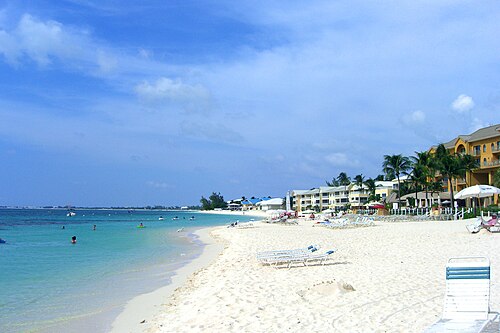
Seven Mile Beach, Grand Cayman
Long, public and famously clear, with the calmest swimming usually toward the central and northern west coast. The exact width changes with storms and erosion.
Governor’s Beach, Grand Cayman
An easy public access point on Seven Mile Beach with luminous water and fewer built-in services than the resort sections.
Cemetery Beach, Grand Cayman
A quieter northern stretch with good swimming and a reef reached by a meaningful offshore swim—best for confident snorkelers in calm conditions.
Smith Barcadere, Grand Cayman
A compact pocket cove framed by ironshore, with shade, facilities and clear water. Arrive early before tour traffic.
Rum Point, Grand Cayman
Shallow north-coast water, hammocks and watersports. Conditions and beach width vary; pair it with Cayman Kai.
Spotts Beach, Grand Cayman
A small south-coast beach known for turtle sightings. Current, boat traffic and visibility make it better for capable swimmers.
Point of Sand, Little Cayman
The Sister Islands’ postcard beach: pale sand, aquamarine water and a remote eastern setting with almost no commercial bustle.
Sargassum report
Reviewed July 26, 2026
CARICOOS reports that 2026 is on track to be at least the second-largest sargassum year in the satellite record. Cayman conditions remain beach-specific: exposed eastern and southern shores face the greatest arrival risk, while Seven Mile Beach’s western orientation often leaves it clearer. “Often” is not a warranty—check recent local reports or ask your hotel immediately before travel.
Popular tours
The Cayman experiences worth reserving.
The strongest tours either reach water you cannot access independently or add useful local context. Book the most weather-dependent experience early in the trip so a rough-water day leaves room to reschedule.
Early Stingray City & Coral Gardens
Choose the first practical departure and a smaller boat. Pair the sandbar with a proper reef snorkel.
North Sound, Starfish Point & Rum Point
A private or limited-capacity charter gives the captain room to sequence stops around cruise traffic, wind and water clarity.
Bioluminescent Bay kayak
Target a darker moon phase and choose a low-impact operator that explains how sunscreen, lights and excess splashing affect the experience.
Crystal Caves & North Side
Walk through limestone caverns and tropical forest, then combine the tour with Rum Point, Kaibo or an East End lunch to justify the drive.
Blue iguanas & Botanic Park
See Cayman’s endemic blue iguanas while learning how habitat protection and captive breeding pulled the species back from the edge.
Kittiwake wreck & West Wall
Pair the ex-USS Kittiwake with a wall or reef dive. Confirm certification, rental gear, marine fees and whether penetration is included or prohibited for your experience level.
On & under the water
Excellent visibility. Honest reef expectations.
Diving the Cayman Islands
Compare Grand Cayman, Little Cayman and Cayman Brac; explore walls, wrecks and shore sites; choose a dive base; understand reef-health realities; and build a realistic multi-island dive trip.
Deep-sea fishing
Grand Cayman has a mature charter scene and extremely deep water close to shore. Boats troll the drop-off for blue marlin, yellowfin or blackfin tuna, wahoo, mahi-mahi and barracuda; ambitious full days may reach offshore banks. Cayman Brac and Little Cayman have fewer boats but equally abrupt depth.
Best timing: Wahoo is commonly strongest in winter, mahi and tuna in spring, and billfish can appear across warmer periods. Visitors should use a licensed local charter and confirm current marine-conservation rules before deciding what may be kept.
Scuba diving
Grand Cayman’s signatures include the USS Kittiwake, West and North Wall, Eden Rock and Devil’s Grotto. Cayman Brac adds the MV Captain Keith Tibbetts; Little Cayman’s Bloody Bay Wall delivers dramatic drop-offs and usually less boat traffic. The official tourism inventory counts 365 named sites across the three islands.
Snorkeling & wildlife
Cemetery Reef, Smith Barcadere, Eden Rock, Spotts and Turtle Reef can all be excellent in the right conditions. Stingray City is iconic but heavily visited; choose a small-group, wildlife-respectful operator. Turtles, eagle rays, tarpon and reef fish are realistic highlights.
Sailing & boating
Day sails and powerboats commonly combine Stingray City, Coral Gardens, Starfish Point and Rum Point. Cayman is not a BVI-style bareboat playground: exposed coasts, reef-fringed approaches and fewer protected cruising anchorages favor experienced local operators. Private yachts should confirm current clearance and marine-park rules.
Surfing
Cayman receives occasional reef surf from winter fronts and tropical systems, particularly around South Sound and exposed coasts. It is inconsistent, shallow and poorly suited to a surfing-first vacation. If a swell appears, get local advice before entering unfamiliar reef breaks.
Culture, trails & excursions
Trade one blue world for another.
Culture
Caymanian identity grew from the sea: turtling, schooner building, rope making and generations of merchant mariners. African, British and Jamaican influences meet in quadrille dancing, storytelling, church traditions and dishes built around seafood, coconut, cassava and heavy cake.
Hiking
Grand Cayman’s 2.3-mile Mastic Trail crosses old-growth dry forest and is best with a National Trust guide. Cayman Brac offers bluff-edge paths, caves and parrot-reserve walks. Little Cayman’s Booby Pond is a nature walk, not a hike—but the frigatebirds have not filed a complaint.
The annual calendar
Pirates Week—the Cayman celebration worth shaping a trip around.
Despite the name, Pirates Week now stretches across multiple weekends and all three islands. Exact dates and island schedules change annually, so confirm which parade, landing pageant or district heritage day you want before choosing your travel week.
Late October–November · All three Cayman Islands
Pirates Week
Mock pirate landings, parades, fireworks, music, street celebrations and district heritage events turn a playful premise into Cayman’s largest cultural festival.Restaurants & hotels
The rare Caribbean island where dinner can lead the itinerary.
Blue by Eric Ripert, The Brasserie, Ristorante Pappagallo and Grand Old House
Tillie’s, Bacaro, Agua, Ms. Piper’s, Avecita and Union Grill
Heritage Kitchen, Grape Tree Café, Czech Inn, Vivine’s Kitchen and Eastern Star
Tukka, Kaibo, Rum Point Club, Over the Edge and Eagle Ray’s
Cayman-style fish, conch stew, turtle stew where legally served, cassava cake, heavy cake and rundown
Hotel strategy
Beach width matters.
Seven Mile Beach is public, but not every resort has the same amount of sand. Storms and erosion can leave neighboring properties with very different shorelines. Check recent, date-stamped guest photos and ask the hotel how much usable beach sits directly in front of the property.
All-inclusive is not Cayman’s strength.
A few packages exist, especially farther east and on the Sister Islands, but Grand Cayman rewards leaving the resort. Its restaurant scene is part of the destination, not an inconvenience between buffets.
Practical details
The useful things to know before you go.
The official and everyday language, spoken with a distinctive Caymanian accent and vocabulary.
CI$1 equals US$1.20. U.S. dollars are widely accepted, but change may come in Cayman currency.
Keep some CI or U.S. cash for buses, tips, small stands and remote Sister Island purchases.
U.S.-style plugs are standard. Most North American devices work without an adapter.
Grand Cayman’s desalinated piped water is safe. Sister Island and private cistern systems vary; ask your lodging.
A rental car is valuable outside Seven Mile Beach. Roundabouts and busy George Town traffic require attention.
Transportation
Drive on the left. A rental car is valuable outside Seven Mile Beach; traffic thickens around George Town and roundabouts require attention. Public minibuses are inexpensive but informal. Taxis are convenient and costly.
Safety
The U.S. advisory is Level 1 as of May 21, 2026. Use normal precautions, secure valuables and prioritize road, sun and water safety. Currents and boat traffic deserve more attention than the destination’s polished appearance suggests.
Health & vaccines
Be current on routine vaccinations and review CDC guidance. Mosquito protection matters. Grand Cayman has the territory’s strongest medical services; evacuation coverage is more important on the Sister Islands.
Cost snapshot
Expect one of the Caribbean’s more expensive trips. The best value usually comes from condos with kitchens, a rental car, local lunches and a carefully chosen handful of destination dinners.
Air schedules, baggage limits, marine restrictions, restaurant openings, beach width and seasonal conditions change. Use the linked official sources and confirm time-sensitive details directly.
Research desk
Official sources & live checks
Use these for current schedules, reef reporting, weather and travel guidance.