Know the island
More than blue water—though the blue water is very persuasive.
Curaçao pairs one of the Caribbean’s most distinctive cities with dry cactus country, dozens of small coves and a shore-diving culture that makes the reef feel wonderfully accessible. It is more urban and self-directed than a classic resort island: rent a car, learn a few words of Papiamentu and let dinner matter.
A brief history
Caquetío people lived on Curaçao before Spain claimed the island after Europeans arrived in 1499. The Dutch West India Company seized it in 1634 and developed Willemstad into a trading port. That prosperity was inseparable from the transatlantic slave trade and plantation system; slavery was abolished in 1863.
Curaçao later formed part of the Netherlands Antilles. When that federation dissolved on October 10, 2010, Curaçao became an autonomous country within the Kingdom of the Netherlands.
What Curaçao is most known for
UNESCO-listed Willemstad, the swinging Queen Emma Bridge, Blue Curaçao liqueur, shore diving, sheltered western coves, bright Dutch-Caribbean architecture, the historic Mikvé Israel-Emanuel synagogue and a multilingual culture that feels Caribbean, Latin and European at once.
Geography
This dry, roughly 40-mile-long island lies north of Venezuela. The northern coast is rough and wave-cut; the south and west hold protected bays and most swimming beaches. Christoffelberg rises 372 meters, while uninhabited Klein Curaçao sits offshore to the southeast.
Plan your trip
Sunny, breezy and genuinely year-round.
February–June
Drier weather, steady trade winds and an excellent balance of beach conditions, diving and value.
July–September
Hot, bright and often breezy. Tropical systems usually pass north, but heat and regional weather still matter.
October–January
Still very visitable, with brief showers and greener landscapes. November and December are usually wettest.
Is Curaçao hurricane-safe?
No island is hurricane-safe. Curaçao sits south of the main Atlantic hurricane belt and direct strikes are uncommon, making it one of the region’s lower-risk choices during hurricane season. Distant systems can still produce heavy rain, flooding, rough seas and flight disruption. Keep insurance and flexible plans.
Arrivals
How to get to Curaçao.
Fly into Curaçao International Airport (CUR), west of Willemstad. Nonstop service varies by season but commonly links Curaçao with Amsterdam, Miami, New York-area gateways, Toronto and regional hubs. Travelers from smaller Caribbean islands may connect through Aruba, Bonaire, Panama or another regional gateway.
Curaçao International Airport
CUR is about 15–25 minutes from central Willemstad and roughly 30–45 minutes from Jan Thiel, depending on traffic. Rental-car desks, taxis and prearranged transfers serve arrivals.
Collect the car early
A car is the simplest way to reach western beaches and dive sites. If you land late, confirm that the rental desk stays open and ask your lodging about a safe, well-lit handoff.
Choose your base
Where to stay in Curaçao
The central decision is city energy versus west-coast nature. First-time visitors who value restaurants often choose Willemstad or Jan Thiel; divers and beach-hoppers gain time by staying farther west. A split stay solves the argument elegantly.
Best for culture, dining & a car-light stay
Punda, Otrobanda & Pietermaai
Base yourself around Willemstad for architecture, museums, cocktails and the island’s deepest restaurant collection. Pietermaai feels stylish; Punda is central; Otrobanda is soulful and increasingly polished. Proper swimming beaches require a drive or hotel shuttle.
- Nearby
- Handelskade, Queen Emma Bridge, Kura Hulanda, Scharloo
- Consider
- Avila Beach Hotel, Kura Botanica, Renaissance Wind Creek, Pietermaai boutiques
Best for families & easy beach days
Mambo Beach & Sea Aquarium
A developed resort corridor with a protected swimming beach, clubs, shops and the aquarium close together. It is convenient and social, and weekend music can travel.
- Nearby
- Mambo Beach, Curaçao Sea Aquarium, Dolphin Academy
- Consider
- LionsDive, Kontiki Beach Resort, The Royal Sea Aquarium Resort
Best for resorts, nightlife & boating
Jan Thiel & Spanish Water
Southeast Curaçao combines beach clubs, villas, restaurants and access to Spanish Water. It suits groups and travelers who like an active resort neighborhood, but feels far removed from the quiet coves of Banda Abou.
- Nearby
- Jan Thiel Beach, Caracasbaai, Tugboat, Spanish Water
- Consider
- Papagayo, Livingstone Jan Thiel, Morena Resort and private villas
Best for a relaxed central-west base
Blue Bay, Kokomo & Coral Estate
Gated resort communities west of Willemstad give you beach, diving and villa space while keeping town and western coves within reach. They are practical with a car; spontaneous walks to local restaurants are limited.
- Nearby
- Blue Bay reef, Kokomo, salt flats, central-west beaches
- Consider
- Bayside Boutique Hotel, Blue Bay villas, Coral Estate Luxury Resort
Best for diving, nature & quiet
Lagun, Westpunt & Banda Abou
The island’s western end puts its prettiest coves, Christoffel and celebrated shore dives close. Nights are dark and peaceful, services are sparse and Willemstad can be an hour away. Stock groceries before settling in.
- Nearby
- Grote Knip, Playa Lagun, Playa Kalki, Christoffel, Shete Boka
- Consider
- Lagun apartments, Marazul Dive Resort, Westpunt villas and small dive lodges
Best for romance & highly serviced stays
Luxury hideaways
Curaçao’s top resorts offer private-feeling beaches, serious dining and spa polish without sacrificing access to town. The tradeoff is price—and the temptation to see far less of an island that rewards exploration.
- Nearby
- Willemstad, Piscadera Bay or the southern coast, depending on resort
- Consider
- Baoase Luxury Resort, Zoëtry Curaçao, Sandals Royal Curaçao
Coves, cliffs & clear water
The best beaches in Curaçao.
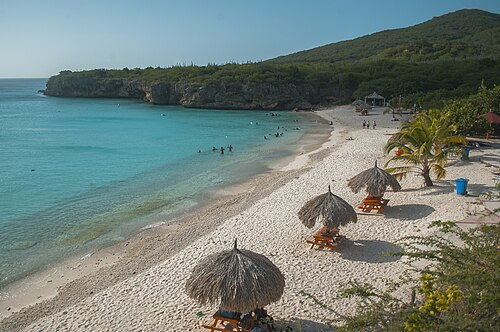
Grote Knip / Kenepa Grandi
The postcard overlook: bright turquoise water below limestone cliffs and a broad pale beach. Facilities are limited, shade is valuable and weekends can be lively.
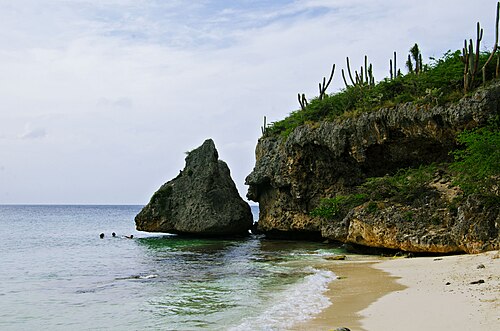
Cas Abao
A well-equipped west-coast beach with loungers, food, showers and excellent clear-water swimming. Entry and chair fees apply; snorkelers and divers share the cove.
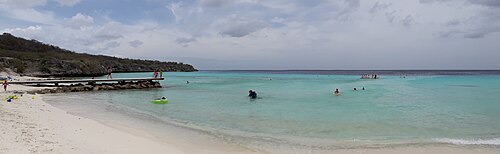
Playa Porto Mari
A double-reef beach with good facilities, a dive operation and famously photogenic resident pigs. The animals are not a reason to feed or crowd them.
Playa Lagun
A small fishing cove framed by cliffs, with easy snorkeling and frequent turtle sightings. Give boats space and never chase resting wildlife.
Kleine Knip / Kenepa Chiki
A compact, less-developed sister to Grote Knip with clear water and a local feel. Bring water, shade and everything you intend to take home.
Daaibooi
A laid-back cove popular with residents, snorkelers and shore divers. It has more character than polish and is an excellent sunset candidate.
Mambo Beach
A long, protected and highly serviced beach for families, dining and nightlife. Expect admission fees, music and a resort atmosphere.
Playa Kalki
A small Westpunt beach and classic shore-dive entry known as Alice in Wonderland. Stairs and gear make it less effortless than the photographs suggest.
Klein Curaçao
A dazzling uninhabited cay reached by boat, with white sand, a lighthouse and almost no natural shade. Sea conditions can make the crossing rough.
Sargassum report
Reviewed July 26, 2026
CARICOOS reports an exceptionally large Atlantic sargassum year in 2026. Curaçao’s sheltered west and southwest coves—including Grote Knip, Cas Abao and Porto Mari—are often less exposed because of their orientation. Eastern, northern and down-current bays can collect more. Conditions are beach-specific and can change quickly, so ask your hotel or dive shop for a same-week report.
Popular tours
The Curaçao experiences worth reserving.
A rental car handles many island days beautifully, but these experiences benefit from a captain, a historian or someone who knows exactly when the cave will glow blue. Put the most weather-dependent boat trip early in your stay.
Klein Curaçao sailing day
Cross to white sand, clear water, the abandoned lighthouse and shipwrecks. Compare vessel size, shade, seasickness strategy and the amount of actual sailing.
Guided Willemstad walk
Link Punda, Otrobanda, Pietermaai and Scharloo with architecture, street art, food and the history behind the UNESCO façades.
Christoffel & Shete Boka
Start early at the mountain or Savonet, then continue to wave-cut inlets, a western beach and lunch near Westpunt.
Blue Room cave by boat
Reach the glowing sea cave with a captain who matches entry plans to the swell and your swimming ability. A west-coast snorkel stop makes the day stronger.
Curaçao liqueur experience
Learn how bitter laraha orange became the island’s famous liqueur, then compare its history and flavors.
Flamingos, salt flats & landhuizen
Combine wildlife viewpoints with plantation houses and thoughtful historical interpretation. Flamingos are wild; distance and timing decide the photographs.
On & under the water
A rental car, a tank and more than 70 possibilities.
Deep-sea fishing
Curaçao offers year-round offshore charters from Willemstad, Spanish Water and west-coast departure points such as Santa Cruz. Deep water arrives quickly, and crews target wahoo, mahi-mahi, yellowfin or blackfin tuna, barracuda, sailfish and blue or white marlin by trolling, jigging or working FADs.
Best timing: Species peaks vary, but tuna, wahoo and mahi provide opportunities across much of the year. Trade-wind chop can be stronger than the protected south-coast bays suggest, so match the boat size to your tolerance.
Scuba diving
Curaçao tourism lists more than 70 dive sites, with over 38 reachable from shore. Excellent choices include Playa Kalki’s Alice in Wonderland, Playa Lagun, Cas Abao, Porto Mari’s double reef, Daaibooi, Tugboat, Director’s Bay and Watamula. The Superior Producer wreck is memorable when port and cruise operations permit access; never assume it is open.
Turtles, eagle rays, moray eels, octopus, seahorses, frogfish and dense reef-fish life are realistic highlights. Many shore entries are straightforward, but stairs, loose rock, surge and long gear carries can turn “easy” into a subjective term.
Snorkeling & wildlife
Playa Lagun, Tugboat, Director’s Bay, Daaibooi, Porto Mari and Playa Piskadó can all be rewarding in calm conditions. Piskadó is famous for turtles attracted by fish-cleaning activity; observe from a respectful distance and never touch, feed or block an animal’s path to the surface.
Sailing & boating
Day sails and catamarans commonly visit Klein Curaçao, Spanish Water, Fuik Bay and sunset viewpoints. The island is not a BVI-style bareboat circuit, and much of the north coast is exposed. Visiting yachts should use designated ports, complete current clearance procedures and confirm anchoring or mooring rules before entering Spanish Water.
For provisioning, Centrum, Carrefour, Mangusa and Vreugdenhil are practical full-size supermarkets. Shop before heading west, where selection and hours shrink.
Surfing, windsurfing & kiting
Playa Kanoa and the exposed north coast receive occasional reef surf, but shallow reef, current and local knowledge make it an experienced-surfer proposition. St. Joris Bay and Spanish Water are the island’s more dependable wind playgrounds for windsurfing and kitesurfing; book instruction if you are new to gusty trade-wind conditions.
Culture, trails & excursions
Bright façades. Complicated history. Wild dry country.
Culture
Papiamentu is the island’s expressive everyday language; Dutch, English and Spanish are also widely heard. African-Caribbean, Dutch, Sephardic Jewish, Latin American and Indigenous influences meet in Carnival, tambú music, the Seú harvest celebration, architecture and food. Museums such as Kura Hulanda help place Willemstad’s beauty beside the history that financed it.
Hiking
Climb Christoffelberg early—access can close later in the morning because of heat. Shete Boka pairs short coastal walks with blowholes and wave-cut inlets. Guided walks around Tafelberg require authorized access; salt-flat routes offer flamingos, dry forest and gentler terrain. Carry more water than feels elegant.
The annual calendar
Three celebrations that reveal Curaçao at full color.
The island's festival season builds from the music that powers Carnival to its grandest parades, then turns toward a deeply rooted harvest tradition. Dates shift from year to year, so confirm the official calendar before booking.
Usually late January · Curaçao Festival Center
Tumba Festival
Local singers and composers compete to create the official tumba song for Carnival—an energetic introduction to the island's signature festival sound.Usually February · Willemstad & island-wide
Curaçao Carnival
Months of preparation culminate in elaborate costumes, music and street celebrations, including the spectacular Gran Marcha and Farewell Parade.Easter Monday · Otrobanda
Seú Harvest Festival Parade
Traditional dress, music, dance and harvest folklore fill the streets in one of Curaçao's most culturally distinctive annual processions.Restaurants & hotels
Come for the reef. Make reservations for the food.
Baoase Culinary Beach Restaurant, The Brass Boer Curaçao and Fort Nassau
Kome, Mosa/Caña, Soi95, Ceviche 91 and Serafina
Plasa Bieu / Marshe Bieu, De Visserij, Jaanchie’s and neighborhood snèks
Keshi yená, stobá, fresh fish, funchi, pastechi, arepa di pampuna and locally made liqueur
Hotel strategy
Choose the location before the room.
Exact location determines whether your trip feels like a city break, resort vacation or dive road trip. Check walking conditions, beach access, parking and actual drive times.
All-inclusive ease
Sandals, Zoëtry and other resorts offer packaged simplicity, while Curaçao’s culture and restaurant scene reward time beyond the gates. Reserve a car and several meals around the island.
Practical details
The useful things to know before you go.
Both are official; English and Spanish are widely spoken. “Danki” means thank you and travels beautifully.
The Caribbean guilder, written Cg or XCG, replaced the Netherlands Antillean guilder in 2025 and is pegged at US$1 = Cg1.79.
Cards work at most hotels, restaurants and shops. Carry small guilder or U.S.-dollar notes for beach fees, tips and markets.
U.S.-style plugs are common. Some properties also provide 220V outlets; confirm before using sensitive equipment.
Curaçao’s desalinated tap water is safe and generally pleasant to drink. A refillable bottle saves money and plastic.
A rental car is strongly recommended for beaches, hikes and dive sites.
Transportation
Drive on the right. A rental car is strongly recommended for beaches, hikes and dive sites. Public buses cover major routes but are too limited for an ambitious beach itinerary; taxis are useful but can become expensive. Never leave bags or dive gear visible in a parked car.
Safety
The U.S. advisory is Level 1. Use normal precautions, lock the car, leave valuables at your lodging and avoid isolated beaches after dark. Heat, dehydration, rough north-coast water and unfamiliar shore entries deserve practical respect.
Health & vaccines
Be current on routine vaccinations and review CDC guidance. Use mosquito repellent and strong sun protection. Medical care is available, but travel insurance with evacuation coverage remains wise for serious illness or dive emergencies.
Cost snapshot
Beach clubs may charge entry, parking or chair fees. Grocery costs reflect imports, while local lunches and apartments with kitchens create meaningful savings. Budget extra for a car, fuel and Klein Curaçao.
Flights, site access, Superior Producer dive windows, restaurant openings, beach fees, marine rules and seasonal conditions change. Use the linked official sources and confirm time-sensitive details directly.
Research desk
Official sources & live checks
Use these for current entry details, currency, reef reporting, sargassum and health guidance.