Know the island
Jamaica rewards travelers who explore beyond a single resort.
The Caribbean’s largest English-speaking island is mountainous, intensely regional and culturally enormous. Its north coast carries major resorts and attractions; Negril owns the great western beach; Portland is lush and cinematic; Kingston supplies the creative pulse; and the South Coast moves to a deliberately slower rhythm. A rewarding trip focuses on two or three regions and gives each enough time.
A brief history
Taíno people called the island Xaymaca. Spain claimed it after Columbus arrived in 1494; England seized control in 1655. Sugar wealth was built through the brutal enslavement of Africans, while Maroon communities resisted in the mountains and secured treaties with the British.
Full emancipation came in 1838, followed by new migrations including Indian and Chinese indentured laborers. Jamaica became independent on August 6, 1962. Its modern identity is shaped by African heritage, Maroon resistance, Rastafari, migration, religion, language and an extraordinary record of turning local music into global culture.
What Jamaica is most known for
Reggae, dancehall, Bob Marley, Rastafari, jerk cooking, Blue Mountain coffee, rum, all-inclusive resorts, Seven Mile Beach, waterfalls and the useful instruction to slow down.
Geography
Jamaica stretches roughly 146 miles east to west and rises from coral-limestone coasts to 7,402-foot Blue Mountain Peak. The north and east are greener; the south contains drier plains and fishing communities. Mountain roads and town traffic make journeys much longer than the mileage suggests.
Plan your trip
The driest months are easiest. The island’s two rainy seasons still leave room for smart travel.
December–April
Lower humidity, more reliable beach weather and better hiking conditions. February and March are often the driest—and priced accordingly.
May–June
Greener landscapes, warmer water and lower rates between showers. May can be wet; sargassum risk rises on exposed coasts.
July
Hot, humid and lively, with Reggae Sumfest usually drawing visitors to Montego Bay. Expect passing showers, active hurricane-season planning and higher sargassum risk on exposed shores.
August–November
Peak heat, humidity, rain and hurricane exposure. September and October are generally the most weather-sensitive months.
Is Jamaica hurricane-safe?
No. Atlantic hurricane season runs June through November. Hurricane Beryl affected Jamaica in 2024, and Hurricane Melissa caused major disruption in 2025. As of July 2026, the tourism board reports all international and domestic airports and cruise ports operational, while hotel and attraction reopenings remain a rolling property-by-property matter. Reconfirm every stay, buy suitable insurance and use flexible bookings.
Arrivals & route planning
Choose the airport that matches the trip.
Sangster International (MBJ)
The best airport for Montego Bay, Negril and much of the North Coast. Allow roughly 15–30 minutes to Montego Bay/Rose Hall, 1½–2 hours to Negril, 1½–2 hours to Ocho Rios and 2½–3½ hours to Treasure Beach depending on traffic and stops.
Norman Manley International (KIN)
Use Kingston for the capital, Blue Mountains, Port Royal and eastern Jamaica. Port Antonio is roughly 2½–3½ hours by road; the Blue Mountain lodging zone may take 1–2 hours over narrow mountain roads.
Ian Fleming International (OCJ)
This small airport near Ocho Rios handles limited scheduled and private service. It can be wonderfully convenient for Oracabessa and Ocho Rios, but route availability is far narrower than MBJ or KIN.
No scheduled international passenger ferry
Jamaica has no dependable public ferry linking it with Cuba, the Cayman Islands, Haiti or the wider Caribbean. Fly between countries. Local boats reach places such as Lime Cay, Monkey Island and Pelican Bar as excursions, not inter-island ferry transport.
Choose your Jamaica
Where to stay across a very large island
For a first trip, choose one easy beach base and one region that adds a different side of Jamaica. Moving every two nights turns an island vacation into a luggage documentary.
Best for easy arrivals, resorts & golf
Montego Bay & Rose Hall
Jamaica’s busiest tourism gateway offers the simplest first and last nights, strong all-inclusive choices, golf, nightlife and easy access to Martha Brae and the Luminous Lagoon. The Hip Strip is energetic; Rose Hall is more spacious and resort-led.
- Nearby
- MBJ airport, Doctor’s Cave, Martha Brae, Rose Hall, Falmouth
- Consider
- Half Moon, Round Hill, S Hotel, Hyatt Ziva/Zilara, Sandals Royal Caribbean
Best for beaches, sunsets & a relaxed week
Negril
Seven Mile Beach is Jamaica’s strongest long-sand resort base, while the West End trades sand for limestone cliffs, small hotels and sunset dining. Beach Road is walkable in sections; the cliffs are quieter but require taxis.
- Nearby
- Seven Mile Beach, Bloody Bay, West End cliffs, Mayfield and Benta Falls
- Consider
- Rockhouse, The Caves, Couples Swept Away, Skylark, Sandals Negril
Best for waterfalls, families & active days
Ocho Rios, Tower Isle & Oracabessa
The north-central coast places Dunn’s River, Blue Hole, rafting, gardens and adventure parks within reach. Ocho Rios is busy on cruise days; Tower Isle and Oracabessa offer more privacy without abandoning the attractions.
- Nearby
- Dunn’s River, Blue Hole, White River, Mystic Mountain, Nine Mile
- Consider
- Jamaica Inn, GoldenEye, Couples Sans Souci, Couples Tower Isle, Sandals Dunn’s River
Best for lush scenery, rivers & independent travel
Port Antonio & Portland
Jamaica’s rainiest, greenest coast is the choice for Frenchman’s Cove, Reach Falls, Rio Grande rafting, jerk at Boston Bay and small coves framed by jungle. It feels wonderfully removed—and transfers, dining and nightlife require more planning.
- Nearby
- Frenchman’s Cove, Winnifred, Blue Lagoon, Reach Falls, Rio Grande
- Consider
- Geejam, Trident Hotel, Jamaica Palace, Goblin Hill and private villas
Best for music, art, history & real city life
Kingston
The capital delivers reggae history, galleries, restaurants, nightlife, Port Royal and access to the Blue Mountains. It is not a beach-resort stop and neighborhood choice matters; New Kingston and upper St. Andrew are the easiest visitor bases.
- Nearby
- Bob Marley Museum, Devon House, National Gallery, Port Royal, Blue Mountains
- Consider
- Spanish Court, AC Hotel Kingston, R Hotel, Terra Nova and boutique apartments
Best for hiking, coffee & cool air
Blue Mountains
Stay above Kingston for cloud forest, birding, coffee farms and a slower mountain rhythm. Roads are steep and narrow, so arranging transfers is often wiser than self-driving. Pair two or three nights here with Kingston or Port Antonio.
- Nearby
- Holywell, Blue Mountain Peak, coffee estates, waterfalls, birding
- Consider
- Strawberry Hill, Lime Tree Farm, RafJam and small mountain guesthouses
Best for community tourism & unhurried exploration
Treasure Beach & the South Coast
A string of fishing coves anchors Jamaica’s low-key south, with YS Falls, Black River, Appleton Estate and Pelican Bar as natural companions. Beaches are less conventionally perfect than Negril, but the pace and sense of place are exceptional.
- Nearby
- Treasure Beach, YS Falls, Black River, Pelican Bar, Appleton Estate
- Consider
- Jake’s, Lashings, Sandals South Coast, Bluefields Bay Villas and guesthouses
From long white sand to jungle coves
Beaches worth building a day around.
Jamaica’s most dependable calm, pale-sand swimming is around Negril and parts of the north coast. Portland’s coves win for scenery; the South Coast trades textbook sand for character and space.
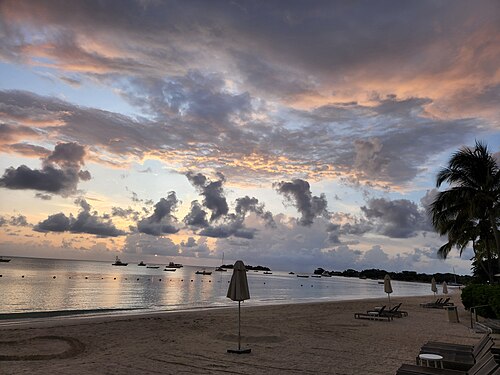
Seven Mile Beach, Negril
Jamaica’s headline strand: pale sand, generally calm water, restaurants and every style of lodging. Public access remains, though resort frontage changes the feel by section.
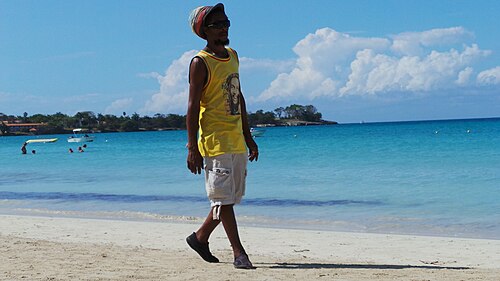
Bloody Bay, Negril
A sheltered crescent north of the main beach with shallow water and large resorts. Boat traffic increases during the day.
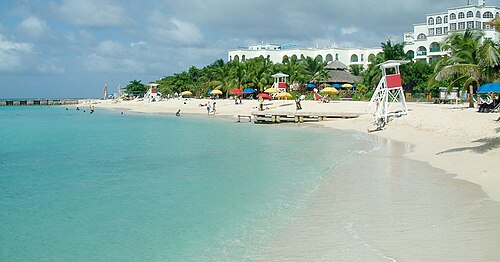
Doctor’s Cave, Montego Bay
Clear water, changing rooms and food in the heart of the Hip Strip. It is a paid beach club and can become crowded on cruise days.
Dead End Beach, Montego Bay
A small public beach near the airport runway with local energy and dramatic low-flying aircraft. Come for atmosphere, not seclusion.
Puerto Seco, Discovery Bay
A managed beach club with a broad sandy bay, facilities and watersports—useful for families driving between Montego Bay and Ocho Rios.
James Bond Beach, Oracabessa
A compact, scenic cove near GoldenEye with music history and headland views. Confirm current public access and opening status before driving.
Frenchman’s Cove, Portland
A lush paid-entry cove where a cool river meets the sea. Small, cinematic and best early before day visitors arrive.
Winnifred Beach, Portland
A community beach with clear water, shade and local food. Support the community contribution box and use arranged transport if not driving.
Boston Bay, Portland
A small surf beach beside Jamaica’s most famous jerk district. Waves can be excellent, but the swimming area is compact.
Long Bay, Portland
A long, windward strip with dramatic color and seasonal surf. Shore break and current make local advice essential.
Treasure Beach, St. Elizabeth
Several rust-colored and dark-sand coves. Calm days are lovely; conditions and swimming quality vary by bay.
Bluefields Beach, Westmoreland
A relaxed south-coast bay with clear water in favorable weather, local food and far fewer resort trappings than the north coast.
East- and south-facing shores carry the greatest exposure.
Checked July 29, 2026
NOAA’s July 25 regional product and CARICOOS reporting indicate an exceptionally large 2026 sargassum season. Jamaica’s east- and south-facing shores are generally most exposed, including parts of Portland, St. Thomas and the South Coast. Negril’s west-facing beach and some sheltered north-coast bays are often less vulnerable, but wind, current and local cleanup create major day-to-day differences.
Worth leaving the resort for
Jamaica’s most popular tours.
Jamaica’s best excursions are regional. Dunn’s River is sensible from Ocho Rios, not Negril; YS Falls belongs with the South Coast. Check the official reopening list after storms and book licensed transport.
Dunn’s River Falls
Climb the famous terraced waterfall early or late, ideally outside cruise-ship peaks. Water shoes and secure phone storage are not optional fashion statements.
Blue Hole & Secret Falls
Swim, jump and rope-swing through river pools near Ocho Rios with a licensed guide who knows current flow and safe entry points.
YS Falls + Black River
Pair seven cascades and freshwater pools with a wildlife-focused boat trip through mangrove country.
Rio Grande rafting
Drift through Portland on a traditional bamboo raft, with an arranged riverside lunch when available.
Martha Brae rafting
A gentler, accessible rafting experience near Falmouth and Montego Bay with established visitor facilities.
Blue Mountains
Hike, bird, cycle or tour a coffee estate; a guide and driver make the steep roads and changing weather considerably easier.
Kingston music & art
Combine the Bob Marley Museum, Devon House, National Gallery or Trench Town with a reputable local guide and planned transport.
Appleton Estate
Trace Jamaican rum from cane to cask on the South Coast. Pair tastings with a driver, because mathematics loses every argument with rum.
Luminous Lagoon
Take an evening boat from Falmouth when weather and water conditions favor bioluminescence. Brightness is natural, variable and never guaranteed.
Pelican Bar
Ride a local boat to the rustic offshore bar from Parottee or Treasure Beach; keep the return plan and weather firmly attached.
Reach Falls
Explore a beautiful Portland river system with official guides and only when current conditions permit upstream pools.
Nine Mile
Visit Bob Marley’s birthplace and mausoleum in the hills of St. Ann, ideally with a guide who can place the story beyond celebrity.
On & under the water
Good diving, real surf and cruising that rewards preparation.
Deep-sea fishing
Jamaica supports deep-sea charters from Montego Bay, Negril, Ocho Rios and Port Antonio. Crews troll for blue and white marlin, sailfish, mahi-mahi, wahoo, tuna, kingfish and barracuda. Port Antonio has historic billfish prestige, while the major resort towns offer the easiest booking logistics.
Best timing: Billfish attention rises in late summer and autumn, while wahoo, mahi and tuna vary through the year. Ask how far offshore the trip travels and whether the boat is a dedicated sport fisher or a general excursion vessel with rods aboard.
Scuba diving
Montego Bay and Negril offer Jamaica’s broadest visitor-friendly dive programs. Montego Bay sites include Airport Reef, Widowmaker’s Cave and walls inside or near the marine park. Negril is known for the Throne Room, Arches, Shark’s Reef and a small tugboat wreck, with profiles for beginners through advanced divers.
Ocho Rios adds Devil’s Reef, the Kathryn wreck and nearby walls; Portland’s Alligator Head area is less heavily visited and tied to active marine conservation. Typical sightings include turtles, rays, barracuda, morays, lobster, nurse sharks and reef fish—never guaranteed.
Snorkeling
Resort reefs and boat sites off Negril, Montego Bay and Ocho Rios provide the easiest access. Rockhouse and West End coves can be clear when calm; Montego Bay Marine Park, Runaway Bay and selected Portland reefs are better by boat. Avoid touching coral, standing on reef or taking bread to fish who did not order it.
Sailing
Jamaica is more passage stop than bareboat-charter playground. Errol Flynn Marina in Port Antonio, Montego Bay Yacht Club and Kingston’s Royal Jamaica Yacht Club are the principal service points. Other weather-dependent stops include Ocho Rios, Discovery Bay, Oracabessa, Bluefields and Port Royal.
Provision most completely in Kingston, Montego Bay and Ocho Rios. The exposed north coast has few truly all-weather anchorages, trade winds can make eastbound progress punishing, and reefs or fish pots make daylight approaches wise. Hurricane-season planning requires a formal strategy.
Foreign yachts must contact authorities, arrive at an official port of entry and await permission before docking. Customs requires vessel, cargo and crew documents; immigration checks passports and visas. Confirm current ports, notice requirements and local movement permissions before arrival.
Surfing
Boston Bay is Jamaica’s best-known surf beach, with board rental and lessons when swell cooperates. The stronger scene sits east of Kingston around Bull Bay: Jamnesia/Copa, Zoo and nearby breaks. Makka in St. Thomas can be powerful; Long Bay in Portland offers more approachable conditions at times. Reef, current and shifting swell make local guidance essential.
Music, food & mountains
Jamaica’s cultural footprint is larger than the island. Consider that a warning against staying behind the resort gate.
Culture
English is official; Jamaican Patois is the expressive language of everyday life. Mento, ska, rocksteady, reggae, dub and dancehall grew here and transformed global music. Rastafari is a religious and cultural movement—and Maroon communities preserve histories of resistance and self-determination.
Cricket, football, dominoes, church, sound-system culture and track and field all matter. Ask before photographing people, use community guides where appropriate and approach Trench Town or Maroon heritage as living communities, not scenery.
Hiking
The pre-dawn Blue Mountain Peak route is the classic challenge, climbing through coffee country and cloud forest to Jamaica’s 7,402-foot roof. Conditions can be cold, wet and muddy; arrange a guide and nearby lodging.
Holywell offers shorter marked forest trails and birding. Cunha Cunha Pass links Blue and John Crow Mountain history; Cockpit Country’s karst, caves and Maroon landscapes require knowledgeable local guides. Waterfall walks change after rain—never enter rivers when guides warn against it.
The annual calendar
Six celebrations worth shaping a Jamaica trip around.
Dates can shift, but these are the recurring cultural events with the strongest visitor appeal. Confirm the current program before booking flights—festival calendars occasionally improvise, rather like the music.
January 6 · Accompong Town
Accompong Maroon Festival
Maroon history, sacred traditions, drumming, dancing, storytelling and food in the Cockpit Country.February · Primarily Kingston
Reggae Month & Bob Marley Birthday Celebrations
A month of concerts and cultural programs, with Bob Marley’s February 6 birthday as its focal point.Usually March · Kingston & Blue Mountains
Blue Mountain Coffee Festival
Coffee tastings, food, music and farm experiences celebrating Jamaica’s celebrated high-mountain crop.Usually April · Kingston
Carnival in Jamaica
Weeks of soca parties culminating in the vivid Road March. Dates move with the Easter calendar.Usually July · Montego Bay
Reggae Sumfest
Jamaica’s signature week of reggae and dancehall, building toward its major concert nights.December 24 · Island-wide
Grand Market on Christmas Eve
Late-night street markets, music, Jamaican food and Christmas celebrations in towns across the island.Restaurants & hotels
Come hungry enough to abandon the buffet occasionally.
Gloria’s in Port Royal, Devon House I-Scream, Broken Plate, Terra Nova, Strawberry Hill and mountain farm-to-table cafés
Scotchies, The HouseBoat Grill, Sugar Mill at Half Moon, Marguerites and established waterfront dining
Rockhouse Restaurant, Pushcart, Ivan’s, Miss Lily’s at Skylark and small West End jerk or seafood spots
Miss T’s Kitchen, Stush in the Bush, Scotchies Drax Hall and Jamaica Inn’s dining room
Boston Jerk Centre, Bushbar at Geejam, Woody’s Low Bridge Place and a prearranged riverside meal on the Rio Grande
Jack Sprat, Little Ochie, Pelican Bar and small Treasure Beach kitchens built around fish, produce and what is actually available
Hotel strategy
Choose region first. Then choose all-inclusive or independent.
All-inclusive ease
Jamaica has one of the Caribbean’s deepest all-inclusive collections, from couples-only enclaves to large family resorts. Check beach quality and transfer time.
Boutique character
Rockhouse, The Caves, Geejam, GoldenEye, Jamaica Inn, Jake’s and Strawberry Hill each reveal a stronger sense of place.
Post-storm check
Before paying a nonrefundable rate, confirm the room category, beach, restaurants, pools, spa and excursions are all operating.
Practical details
The useful things to know before “just down the road” becomes three hours.
English works everywhere. Jamaican Patois is widely spoken and central to the culture.
JMD is standard. U.S. dollars are accepted in tourism areas, often at an unhelpful exchange rate.
Cards work at hotels and established businesses. Keep Jamaican dollars for local restaurants, markets, tips and small vendors.
North American plugs usually fit. Check devices sensitive to frequency and never assume every old outlet is grounded.
Major hotels and cities usually have treated water, but use filtered or bottled water after storms, outages or local advisories.
Roads and traffic vary dramatically. A hired driver is often the calmer choice for cross-island days.
Cash & cards
Cards work at resorts, established restaurants and supermarkets. Carry Jamaican dollars for route taxis, tips, markets, small beaches and rural businesses. Use bank ATMs and decline dynamic currency conversion when your own bank offers the better rate.
Transportation
Traffic drives on the left. Rental cars suit confident drivers, but potholes, aggressive passing, livestock, pedestrians and poor lighting make night driving a bad introduction. For multi-region trips, licensed private transfers often beat self-driving. Route taxis and buses are inexpensive but not ideal for first-time visitors with luggage.
Safety
The U.S. advisory is Level 2 as of June 23, 2026 due to crime and health risks, with specific districts listed at Level 3. Tourist areas generally experience less violent crime, but robbery and sexual assault can occur, including at resorts. Use licensed transport, avoid public buses and intercity driving at night, do not wander unfamiliar districts, secure valuables and read the current area list before route planning.
Health & vaccines
Be current on routine vaccines; CDC recommends hepatitis A for unvaccinated travelers and hepatitis B for many. Mosquito protection matters for dengue and Zika risk. Medical and ambulance services can be limited outside major centers, private hospitals may require advance payment and serious cases may need evacuation—insurance should reflect that.
Research desk
Official sources & live checks
Post-storm openings, road conditions, attraction access, reef health, airline schedules and safety guidance can change. These official and specialist sources are the best final check before booking.