Know the island
Montserrat is a living island shaped by an extraordinary volcanic history.
Soufrière Hills transformed Montserrat, burying the capital and forcing most residents to leave. The inhabited north remains lush, safe when official rules are followed and deeply welcoming. Volcano science and extraordinary landscapes lead into a richer story of resilience, music, humor and close-knit community.
A brief history
Indigenous peoples lived on the island long before Columbus named it Santa María de Montserrate in 1493. English and Irish settlers established a colony in 1632. Plantation wealth in sugar, cotton and limes was built through enslaved African labor; emancipation took effect in the 1830s. The island remains a self-governing British Overseas Territory.
Soufrière Hills began erupting in 1995 after centuries of quiet. Plymouth was evacuated and later buried; eruptions and pyroclastic flows destroyed communities, and 19 people died in 1997. Much of the population relocated abroad. Activity has remained low in recent years, but the volcano is active, monitored continuously and still defines where people may live and travel.
What Montserrat is most known for
The buried capital of Plymouth, Soufrière Hills, black-sand beaches, the endemic Montserrat oriole, St. Patrick’s Festival, goat water, AIR Studios and the rare experience of visiting a Caribbean island where nearly everyone still seems connected.
Geography
Montserrat covers roughly 40 square miles and rises through three volcanic massifs: Silver Hills, Centre Hills and Soufrière Hills. The inhabited north is green and mountainous. The south contains the active volcano, abandoned settlements and controlled zones; volcanic deposits have actually extended parts of the coastline.
Plan your trip
The dry season suits trails and sea days. March brings the island’s biggest cultural celebration.
December–April
Drier, breezier weather and the best odds for clear volcano views. December has festival energy; March centers the distinctive St. Patrick’s celebration.
May–June
Warmer, greener and usually less expensive. Showers increase, ferry schedules may be limited and sargassum risk rises on exposed shores.
July
Hot, humid and quiet, with warm water and a more local pace. Expect tropical showers, active sargassum on exposed shores and flexible hurricane-season bookings.
August–November
Peak heat, rain and hurricane exposure. Small businesses may keep reduced hours, and transport disruptions have a larger impact on an island with few alternatives.
Current volcano status
At this review, the Montserrat Volcano Observatory lists Hazard Level 1: activity remains low, but Soufrière Hills is active and there is no public access to Zone V, including Plymouth. Controlled tours never override a closure. Check MVO and follow the guide, DMCA and police without exception.
Is Montserrat hurricane-safe?
No. Atlantic hurricane season runs June through November. Montserrat’s limited air and sea links make recovery from a cancellation harder than on a major hub island. Use flexible tickets, allow a buffer before long-haul flights and carry insurance that covers weather disruption.
How to get there
Antigua is the gateway. The flight is dependable; the ferry is seasonal.
Fly from Antigua
Most visitors connect through Antigua’s V.C. Bird International Airport to John A. Osborne Airport (MNI) on Montserrat. The final flight is about 20 minutes on a small aircraft; luggage limits are strict and weather can move schedules. Allow a generous Antigua connection or overnight.
St. Maarten when scheduled
Tourism information also lists regional service from St. Maarten, taking roughly 50 minutes. Routes can be seasonal or change with demand, so verify the operating airline before building an international itinerary around it.
Antigua—seasonal only
Montserrat is usually served by a seasonal passenger ferry from Antigua, with crossings of at least 90 minutes. Contracts and operating periods have changed repeatedly. Treat the ferry as available only when MNI Access publishes bookable dates for your exact travel day.
Other nearby islands
There is no dependable public ferry to Guadeloupe, Nevis, St. Kitts or Redonda. Redonda belongs to Antigua and Barbuda, is uninhabited and is not a casual day-trip island. Use regional flights or a properly cleared private vessel.
Choose your Montserrat
Where to stay on the inhabited side of the island
Montserrat is compact enough for one base. Choose Little Bay for walkable evenings, Brades for practicality, the west-coast hills for villas or Isles Bay for volcano atmosphere.
Best for short visits, beach time & the port
Little Bay & Carr’s Bay
Little Bay is the island’s emerging waterfront center, with the port, National Museum, beach bars and several restaurants close together. It is the easiest base without a car, though active port work and nightlife make it less secluded than the hills.
- Nearby
- Little Bay Beach, National Museum, port, Rendezvous trailhead
- Consider
- Apartments and guesthouses around Little Bay, Carr’s Bay and Sweeney’s
Best for practical convenience & local life
Brades, Cudjoe Head & St John’s
The working heart of modern Montserrat places supermarkets, banks, government services and casual restaurants within easy reach. It feels residential.
- Nearby
- Brades, Runaway Ghaut, Centre Hills trail access, airport road
- Consider
- Tropical Mansion Suites, Grand View Bed & Breakfast and local apartments
Best for villas, views & quiet evenings
Olveston, Woodlands & Old Towne
These green west-coast hills contain many of Montserrat’s most appealing villas and intimate guesthouses. Woodlands Beach sits below; Olveston has destination dining and music history. A rental car makes the scattered layout far easier.
- Nearby
- Woodlands Beach, Hilltop Coffee House, Oriole Walkway, Salem
- Consider
- Olveston House, Gingerbread Hill, Vue Pointe area stays and private villas
Best for volcano views & atmosphere
Salem, Isles Bay & Belham Valley
The southwest edge of the inhabited north provides unforgettable views toward Soufrière Hills and buried Plymouth. It is beautiful, quiet and close to Isles Bay Beach, but access rules can change and some roads or trails approach controlled zones.
- Nearby
- Montserrat Volcano Observatory, Garibaldi Hill views, Isles Bay
- Consider
- Isles Bay villas, Salem apartments and small guesthouses
Volcanic sand & one hidden white crescent
Beaches worth slowing down for.
Montserrat’s beaches are intimate, dark and often empty. There are few lifeguards and surf changes quickly; ask locally before swimming and respect every closure near the south.
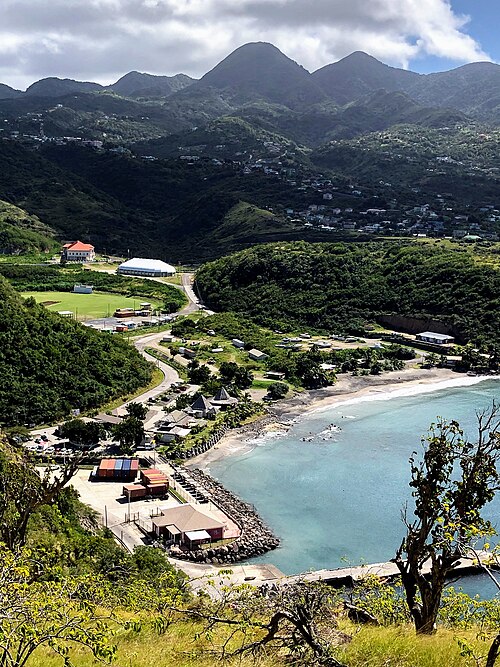
Rendezvous Bay
Montserrat’s only white-sand beach is reached by boat, kayak or a steep 30–50 minute hike from Little Bay. Bring water and leave enough daylight for the return.
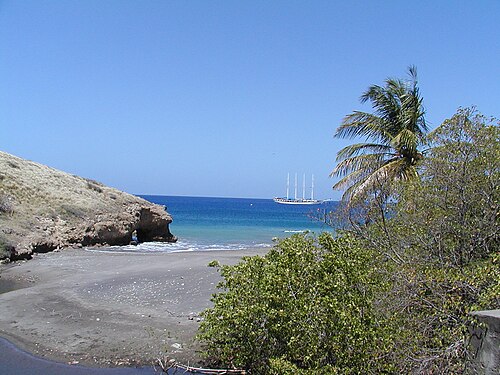
Little Bay Beach
The easiest beach for swimming, lunch and a sunset drink. The dark volcanic sand, clear water and working waterfront feel unmistakably Montserratian.
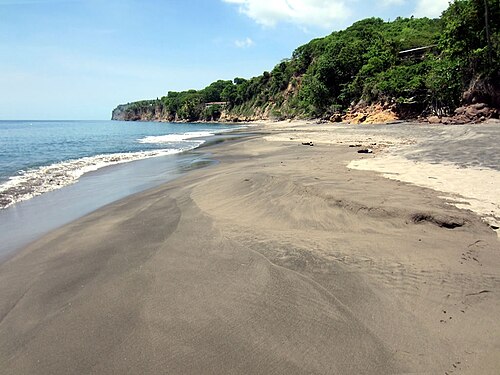
Woodlands Beach
A broad black-sand beach below a cliffside picnic area. Surf and undertow can be strong; enjoy the view when conditions are not inviting.
Bunkum Bay
A quiet west-coast beach with dark sand, simple access and little development. Conditions and beach width change with swell.
Carr’s Bay
A small historic bay beside Little Bay with coastal views and easy access. It is better for a pause or snorkel in calm weather than a full beach day.
Isles Bay Beach
A dramatic volcanic strand facing the Belham Valley and Soufrière Hills. Follow every current access sign and never continue toward Plymouth independently.
Lime Kiln Bay
A secluded dark-sand cove on the west coast, best with local directions and settled water. Facilities are minimal to nonexistent.
Foxes Bay
A striking southern beach that may fall within changing controlled-access arrangements. Visit only when authorities and a certified guide confirm it is open.
The east and northeast carry the greatest exposure
Checked July 29, 2026
Regional monitoring shows record-high June sargassum in the Caribbean Sea and continuing beaching across the Lesser Antilles into July. Montserrat’s exposed east and northeast coasts carry the greatest recurring risk. The accessible leeward beaches around Little Bay, Woodlands, Bunkum and Isles Bay are usually more dependable, though currents can still produce a landing on any coast.
The experiences that explain the island
Montserrat’s most worthwhile tours.
A certified local guide brings essential knowledge of volcano access, trail conditions and personal history.
Montserrat Volcano Observatory
Start here for the science, monitoring and human story of Soufrière Hills. The observation deck places the island’s geography into immediate perspective.
Buried City tour
See Plymouth only with a certified guide and current authorization. Access depends on hazard level, route status and official permission; no photograph is worth improvising.
Volcano boat tour
Travel the west coast toward Plymouth for the clearest view of new volcanic coastline and the buried capital without entering the land exclusion zone.
St. George’s Hill
A powerful viewpoint recently reopened under controlled access. Certified guides apply to the DMCA in advance; an environmental levy currently applies.
Day of Discovery
A six-to-seven-hour island overview combining the observatory, museum, communities, viewpoints and stories that are easy to miss alone.
Petroglyph hike
Walk Soldier Ghaut with a knowledgeable guide to rock carvings believed to be 1,000–1,500 years old, discovered by local hikers in 2016.
Centre Hills birding
Search for the endemic Montserrat oriole and other forest birds with a guide who knows the calls, terrain and conservation story.
Rendezvous Bay outing
Hike, kayak or arrange a boat to the island’s only white-sand beach, packing shade, water and everything back out.
Hilltop Coffee House
Explore memorabilia connected to AIR Studios and artists including The Police, Dire Straits, Elton John and Paul McCartney.
National Trust & Botanic Garden
Learn about endemic plants, traditional remedies, archaeology and the conservation work protecting the inhabited north.
Runaway Ghaut
Stop at the famous roadside spring, then add a short forest walk. The local legend says one drink binds you to Montserrat forever.
Festival visit
Plan around St. Patrick’s Festival in March or the December carnival season for music, masquerade, food and a much fuller social calendar.
On & under the water
Quiet reefs and volcanic seascapes—with limited infrastructure.
Deep-sea fishing
Montserrat does not currently have a dependable, broad visitor-oriented deep-sea charter fleet. Local fishing certainly occurs and pelagic species pass the surrounding deep water, but boat availability, port operations and weather make this an activity to confirm directly.
Best timing: If an insured local captain is operating, ask about tuna, mahi-mahi or wahoo and verify departure from Little Bay. Otherwise arrange offshore fishing from Antigua and treat the crossing as a separate international boat trip.
Scuba diving
Montserrat’s low visitor volume gives its reefs a wonderfully uncrowded character. Diving is concentrated along the calmer west and north coasts, with volcanic walls, pinnacles, healthy sponge growth and sand channels around Little Bay, Rendezvous, Woodlands, Pinnacle Rock and Statue Rock. Turtles, rays, barracuda, nurse sharks, lobster and schooling reef fish are possible, never promised.
The island has far fewer operators and rental inventories than established dive destinations. Confirm that a shop is actively running, ask about tank availability and reserve equipment before buying flights. Trips toward Redonda are exposed, advanced expeditions.
Snorkeling
Rendezvous Bay is the headline choice, with rocky edges and clear water in settled weather. Little Bay and Carr’s Bay offer easier access; Woodlands can be rewarding only when the sea is calm. With no lifeguards and few marked entries, local advice matters more than a pin on a map.
Sailing
Little Bay is Montserrat’s sole official port of entry. Visiting yachts must clear customs and immigration there and confirm current advance-notice procedures. Port construction, commercial traffic, surge and changing moorings can make the approach less leisurely than the scenery suggests.
Rendezvous Bay and Carr’s Bay may offer alternatives in settled conditions, but protection is limited and the leeward coast becomes uncomfortable in north or west swell. The maritime exclusion zone off the south must be respected exactly. Provision comprehensively before arrival—Antigua offers far deeper marine services and groceries.
Surfing
Montserrat is not a reliable surf destination and has no broad rental-and-school scene. Seasonal north swell can create waves at west-coast beaches, including Woodlands and Isles Bay, but currents, rocks, changing sand and access restrictions demand local knowledge. Bring equipment only if surfing is a bonus, not the reason for the trip.
Forest, music & memory
The Emerald Isle identity is Caribbean, African, Irish—and entirely its own.
Culture
English is official, while a local Creole shapes everyday speech. African-Caribbean traditions form the island’s cultural foundation, alongside a visible Irish inheritance. St. Patrick’s Day carries special weight: it commemorates both Irish connections and an attempted 1768 uprising by enslaved Africans.
Montserrat gave the world soca star Arrow and “Hot Hot Hot.” George Martin’s AIR Studios brought major recording artists to the island before Hurricane Hugo damaged the facility in 1989. Cricket, church, calypso, masquerade, storytelling and the December festival season remain part of the social fabric.
Hiking
The Centre Hills are the hiking core. The Oriole Walkway offers the best-known chance to seek Montserrat’s endemic national bird; the Blackwood Allen, Dry Waterfall, Runaway Ghaut and Silver Hills routes add forest, ravines and coastal views. Trail names and conditions are best confirmed with the National Trust or a local guide.
Rendezvous Bay requires a steep headland crossing. Soldier Ghaut leads toward the petroglyph site. St. George’s Hill and every path near the exclusion zone require current authorization. After heavy rain, ghauts rise and clay trails become extremely slippery.
The annual calendar
Montserrat saves its biggest celebrations for March and year's end.
Both signature festivals tell a layered island story. St. Patrick's season connects African resistance with Montserrat's Irish inheritance; Carnival gathers calypso, masquerade and community into one of the Caribbean's final celebrations of the year.
Approximately two weeks culminating March 17 · Island-wide
St. Patrick's Festival
Parades, concerts, food fairs, heritage programs and hikes explore Montserrat's African and Irish histories while commemorating an attempted 1768 uprising by enslaved islanders.Mid-December–January 1 · Montserrat
Montserrat Carnival
Calypso and soca competitions, pageants, J'Ouvert, masquerade and New Year's Day celebrations create a spirited finale to the Caribbean festival calendar.Restaurants & hotels
Small-island dining rewards a reservation and a flexible appetite.
Goat water is the national dish: a deeply seasoned goat stew traditionally served with bread. Also look for saltfish, fungi, ducana, roti, grilled fish, souse, local juices and rum punch. Many kitchens open on particular days or by reservation.
Pont’s Beach View for Sunday grill, Summer Breeze, waterfront bars and casual fish or Caribbean plates
Grand Phoenix, Emerald Rose, JJ’s Cuisine and changing lunch counters around the commercial center
Olveston House, Watermelon Cottage, Ziggy’s and The Attic—several require advance reservations
Isles Bay Beach Bar, festival food stalls and small neighborhood kitchens with limited weekly schedules
Hotel strategy
Think guesthouse or villa.
Full-service option
Tropical Mansion Suites is among the island’s most established hotel-style choices and sits conveniently between the airport and central communities.
Character stays
Olveston House, Gingerbread Hill, Grand View and locally managed apartments offer personal hosting and a stronger sense of place.
Villa life
The west-coast hills have attractive villas with sea and volcano views. Confirm road access, backup power, air-conditioning, pool care and whether a car is essential.
Practical details
A small island is wonderfully simple—until a missed connection becomes tomorrow’s problem.
English works everywhere. Montserratian speech carries its own Caribbean rhythm and vocabulary.
EC$ is fixed at roughly EC$2.70 to US$1. U.S. dollars are widely accepted, usually with change in EC currency.
Cards work at larger businesses, but keep EC or small U.S. notes for taxis, shops and small restaurants.
Some accommodations also provide 110V outlets. Check each socket and appliance.
The tourism authority describes the tap supply as pure and safe. Follow local notices after storms or service interruptions.
A rental car or local driver is useful. Roads are winding, and exclusion-zone rules must be respected.
Cash & cards
Cards work at established hotels, supermarkets and some restaurants, but outages and small businesses make cash essential. Bring enough EC or U.S. currency for taxis, guides, beach bars and meals. ATMs exist, but there are few backups if one is unavailable.
Transportation
Traffic drives on the left. Rental cars are the easiest way to explore; visitors usually need a temporary local driving permit, often arranged by the agency. Roads are steep and winding but traffic is light. Minibuses serve the main northern corridor in daylight; taxis and guides suit airport transfers and volcano touring.
Safety
Ordinary crime risk is low, but secure valuables and use normal nighttime awareness. The dominant hazards are volcanic restrictions, unguarded water, heat, steep trails and hurricane disruption. Never cross a barrier, follow an old map into the south or assume yesterday’s access permission still applies.
Health & vaccines
Be current on routine vaccines; CDC guidance includes hepatitis A for many unvaccinated travelers and yellow-fever proof for arrivals from certain risk countries. Mosquito protection matters for dengue and other mosquito-borne illness. Hospital services are limited, and serious cases may require evacuation to Antigua or beyond—buy appropriate coverage.
Research desk
Official sources & live checks
Volcanic access, ferries, flights, restaurant days and trail conditions can change. These official and specialist sources are the essential final check.