Map & orientation
Nine square miles, three distinct rhythms.
Gustavia anchors the west; St-Jean and Lorient make the center convenient; the northeast and southeast trade quick access to town for lagoons, privacy and a wilder Atlantic edge.
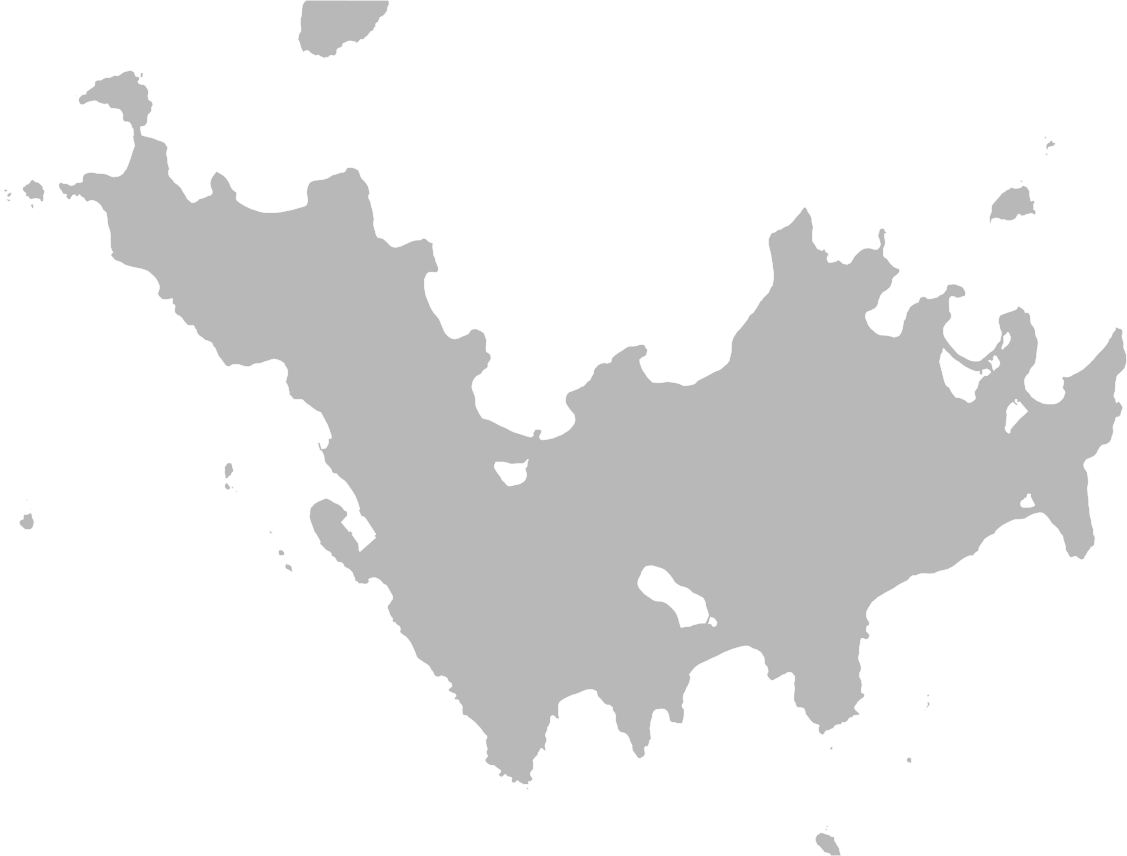
WestGustavia · Lurin · Shell Beach
CenterSt-Jean · Lorient · airport
EastGrand Cul-de-Sac · Toiny
Know the island
Small, polished and far more interesting than the superyacht shorthand.
St. Barts is famous for villas, long lunches and New Year’s yachts, but its real luxury is scale: every beach is public, no cruise ship can dominate the island, and a short drive can move from a French bakery to an empty cove. It is glamorous without being all-inclusive—and expensive without requiring every hour to cost money.
A brief history
Indigenous peoples lived in and moved through the northern Lesser Antilles long before Europeans arrived. Christopher Columbus named the island for his brother Bartolomeo in 1493. France began permanent settlement in the 1600s, then transferred the island to Sweden in 1784. Gustavia, renamed for King Gustav III, developed as a free port.
Swedish rule did not make the island separate from the region’s slavery economy: enslaved Africans lived and worked here, and the port participated in Caribbean trade. France repurchased the island in 1878. St. Barthélemy separated administratively from Guadeloupe in 2007 and is now a French overseas collectivity with substantial local authority.
What it is most known for
Gustavia’s red roofs and yacht harbor, white-sand beaches, designer villas, French-Caribbean food, Eden Rock, Cheval Blanc, New Year’s Eve, the Bucket Regatta, the tiny hillside runway and an atmosphere that can move from barefoot to black-tie without changing islands.
Geography
The dry, hilly volcanic island covers roughly nine square miles. Its highest point, Morne de Vitet, reaches about 286 meters. Gustavia sits on the southwest harbor; St-Jean and the airport occupy the center; lagoons and resorts line the northeast; wild Saline and Gouverneur face south. Narrow roads make short distances feel longer.
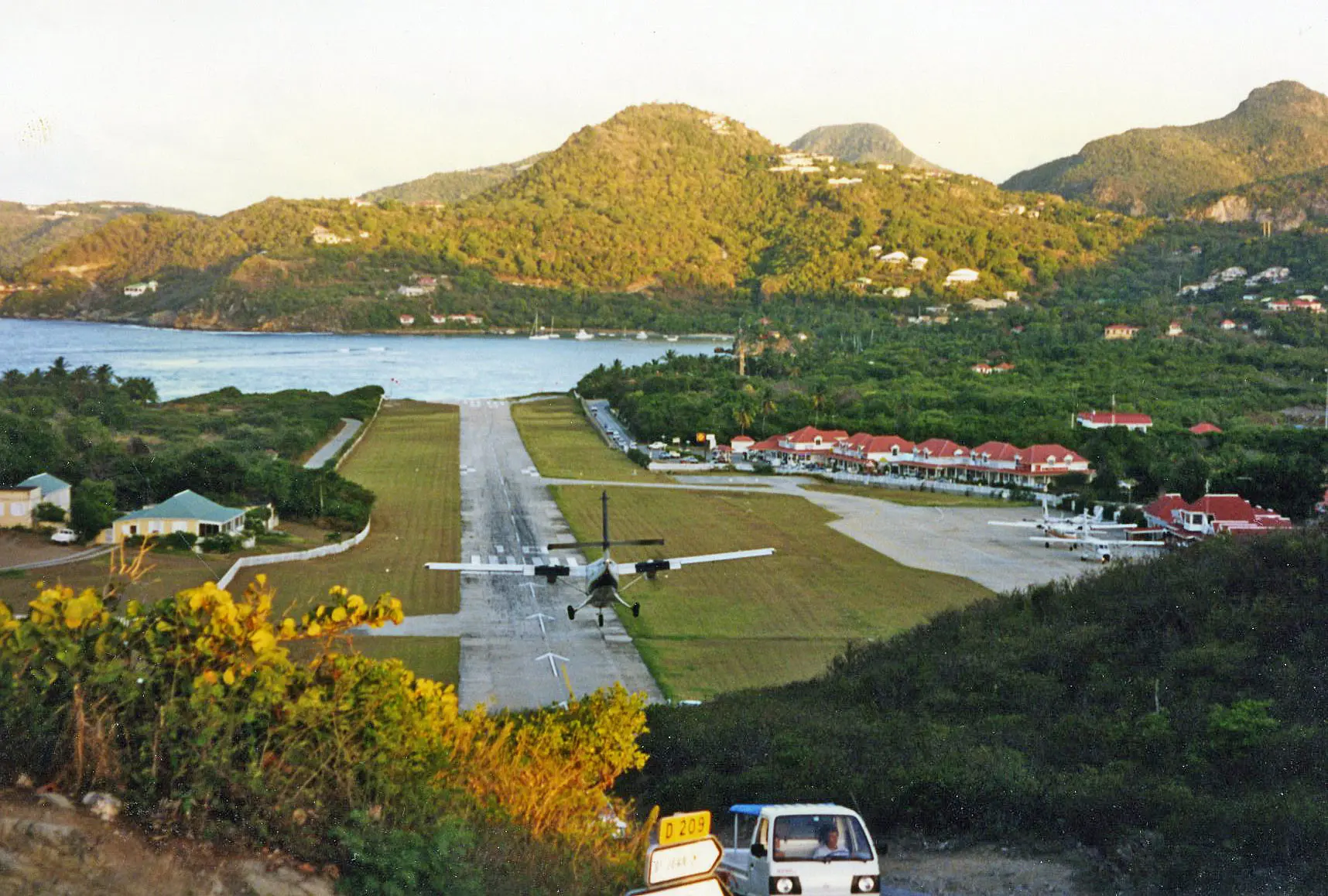
The runway occupies the island’s narrow center, squeezed between a steep hill and St-Jean Bay.
David Broad / Wikimedia Commons · CC BY 3.0Plan your trip
Come for winter polish, or trade the scene for shoulder-season breathing room.
December–April
Drier weather, lower humidity, full restaurant schedules and the island at its most polished. Christmas through New Year’s and regatta weeks bring extraordinary prices and scarce cars, tables and rooms.
May–August
May and June bring quieter beaches and more flexible villa rates. July and August stay warm and lively, but humidity, showers and hurricane risk rise; some businesses begin reducing their hours later in summer.
September–November
September and October combine peak storm risk with the deepest annual pause. November is a gradual reopening month, so confirm hotels, restaurants and beach clubs individually.
Is St. Barts hurricane-safe?
No. The island lies within the Atlantic hurricane belt; Hurricane Irma caused severe damage in 2017. Season officially runs June through November, with the highest climatological risk in late summer and early fall. Use flexible reservations, strong evacuation coverage and a plan that can survive a canceled ferry or small-plane flight.
How to get there
Every arrival includes a final hop by small aircraft or ferry.
St. Maarten · SXM → SBH
Fly internationally to Princess Juliana, then connect on a small aircraft to Rémy de Haenen Airport. St Barth Commuter serves SXM and Grand Case; schedules and baggage limits deserve careful reading. Leave a generous connection after immigration and baggage handling.
San Juan or Antigua → SBH
Tradewind publishes scheduled service from San Juan and Antigua in season. It can create a cleaner connection for some North American travelers, but fares and operating days vary substantially.
Philipsburg ↔ Gustavia
Great Bay Express runs the roughly 45-minute crossing from Bobby’s Marina. Sea conditions can make it rough; reserve in peak periods, arrive early with a passport and avoid a tight same-day connection to a long-haul flight.
Marigot ↔ Gustavia
Voyager connects French St-Martin with Gustavia, generally in about an hour depending on vessel and conditions. Compare the ferry terminal with your airport and hotel before deciding which St. Martin route is actually faster.
What part of the island to stay on
Choose a neighborhood before choosing a beautiful room.
The island is compact, but steep roads, dinner parking and taxi costs make location matter. First-time visitors usually do best around Gustavia, St-Jean or Lorient; the east rewards travelers who prefer a resort or villa cocoon.
Beaches worth building a day around
All beaches are public. Amenities are very much not guaranteed.
The island’s finest beaches remain free to enter, including the sand in front of luxury hotels. Public does not mean staffed: many beaches have no lifeguard, restrooms, shade or food, and winter swell can transform conditions within hours.
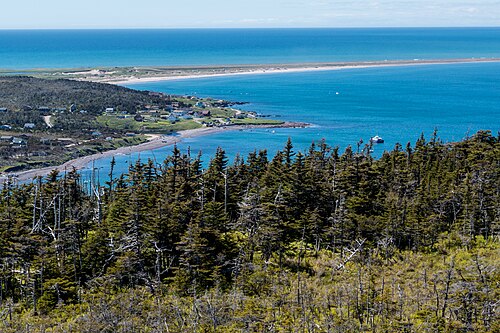
Gouverneur
A cinematic, undeveloped sweep of pale sand with no reliable facilities or lifeguard. Water can be glassy or powerful; arrive early, bring shade and judge the sea.
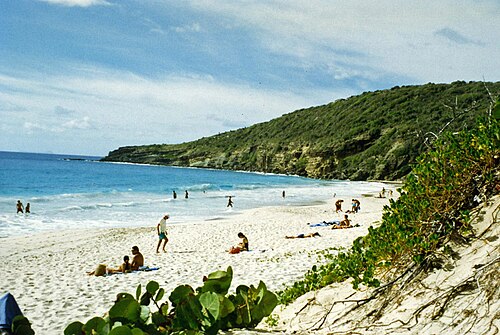
Grande Saline
Wild dunes and broad sand reached by a short path from the salt pond. There are no services on the beach, and swell can be strong. Clothing-optional sunbathing is not unusual at the quieter ends.
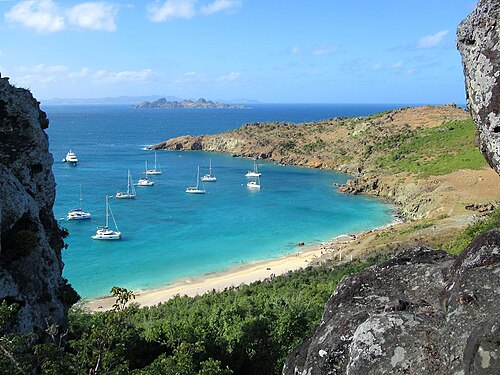
Colombier
A protected-feeling bay reached only by foot or boat. Use the gentler lower trail from Petite Anse/Flamands or the steeper upper route, carry water and snorkel without touching turtles or reef.
Saint-Jean
Two social crescents divided by Eden Rock, with beach clubs, restaurants and runway views. The water is often friendly, but aircraft operations, boat lanes and changing swell require attention.
Flamands
A long, beautiful strand backed by palms and elegant hotels. It is excellent for walking; winter swell can turn an inviting-looking sea into a poor swimming choice.
Shell Beach
The easiest swim from Gustavia, tucked below Fort Karl and covered in shell fragments. It is ideal for sunset and lunch, though cruise and ferry days can make it busy.
Lorient
A relaxed local beach with a protected swimming area, reef life and surf outside the shelter when swell arrives. Enter around reef and urchins carefully.
Grand Cul-de-Sac
A shallow lagoon for paddling, turtles and resort water sports. It is one of the easiest family choices, but boats, kites and seasonal sargassum all affect the day.
The northeast carries the greatest exposure.
Checked July 29, 2026
NOAA and CARICOOS are tracking another exceptionally large Caribbean sargassum year. St. Barts conditions remain beach-specific and can change overnight. Windward eastern and northeastern bays—including Grand Cul-de-Sac, Marigot and exposed stretches around Lorient—usually carry higher risk; Gustavia/Shell Beach, Colombier and western shores are often better alternatives, not guarantees.
June 2026 local reports described several major beaches as clear on one day and Saline holding older deposits on another. Conditions are volatile, so ask a hotel or concierge for a same-day photo before driving across the island.
The experiences that define the island
St. Barts’s most worthwhile tours.
A rental car can cover most land highlights independently. Spend guide money where it adds access or knowledge: boats, diving, marine ecology, food history and exposed coastal routes.
Private island beach day
Use a driver or rental car to link Gouverneur, Saline, Lorient and Shell Beach, leaving enough time to swim.
Colombier hike + snorkel
Walk in early with water and reef-safe sun protection, then snorkel the rocky edges in calm conditions. A boat return can turn the outing into a seamless half-day.
Marine-reserve dive
Dive Pain de Sucre, Gros Îlets, Île Fourchue or another site chosen for the day’s wind, current and certification. Advanced divers can ask whether conditions suit the Kaïali wreck.
Catamaran to Île Fourchue
Sail to the uninhabited reserve island for swimming and snorkeling, using designated moorings and an operator that follows marine-park rules.
Gustavia history walk
Climb to Fort Karl and Fort Gustav viewpoints, look for Swedish street names and historic buildings, then connect the harbor’s glamorous present to its colonial and trading past.
Grand Cul-de-Sac eco outing
Kayak or paddleboard the lagoon with a naturalist and look for green turtles and rays without crowding, touching or feeding wildlife.
Toiny coastal hike
Walk the dramatic Grand Fond/Toiny coast with a knowledgeable guide. Natural pools are exposed to swell and are never worth entering when waves are breaking across them.
Beach-club lunch
Reserve a long lunch at St-Jean, Shell Beach or Toiny. The experience is part food, part theater and entirely capable of consuming the afternoon.
Sunset sail from Gustavia
See the red-roofed harbor and dry hills from the water, then return as town lights come on. Confirm the route when the west-side swell is uncomfortable.
Food-focused evening
Pair a harbor aperitif with French-Caribbean dining, or ask a guide to balance a glamorous table with a bakery, market and genuinely local Creole cooking.
On & under the water
A protected marine park, sophisticated sailing and surf that demands judgment.
Deep-sea fishing
St. Barts has a small, premium charter market from Gustavia and nearby marinas. Offshore boats target mahi-mahi, wahoo, tuna, barracuda and occasional billfish, but availability is narrower and pricing higher than on St. Maarten. Private yacht concierges can arrange trips, though a dedicated fishing operator is preferable.
Best timing: Wahoo is associated with winter, mahi with late winter and spring, and billfish with warmer water. Confirm that fishing is the principal purpose of the charter.
Scuba diving
The marine park protects five sectors around Colombier, Île Fourchue, Pain de Sucre, Gros Îlets, Frégate and Toc Vers, with 23 marked dive sites and ecological moorings. Reefs, pinnacles, arches and rocky passages hold turtles, eagle rays, barracuda, tarpon, lobster, schooling fish and occasional reef sharks.
Pain de Sucre and Gros Îlets sit close to Gustavia; Île Fourchue adds volcanic scenery and reserve habitat. The Kaïali fishing-trawler wreck rests near 30 meters and suits experienced divers. Operators choose sites around wind, current, certification and the reserve’s rules.
Reef health
Protection reduces anchor and fishing pressure, but St. Barts is not insulated from Caribbean coral bleaching, marine heat, disease and storms. Ask what the operator has observed recently, use moorings and never touch coral, turtles, rays or sharks.
Snorkeling
Colombier is the strongest all-around shore option in calm water, especially along the rocky edges. Lorient, Petit Anse, Grand Cul-de-Sac and the rocks around Shell Beach can be rewarding when visibility and swell cooperate. Boat trips reach Île Fourchue and protected sites more safely. Keep distance from turtles and stay out of marked boat channels.
Sailing
Gustavia is the principal port, with stern-to berths, outer-harbor moorings and anchoring areas assigned by the port. Complete current pre-arrival and customs formalities, then check in with the harbor office; rules and fees change, so use the official port and clearance sites.
Sailing from St. Martin
St. Martin is the practical charter gateway. Bareboat and skippered fleets operate from Marigot/Fort Louis and other St. Martin bases; the passage to Gustavia is roughly 15 nautical miles and is commonly planned at about three hours. It crosses open water exposed to easterly trade wind and Atlantic swell, so an early departure and a conservative forecast matter more than the short mileage.
This is an international passage into Saint-Barthélemy. Clear out through the correct French- or Dutch-side authority, carry passports and vessel papers, submit Gustavia’s current arrival formalities and follow the charter company’s briefing. Most first itineraries enter at Gustavia, then continue roughly two nautical miles to Colombier or onward to Île Fourchue under marine-reserve rules. The major charter fleets are based in St. Martin; St. Barts has more limited charter infrastructure.
Colombier and Île Fourchue are the signature reserve anchorages. Vessels over 25 meters are not allowed in those bays; reserve stays, ecological moorings, insurance, anchoring zones and time limits are regulated. Gustavia is best for groceries, fuel, restaurants and technical services. Provision before moving to the quieter anchorages, use a secure dinghy and never anchor on seagrass or coral.
Surfing
Lorient is the most approachable surf area, with a reef break outside the protected swimming zone and occasional smaller conditions nearer shore. Toiny and Pointe Milou are exposed, powerful reef setups for experienced surfers with local knowledge. Anse des Cayes can also work. Rentals and lessons exist, but St. Barts is a conditional surf stop.
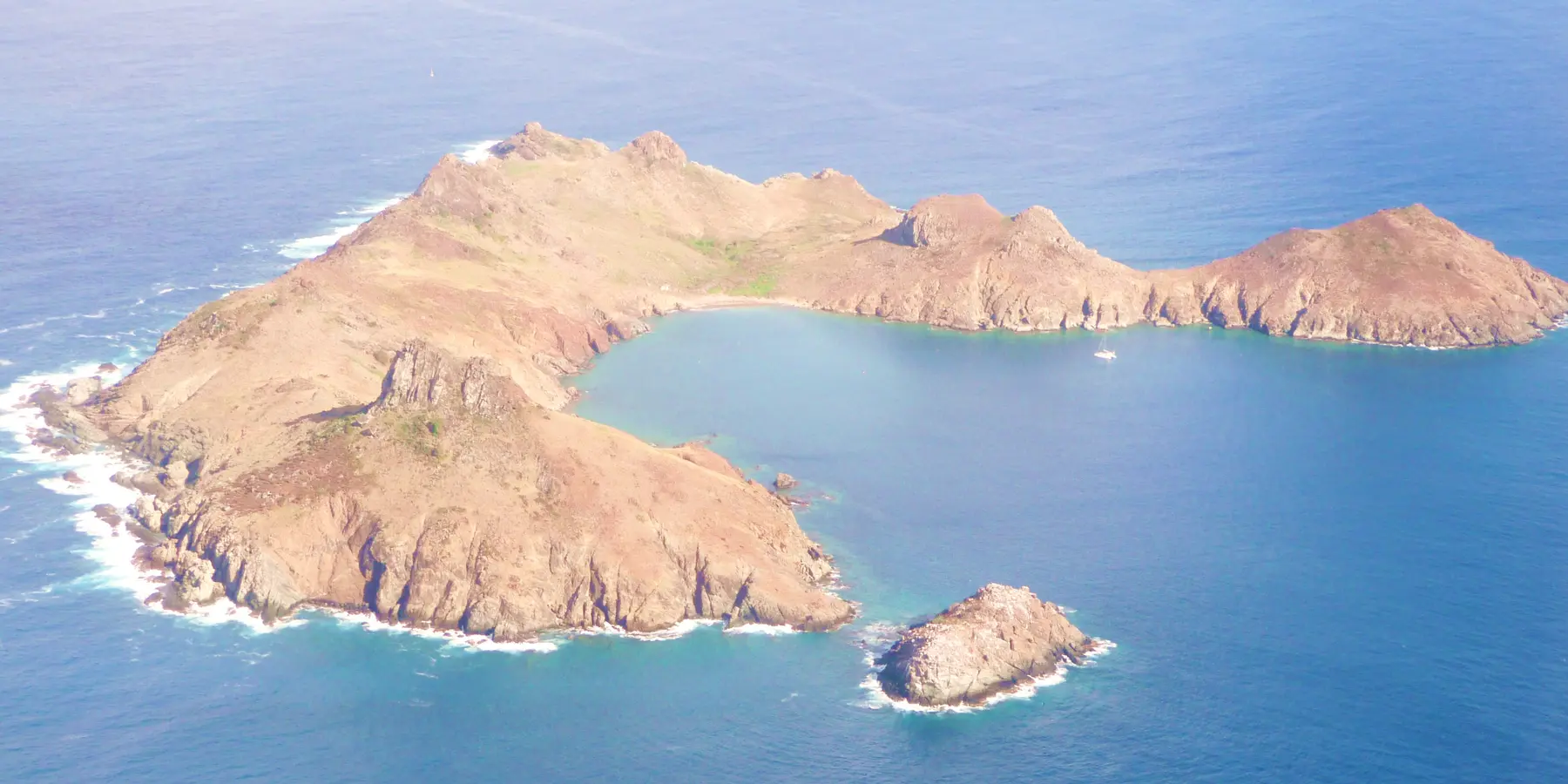
A protected anchorage and volcanic shoreline make Fourchue a natural extension of a St. Martin-to-St. Barts itinerary.
Hansottowirtz / Wikimedia Commons · CC0Culture & trails
Look beyond the beach club and the island becomes much richer.
Culture
French is the official language and daily life blends metropolitan French influence with a distinct Barthélemois identity and wider Caribbean heritage. Swedish-era names remain in Gustavia; Creole food, music and family traditions connect the island to its neighbors. Carnival, the music festival, Gourmet Festival, Bucket Regatta and local fêtes reveal different sides of the calendar.
Visit churches, cemeteries, Fort Karl, Fort Gustav and the Wall House museum when open. Treat the Swedish period critically as well as aesthetically: free-port prosperity existed alongside slavery and regional colonial trade.
Food culture
French technique meets Caribbean fish, lobster, accras, cod fritters, plantain, christophine, spices and rum. Bakeries and casual counters matter as much as the famous dining rooms. A baguette picnic at Colombier may be the island’s rare perfect lunch under €30.
Colombier trails
The lower route from Petite Anse/Flamands is longer and generally gentler; the upper route from the Colombier viewpoint is shorter, steeper and exposed. Neither offers shade or services. Carry water, use secure footwear and avoid the hottest hours.
Grand Fond & Toiny coast
Coastal paths cross rock, scrub and dramatic Atlantic shoreline. The natural pools promoted online can be dangerous or unreachable in swell. A guide and a conservative sea-state decision are more valuable than a viral photograph.
Fort walks
Fort Karl above Shell Beach and Fort Gustav near the lighthouse provide short, rewarding views over Gustavia. They are the easiest way to combine exercise, history and sunset without committing to a half-day hike.
The annual calendar
Five moments when St. Barts becomes its own kind of stage.
Music, Carnival, racing yachts and ambitious food each reveal a different side of the island. New Year's Eve turns the volume—and the room rates—all the way up. Event weeks sell early, so confirm dates and reserve lodging, cars and restaurants far ahead.
Usually January · Venues around St. Barts
St. Barts Music Festival
Classical music, opera, ballet and jazz are performed in intimate island churches and venues during one of the Caribbean's most refined cultural gatherings.February or March · Gustavia
St. Barts Carnival
Costumes, music and Mardi Gras parades lead into Ash Wednesday's black-and-white procession and the burning of Carnival King Vaval at Shell Beach.Usually April · Gustavia & island waters
Les Voiles de St. Barth Richard Mille
International racing fleets compete by day while a lively race village and concerts bring sailors and spectators together ashore.Usually early November · Participating restaurants
St. Barth Gourmet Festival
Michelin-starred visiting chefs collaborate with leading island kitchens on special tasting menus and dinners that book quickly.December 31 · Gustavia
New Year's Eve
Superyachts fill the harbor while restaurants, beach clubs and private celebrations build toward fireworks over Gustavia.Restaurants & hotels
Reserve the iconic tables. Protect a few evenings for spontaneity.
Peak-season dinner books can open months ahead; September and October can erase half a wish list. Confirm operating dates directly, and ask whether transport is included or available before the final dessert becomes a taxi negotiation.
Bonito, L’Isola, Orega, Black Ginger, Bagatelle, La Petite Plage and La Guérite
Eddy’s, Le Select, Fish Corner, Le Repaire, Marius and bakeries around Lorient and St-Jean
Sand Bar, Nikki Beach, Gyp Sea, Shellona, La Cabane, Le Toiny Beach Club and Pearl Beach
Tamarin, L’Esprit, Bonito’s harbor view, Le Sereno and hotel dining at Cheval Blanc or Le Toiny
Hotel strategy
A villa is not automatically cheaper. A hotel is not automatically easier.
Grand luxury
Eden Rock for St-Jean energy; Cheval Blanc for Flamands beach; Rosewood Le Guanahani and Le Barthélemy for the lagoon; Le Toiny for seclusion; Carl Gustaf for harbor access.
Boutique character
Tropical Hotel, Manapany, Christopher, Gyp Sea and Le Sereno each create a distinct neighborhood experience. Match location before comparing pools.
Value—by St. Barts standards
Look at small Gustavia hotels, Les Îlets de la Plage, locally managed studios and one-bedroom villas in shoulder season. A kitchen and compact rental car can save more than chasing the lowest room rate.
Practical details
French systems, Caribbean roads and a budget that appreciates advance warning.
French is official. English is widely spoken in hotels, restaurants and visitor services; Creole heritage remains part of island life.
Euros are official. U.S. dollars are commonly accepted in tourism businesses, often at a merchant-set rate.
Keep euros for bakeries, parking, small purchases and the occasional card outage.
North American travelers need a plug adapter and must check device voltage. Phones and laptops are usually dual-voltage; hair tools often are not.
Water is treated and generally drinkable, but taste, cistern use and plumbing vary. Many visitors use filtered or bottled water.
A compact rental car is the practical default. Roads are narrow, steep and shared with scooters.
Cash & cards
Major cards are standard at hotels, restaurants, shops and rental agencies. Keep euros for bakeries, parking, small purchases and the occasional card outage. ATMs dispense euros. Ask whether service is included before tipping twice.
Transportation
Traffic drives on the right. A compact rental car is the practical default; book early in winter and request automatic transmission if needed. Roads are narrow, steep, dark and shared with scooters. Taxis are expensive and limited late at night. There is no useful public bus network.
Safety
Crime is relatively low, but lock vehicles and villas and use ordinary precautions. The larger risks are rough water, no-lifeguard beaches, steep roads, scooters, heat and exposed coastal walks. Do not stand beneath the St-Jean approach path or obstruct airport operations for a photograph.
Health & vaccines
Be current on routine vaccines and review CDC guidance. Mosquito protection matters for dengue and other mosquito-borne illness. Proof of yellow-fever vaccination may apply when arriving from a risk country. The island has a small hospital and clinics; serious trauma, cardiac events or diving injury may require evacuation to St. Martin, Guadeloupe or beyond.
Research desk
Official sources & live checks
Small-plane schedules, sea crossings, seasonal restaurants and marine rules change. These are the strongest starting points for a final date-specific check.