Know the island
The Pitons define the horizon; rainforest, volcanic coast and Creole culture give Saint Lucia its depth.
Saint Lucia is unusually lush, vertical and varied. Couples come for open-wall resorts and Piton views; hikers, divers and sailors find an island with real substance beyond the honeymoon image. The roads are slower than the map implies, so choosing—or splitting—your base matters.
A brief history
Arawak and later Kalinago communities lived here before sustained European colonization. France and Britain contested the island repeatedly, leaving French roots in place names, food and Kwéyòl even after Britain secured control in 1814. Enslaved Africans built the plantation economy; emancipation came in 1834, followed by full freedom in 1838.
Saint Lucia became independent on February 22, 1979. Its modern identity joins African, French, British and East Indian influences with strong village traditions, two Nobel laureates and a creative culture that is distinctly its own.
What it is most known for
Gros and Petit Piton, drive-in volcanic springs, rainforest, spectacular hillside resorts, cocoa, sailing, reef diving, warm Creole hospitality and west-coast sunsets.
Geography
This mountainous volcanic island is about 27 miles long and 14 miles wide. The Caribbean-facing west coast is generally calmer and more protected; the Atlantic east is windier, rougher and more exposed to sargassum. The UNESCO-listed Pitons Management Area includes peaks rising roughly 770 and 743 meters, geothermal features and an important marine zone.
Plan your trip
Choose the dry months for the clearest all-around trip—and still expect a tropical shower.
December–May
Lower rainfall, less humidity and the best blend of beach, hiking, sailing and diving weather. February through April is often driest; Christmas, winter and Easter command the highest rates.
June–July
Greener, warmer and often better value. Showers increase, Carnival brings energy and storm risk begins to matter. Flexible reservations are essential.
August–November
The wettest, most humid stretch overlaps peak Atlantic storm activity. Trails can be muddy, roads can flood and tropical systems can disrupt flights and ferries.
Is Saint Lucia hurricane-safe?
No. Its southerly position does not place it outside the hurricane belt. Atlantic hurricane season runs June 1 through November 30, with the greatest historical risk from August into October. Even a distant system can bring dangerous surf, flooding and landslides. Book flexible travel, insure nonrefundable costs and follow the Saint Lucia Meteorological Service.
How to get there
Fly into the airport that matches your route.
Hewanorra · UVF
Most nonstop flights from North America and the United Kingdom use Hewanorra in the far south. Soufrière is typically about 45–70 minutes away by road; Rodney Bay can take 90–120 minutes or more with traffic. Helicopter and boat transfers are premium alternatives.
George F. L. Charles · SLU
This smaller airport beside Castries is far more convenient for Rodney Bay and northern stays. Regional flights connect through Caribbean hubs; confirm baggage limits and leave a generous buffer when tickets are separate.
Martinique
Passenger ferries connect Castries and Fort-de-France on selected days, with a typical nonstop crossing of about 90 minutes. This is international travel: passport, immigration, advance check-in and baggage rules apply. Open-water seas can be lively.
Dominica & Guadeloupe
Through services may continue north via Martinique to Dominica and Guadeloupe on selected dates. They are useful for a deliberate multi-island trip, not a connection to assume. Buy from the live timetable and protect the night before any flight home.
Choose your Saint Lucia
Stay south for the dreamscape. Stay north for ease. Split the trip for both.
A north/south split is not fussy here—it prevents repeated two-hour drives and lets the island reveal two very different personalities.
Best for scenery · romance · nature
Soufrière & the Pitons
This is the Saint Lucia of the postcards: rainforest, volcanic peaks, black-sand coves and open-air rooms facing the Pitons. It is the strongest choice for honeymoons and active couples, but roads are winding, nightlife is quiet and many resorts sit on steep hills.
- Nearby
- Sugar Beach, Anse Chastanet, Sulphur Springs, Gros Piton, Tet Paul
- Consider
- Jade Mountain, Anse Chastanet, Sugar Beach, Ladera, Rabot Hotel, Stonefield
Best first trip · dining · families · nightlife
Rodney Bay, Gros Islet & Cap Estate
The north is easiest for restaurants, groceries, marina departures and a classic sandy-beach routine. Reduit Bay is very swimmable and Cap Estate is quieter and more residential. The tradeoff is a long, curvy day trip to the Pitons and a lengthy transfer from UVF.
- Nearby
- Reduit Beach, Pigeon Island, Rodney Bay Marina, Gros Islet
- Consider
- Cap Maison, BodyHoliday, Windjammer Landing, Bay Gardens, Harbor Club
Best for sailing · seclusion · a short romantic stay
Marigot Bay
A deep, palm-framed harbor gives Marigot an intimate nautical mood between north and south. It works beautifully for boaters and travelers who want to slow down, but the beach is tiny, dining choices are limited and most island sights still require a drive or boat.
- Nearby
- Marina, boat excursions, Roseau Valley, Anse La Raye
- Consider
- Zoëtry Marigot Bay, Marigot Beach Club, hillside villas
Best for airport ease · wind sports · local pace
Vieux Fort, Laborie & the south
The south places you close to UVF, wide Atlantic-facing beaches and less resort-developed communities. It suits a first or final night, kiteboarders and independent travelers. Expect stronger wind, fewer destination restaurants and more driving for the famous west-coast sights.
- Nearby
- UVF, Sandy Beach, Anse des Sables, Laborie, Maria Islands
- Consider
- Coconut Bay, Serenity at Coconut Bay, Laborie guesthouses and villas
Beaches worth building a day around
Volcanic sand, clear coves and one impossible view between the Pitons.
All beaches are public below the high-water mark, but access, parking, chairs and resort facilities are separate questions. West-coast water is usually calmer; always read the sea before entering.
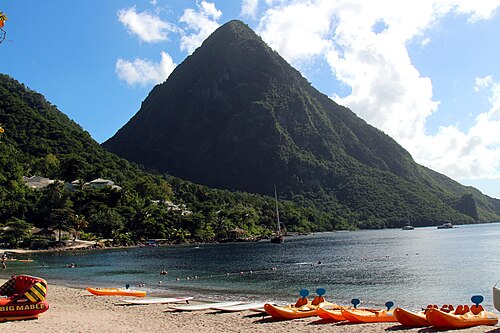
Sugar Beach
The most cinematic swim on the island, directly between the Pitons. Clear water, dramatic snorkeling near shore and resort services make it special; public beach access exists, but transport, parking and resort facilities require planning.
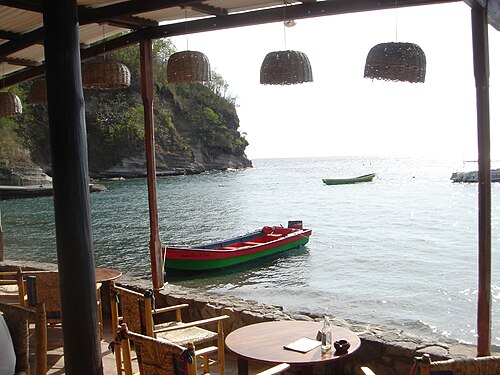
Anse Chastanet
A dark-sand cove with one of Saint Lucia’s best shore reefs. Snorkeling begins near the beach, while the rough access road makes a water taxi an appealing arrival.
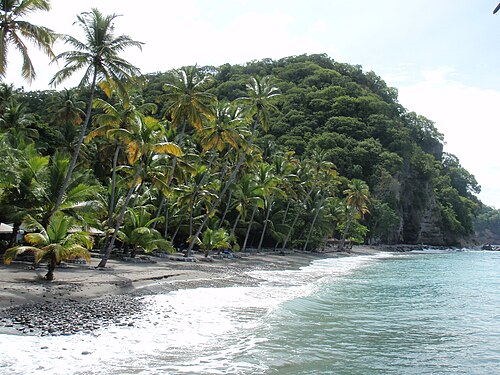
Anse Mamin
A quieter, palm-backed beach beyond Anse Chastanet. Come for soft volcanic sand, calm-weather swimming and an unhurried lunch; access is usually through the resort or by boat.
Reduit Beach
The easiest all-around beach for families, gentle swimming, water sports and nearby restaurants. It is lively.
Pigeon Island beaches
Two sheltered coves beneath the national landmark pair an easy swim with Fort Rodney views. Facilities and calm-water appeal make this a smart north-coast half day.
Anse Cochon
A compact west-coast cove with good snorkeling, clear water and fewer crowds than the main resort beaches. Boat tours visit frequently; land access varies by property.
Most exposure sits on the Atlantic coast
Checked July 29, 2026
Regional monitoring indicates mild-to-moderate overall influx potential, but island-wide labels can hide heavy local landings. Saint Lucia’s exposed Atlantic east and southeast—around Vieux Fort, Anse des Sables, Micoud, Praslin and Dennery—generally face the greatest risk. The leeward west around Soufrière, Anse Chastanet, Marigot and the Pitons is often less exposed, never immune.
The experiences that explain the island
Saint Lucia’s most worthwhile tours.
The best days combine scenery with local context and leave room to feel the island.
Pitons by land and sea
Combine a coastal boat ride with Soufrière, the volcano, a waterfall and a Piton viewpoint. Small groups and sensible pacing are worth more than squeezing every stop into one day.
Gros Piton climb
A demanding guided ascent with steep steps, heat and roughly four to six hours on the trail. Start early, carry substantial water and do not mistake the famous view for an easy hike.
Tet Paul Nature Trail
The best high-impact, lower-effort panorama: a short guided loop with views over the Pitons, farmland and the southern coast.
Soufrière reef day
Snorkel or dive Anse Chastanet, Coral Gardens, Superman’s Flight or a nearby site selected for the day’s current and visibility.
Sulphur Springs & waterfall
See the geothermal landscape, then cool off at Toraille, Piton Falls or a quieter operator-chosen alternative. Go early to soften the crowds.
Sunset sail
The Pitons are at their most elegant from the water. Choose a smaller sailboat if atmosphere matters more than an open-bar party.
Rainforest and birding
Walk with a guide in the interior for tropical forest, endemic birds and plant knowledge that a beach-based itinerary misses.
Friday-night culture
Gros Islet’s street party or the Anse La Raye fish fry can be a joyful local evening. Confirm the current schedule and arrange a trusted ride home.
On & under the water
The west coast concentrates the calmest water, strongest reefs and most memorable sailing.
Deep-sea fishing
Saint Lucia has visitor-ready sport-fishing charters from Rodney Bay, Marigot Bay and selected west-coast marinas. The steep volcanic shelf gives relatively quick access to mahi-mahi, wahoo, tuna, sailfish and blue or white marlin. Half days are possible, but full days improve the odds of finding moving pelagics.
Best timing: Wahoo and mahi are often emphasized in the cooler, drier part of the year, while billfish and tuna shift with warm water and bait. Strong trade winds and acceleration zones can make the ride energetic.
Scuba & snorkeling
Anse Chastanet’s shore reef, Coral Gardens below Gros Piton, the Piton Wall and Superman’s Flight are the signature southern sites. Keyhole Pinnacles adds dramatic topography; the Lesleen M and Vicky B provide wreck profiles for appropriately certified divers. Turtles, rays, morays, seahorses, trumpetfish and dense reef fish are realistic highlights.
The UNESCO marine area remains biologically rich, but reef condition varies with depth, runoff, fishing pressure, storm damage and recent Caribbean heat stress. Choose an operator that uses moorings, keeps groups small and can explain what it observed this week. Beginners will find sheltered sites; drift, wall and wreck plans should match certification and conditions.
Sailing
Rodney Bay Marina is the principal yacht hub and easiest place to provision; Massy and specialty shops serve the north. Marigot Bay is a protected, full-service harbor with limited anchoring room. In the Soufrière Marine Management Area, use official moorings around Anse Chastanet, Soufrière and the Pitons—never anchor on coral. Soufrière groceries are smaller, so stock major items in the north.
International yachts must clear customs and immigration at an official port and follow current port procedures. Castries, Rodney Bay, Marigot and Vieux Fort serve different operational needs; verify office hours before arrival or departure. Martinique is the natural onward passage, while coastal sails to the Pitons are the essential local day.
Surfing & wind sports
Saint Lucia is not a dependable surf destination. Cas en Bas and exposed northeastern breaks can work when swell, wind and access align, but conditions are inconsistent and reefs or currents demand local advice. Beginners should arrange a lesson.
Anse des Sables near Vieux Fort is the more established wind-sports choice, with trade winds suited to kitesurfing and windsurfing. Use a qualified school and respect protected Maria Islands habitat.
Culture & hiking
Climb for the view. Stay for the Kwéyòl heart beneath it.
Culture
English is official, while Saint Lucian Kwéyòl is central to everyday identity. October’s Creole Heritage Month and Jounen Kwéyòl celebrate language, dress, music and food; Carnival brings calypso, soca and mas in June and July. Dennery Segment, folk traditions, cocoa, rum and community fish fries invite genuine participation.
Try green fig and saltfish, bouyon, accra, cocoa tea and locally made chocolate. Ask before photographing people, dress respectfully away from beaches and spend beyond the resort gate.
Hiking
Gros Piton is the celebrated challenge: strenuous, hot and best started early with the required local guide. Tet Paul gives the most accessible Piton panorama in under two hours. Enbas Saut descends through rainforest toward waterfalls and requires current trail advice; Pigeon Island offers an easier Fort Rodney climb with historical context.
Petit Piton is steep, exposed and not a casual alternative to Gros Piton. Do not attempt it without properly authorized local guidance and current access information. Rain changes trail safety quickly everywhere on the island.
The annual calendar
Saint Lucia celebrates in full color—and then in light.
Summer Carnival brings weeks of music and mas into the streets, while December's quieter National Day tradition illuminates the island in honor of Saint Lucy.
June–July · Castries & island-wide
Saint Lucia Carnival
Calypso, soca, steelpan, pageants and fetes build toward two large costumed street-parade days filled with color and movement.December 12–13 · Castries & island-wide
Festival of Lights & Renewal
Lanterns, illuminated displays, music and fireworks celebrate National Day and Saint Lucy, the island's namesake and patron saint of light.Eat & sleep well
Choose a few destination meals—and leave space for roadside bread, fish and cocoa.
Saint Lucia’s best food experiences move between refined Piton-view dining, Creole kitchens, village fish fries, markets and cocoa estates. Reserve special dinners in high season and reconfirm opening days and transportation the same week.
Orlando’s, Rabot Restaurant, Dasheene, Mango Tree and waterfront local kitchens.
The Coal Pot, Pink Plantation House, Big Chef Steakhouse, Naked Fisherman and Flavours of the Grill.
Working markets, village bakeries, cocoa experiences and the scheduled fish fries in Gros Islet or Anse La Raye.
Hotel shortlist
Piton-view icons
Jade Mountain, Ladera, Sugar Beach and Anse Chastanet.
Wellness & quiet
BodyHoliday, Cap Maison and Ti Kaye.
Families & all-inclusive ease
Windjammer Landing, Bay Gardens Beach Resort and Coconut Bay.
Independent character
Stonefield, Fond Doux, Laborie guesthouses and locally managed villas.
Before you go
The practical details.
English is official. Saint Lucian Creole French is widely spoken and culturally important.
XCD is fixed at EC$2.70 to US$1. U.S. dollars are widely accepted; change may be in XCD.
Cards work at most resorts and larger restaurants. Carry XCD for buses, vendors, small eateries and tips.
British-style plugs are standard. Some hotels provide 110V outlets; verify before relying on them.
Urban and hotel supplies are normally treated, but outages and storms can affect service. Follow local advice.
A local temporary permit is required. Roads are narrow, steep and winding; avoid a first drive after dark.
Transportation
A rental car offers freedom, but driving is demanding and journey times are long. Use reputable, licensed taxis and agree the fare in advance; taxis are not generally metered. Public minibuses are inexpensive and useful by day on established routes, but they do not follow a visitor-friendly timetable. Water taxis can turn a difficult west-coast road transfer into part of the experience.
Entry basics
Rules depend on nationality. U.S. travelers currently need a passport valid for their stay plus onward or return arrangements; requirements can change. Confirm with the Saint Lucia government or airline before travel.
Safety
As of this review, the U.S. advisory is Level 2 due to crime. Use hotel-arranged or licensed transport, avoid isolated beaches and unlit streets after dark, secure valuables and do not leave belongings in a car. Heat, slippery trails, currents, steep roads and flash flooding are more common visitor hazards than dramatic headlines.
Health & vaccines
Review routine vaccines and CDC advice; hepatitis A is commonly recommended for travelers. Mosquito precautions matter for dengue, chikungunya and Zika. Yellow-fever proof may be required when arriving from a risk country. Medical capacity is limited for serious emergencies, so carry robust health and evacuation insurance.
Entry rules, ferry schedules, health advice, trail access, hotel operations and sea conditions can change. Reconfirm details with official sources and your providers before booking or departing.
Research desk
Official sources & live checks
Weather, ferry schedules, trail access and sargassum change faster than a guide can. Use these for the final decision close to departure.