Find your bearings
Trinidad faces South America. Tobago faces the Caribbean.
Trinidad is the larger, busier and more industrial island, anchored by Port of Spain and the Northern Range. Tobago lies about 20 miles northeast and delivers the compact beach, reef and rainforest stay many visitors initially imagine.
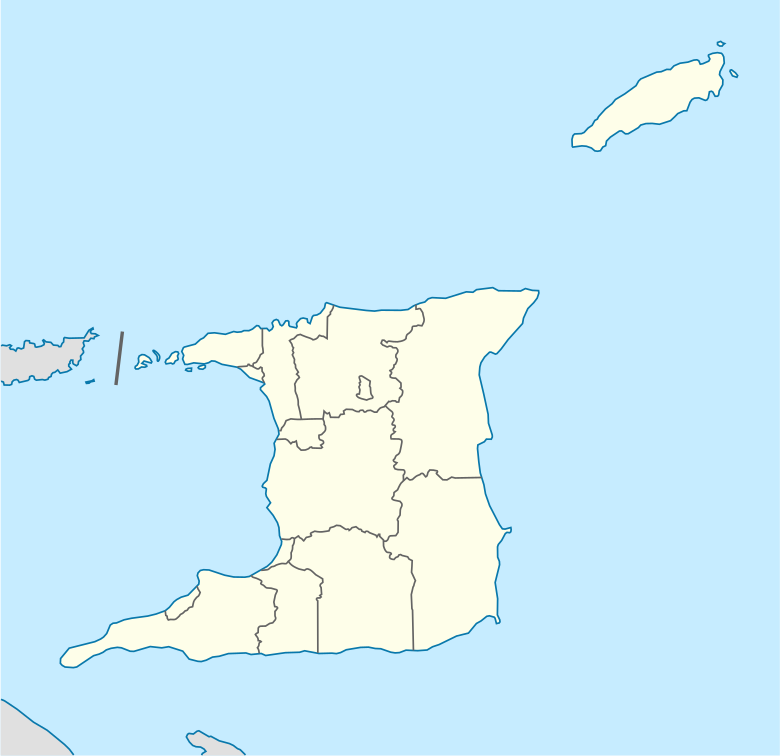
Carnival, food, birding, leatherbacks, rainforest, cities and a far larger road network.
Crown Point, Pigeon Point, Buccoo Reef, Mount Irvine and the easiest visitor logistics.
Castara, Main Ridge, Speyside and Charlotteville reward slower, better-planned travel.
Know the islands
Two islands create one remarkably layered journey.
Trinidad and Tobago joins a culturally electric, biodiverse continental island with a smaller, reef-edged island shaped by swimming, diving, rainforest and fishing villages.
A brief history
Indigenous communities including the Kalinago and Arawakan-speaking peoples lived across the islands before European colonization. Spain claimed Trinidad; Tobago changed hands repeatedly among European powers. Britain took Trinidad in 1797 and joined Tobago administratively with it in the late nineteenth century.
Enslaved Africans sustained plantation economies until emancipation in 1834. Indentured laborers from India arrived from 1845, adding traditions that became fundamental to national food, faith and language. The country gained independence in 1962 and became a republic in 1976.
What it is most known for
Trinidad created steelpan and hosts the Caribbean’s defining Carnival. It is also famous for doubles, roti, calypso, soca, scarlet ibises and nesting leatherbacks. Tobago is known for Pigeon Point, Buccoo Reef, Main Ridge rainforest, birding, current-swept diving and fishing villages.
Geography
Trinidad’s mountains and fauna reflect its former connection to South America. Tobago is smaller, narrower and more classically Antillean, with a forested spine dropping into deep bays. The islands are close on a map but about three hours apart by fast ferry.
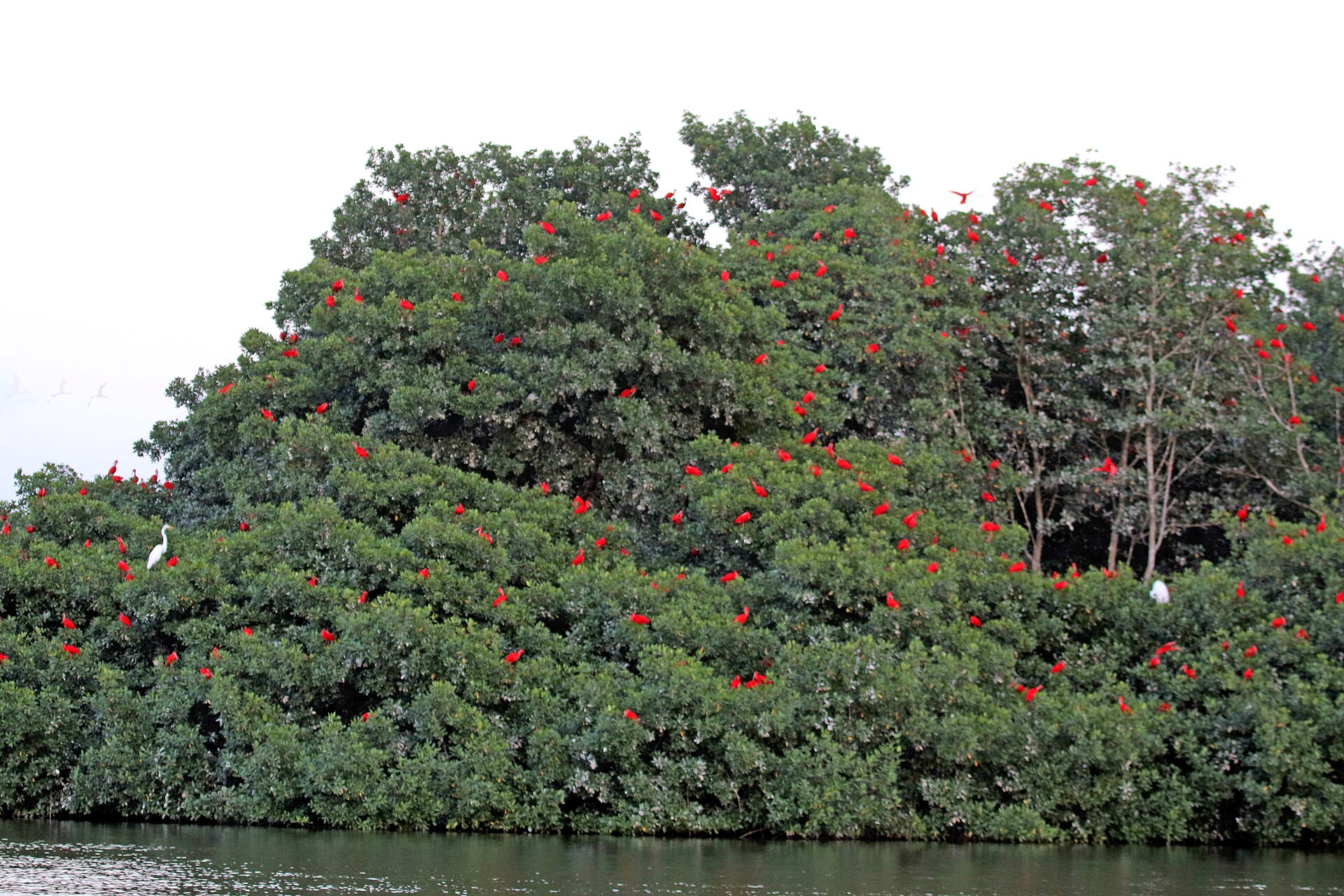
A flat-bottomed boat enters the mangroves in late afternoon, then waits as Trinidad’s national birds return in luminous flocks. The quiet is part of the experience.
Charles J. Sharp · Wikimedia Commons · CC BY-SA 4.0 · croppedPlan your trip
Choose the event first—or choose the calm.
January–May
Dry-season weather favors Tobago beaches, rainforest walks and diving. Carnival usually falls in February or March; leatherback nesting begins around March. Book Carnival travel far ahead.
June–July
Rain and humidity increase, while Tobago Heritage Festival and the start of summer events add cultural energy. Build flexibility into nature and ferry days.
August–October
Emancipation celebrations, Blue Food Festival and Tobago Carnival can justify the wetter season. Tropical systems and heavy rain can still disrupt roads, ferries and flights.
November–December
Rain gradually eases and the islands move toward the dry season. December brings festive demand, warmer cultural calendars and rising holiday rates.
Are Trinidad and Tobago hurricane-safe?
No island is hurricane-proof. Trinidad sits on the southern edge of the Atlantic hurricane belt and receives fewer direct strikes than many northern islands; Tobago is somewhat more exposed. Both can experience tropical-storm rain, flooding, wind and transport disruption from June through November. Insure the trip.
Arrivals & island connections
Fly into Trinidad or Tobago—then choose 25 minutes in the air or three hours at sea.
Piarco · POS
Trinidad’s airport has the broader international and regional network. It is well east of Port of Spain; prearrange an authorized taxi or hotel transfer, especially after dark.
A.N.R. Robinson · TAB
Tobago’s airport sits beside Crown Point and receives inter-island service plus limited international flights. Crown Point hotels are minutes away; the north coast can require two hours.
POS ↔ TAB by air
Frequent Caribbean Airlines flights take about 25 minutes. Leave a generous buffer when connecting to an international ticket, especially when the sectors are booked separately.
Port of Spain ↔ Scarborough ferry
The fast ferry generally takes about 3–3½ hours and carries passengers and vehicles on selected sailings. Seas can be uncomfortable and schedules change, so book ahead and check alerts.
Choose your base
Where to stay in Trinidad and Tobago
For a first trip, split the islands. Trinidad is not well served by a single remote beach rental, and Tobago’s most peaceful villages are not convenient substitutes for a Crown Point overnight before an early flight.
Best for Carnival, culture, restaurants & short Trinidad stays
Port of Spain · Trinidad
Base in a reputable hotel around St. Clair, Woodbrook or the Queen’s Park Savannah side of the city. You will be close to pan yards, restaurants and northern excursions, but this is an urban stay that requires deliberate transportation and security planning.
- Nearby
- Queen’s Park Savannah, Magnificent Seven, Woodbrook, Caroni departures
- Consider
- Hyatt Regency, The BRIX, Kapok, Hilton Trinidad and established guesthouses
Best for birding, rainforest & a quieter Trinidad chapter
Northern Range · Trinidad
Maracas Valley, Arima Valley and the north-coast foothills exchange nightlife for birdsong, gardens and early trail access. A specialist nature lodge or prearranged driver makes more sense than relying on spontaneous evening transport.
- Nearby
- Asa Wright area, Yerette, Aripo, Blanchisseuse and north-coast roads
- Consider
- Mt. Plaisir Estate, nature lodges, small inns and carefully vetted rentals
Best for first trips, beach ease & boat excursions
Crown Point & Pigeon Point · Tobago
The most convenient Tobago base sits close to the airport, Store Bay, Pigeon Point, restaurants and Buccoo Reef departures. It is busier than the north coast but dramatically easier without a car.
- Nearby
- Pigeon Point, Store Bay, Buccoo Reef, Nylon Pool and Bon Accord Lagoon
- Consider
- Coco Reef, Kariwak Village, Shepherd’s Inn, Crown Point Beach Hotel and villas
Best all-around Tobago base for surf, sunsets & restaurants
Black Rock, Stonehaven & Mount Irvine · Tobago
This west-coast corridor balances swimmable coves, Mount Irvine surf, hotel choice and manageable drives in both directions. It is calmer than Crown Point and more connected than the remote north coast.
- Nearby
- Mount Irvine, Stonehaven, Turtle Beach, Plymouth and Buccoo
- Consider
- Mount Irvine Bay Resort, Le Grand Courlan, villas and boutique apartments
Best for village rhythm, rainforest coast & a slower stay
Castara & Parlatuvier · Tobago
Choose the north coast for fishermen, green hills, smaller bays and a genuine sense of place. Roads are winding, restaurants are limited and evenings are quiet; that is the appeal, not a flaw.
- Nearby
- Castara Bay, Englishman’s Bay, Parlatuvier and Main Ridge trails
- Consider
- Castara Retreats, small guesthouses, cottages and locally managed apartments
Best for serious diving, birding & remote beauty
Speyside & Charlotteville · Tobago
The northeast is the right choice for advanced diving, Little Tobago, rainforest and an almost edge-of-the-map atmosphere. It is a long transfer from the airport, and operators, meals and transport should be arranged before arrival.
- Nearby
- Little Tobago, Goat Island, Kelleston Drain, Pirate’s Bay and Main Ridge
- Consider
- Blue Waters Inn, Speyside Inn, Charlotteville guesthouses and cottages
Beaches worth building a day around
Tobago brings the turquoise. Trinidad brings the drama.
Tobago is the stronger beach island by a wide margin. Trinidad’s best-known bays are culturally rewarding and scenic, but they are longer excursions and require more careful transport and timing.
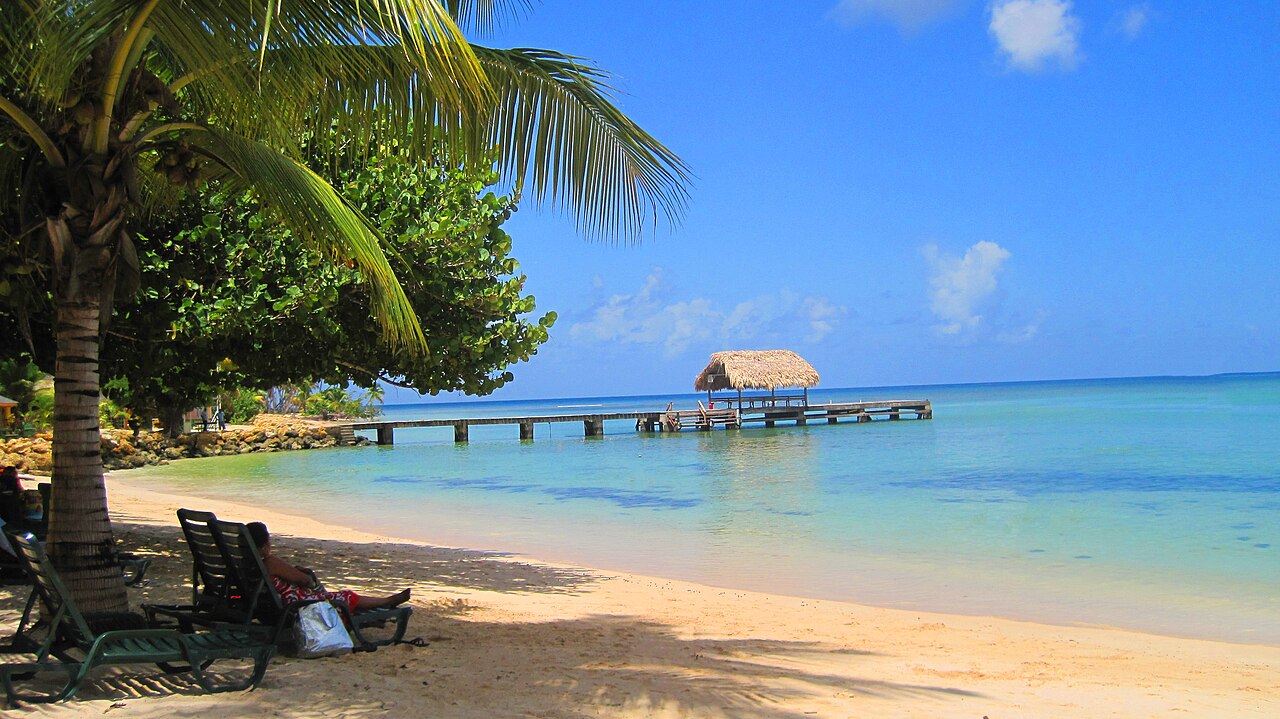
Pigeon Point · Tobago
The country’s iconic beach: pale sand, calm turquoise water, a thatched jetty, facilities and easy boat departures for Buccoo Reef and Nylon Pool. There is an admission fee.
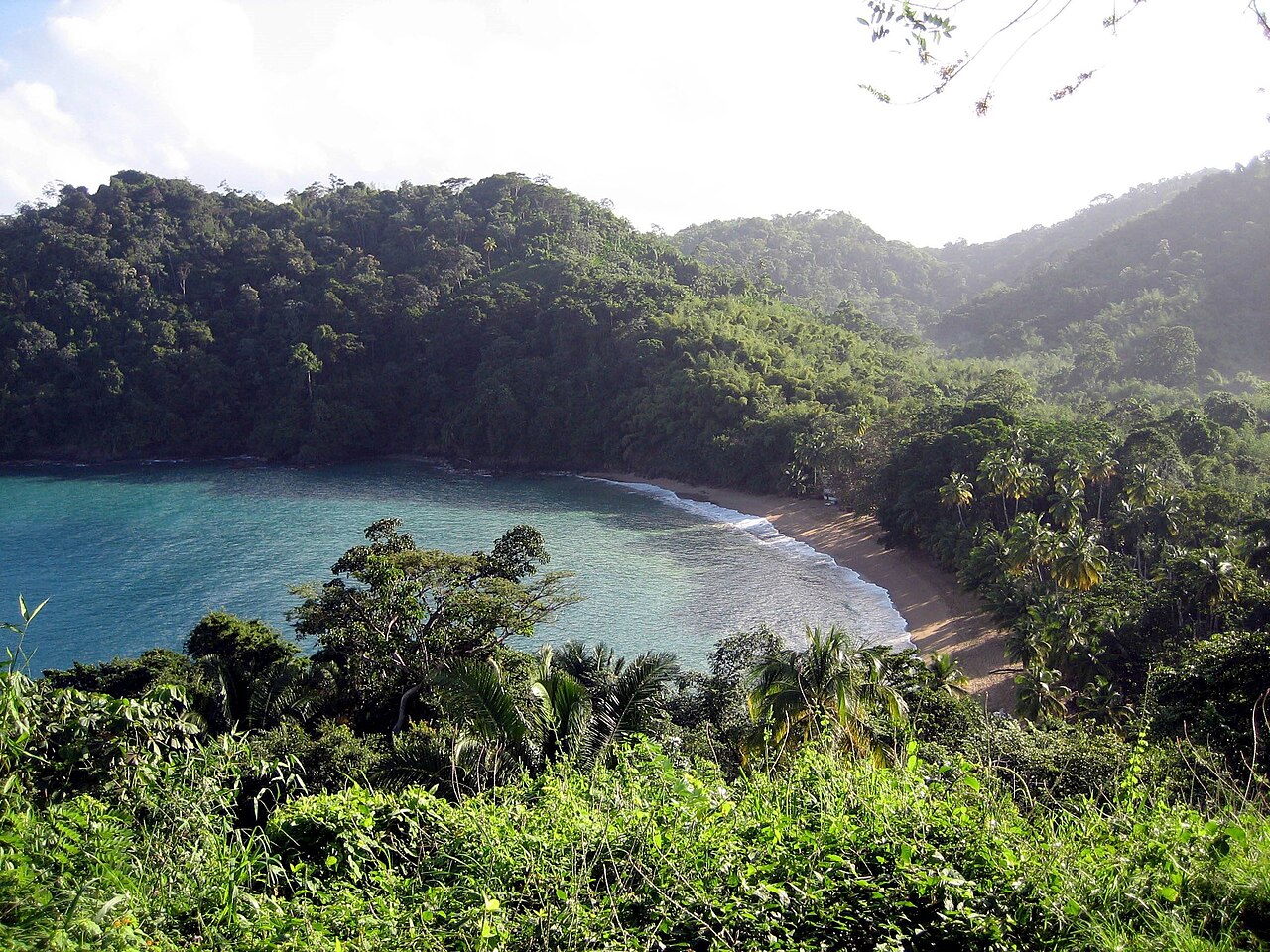
Englishman’s Bay · Tobago
A rainforest-backed crescent with deep blue-green water and far less development. Conditions can be stronger than the postcard suggests; assess the sea before swimming.
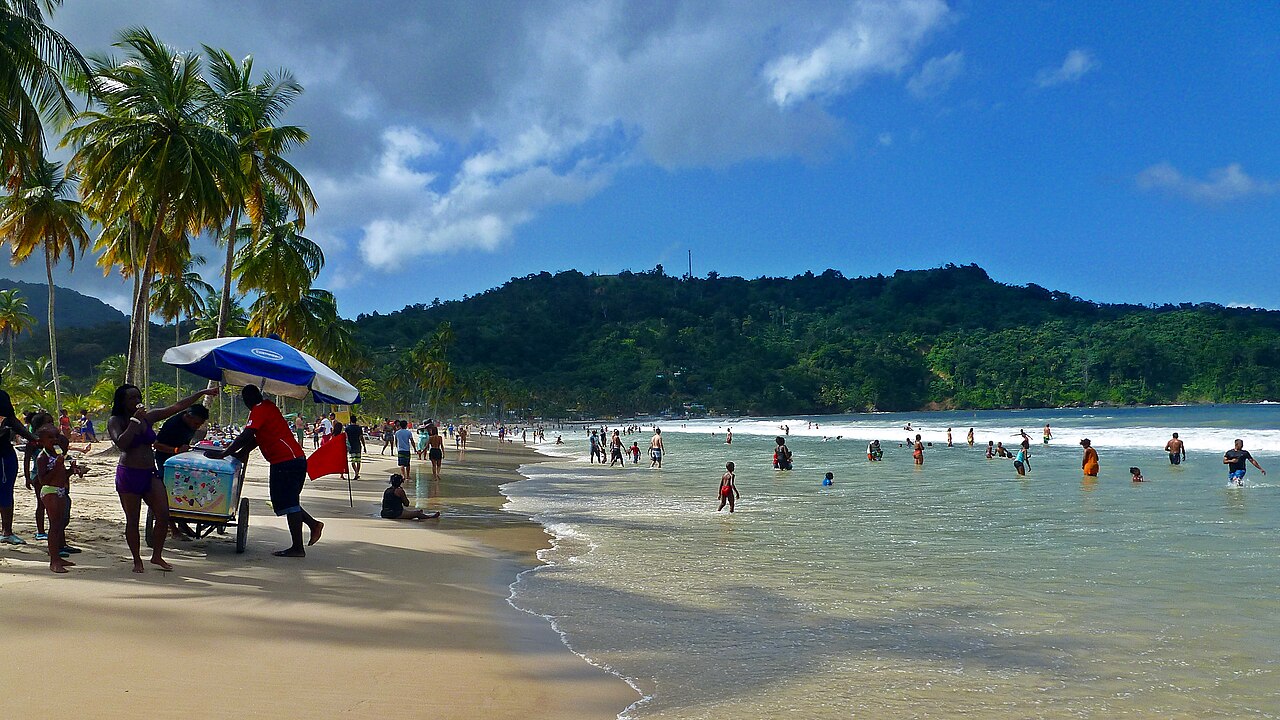
Maracas Bay · Trinidad
Trinidad’s classic north-coast day: a mountain road, broad sand, lively atmosphere and bake-and-shark stands. Go by trusted driver or organized tour and leave well before dark.
Store Bay · Tobago
Small, social and wonderfully convenient near the airport, with calm-water days, food stalls, changing facilities and glass-bottom-boat departures.
Castara Bay · Tobago
A working fishing village with swimming, snorkeling, sunset and Thursday-night community energy. Watch the seine boats and give fishermen room to work.
Pirate’s Bay · Tobago
A beautiful, usually calm Charlotteville cove reached by boat or a long stairway. Bring water, leave before dark and do not mistake remoteness for lifeguarded safety.
Mount Irvine Bay · Tobago
One side serves swimmers; the reef side becomes Tobago’s signature surf break during the north-swell season. Ask locals which section suits the day.
Las Cuevas · Trinidad
A longer, quieter north-coast beach east of Maracas. Its Blue Flag-style facilities and seasonal lifeguard presence help, but currents still demand attention.
West Tobago usually offers the strongest backup plan.
Reviewed July 28, 2026
Regional monitoring remains elevated in another heavy Caribbean season. Tobago’s Atlantic-facing east and southeast coasts and Trinidad’s east coast generally carry greater exposure; western Tobago coves such as Pigeon Point, Store Bay and Mount Irvine are often more sheltered. Wind can reverse the advantage in days.
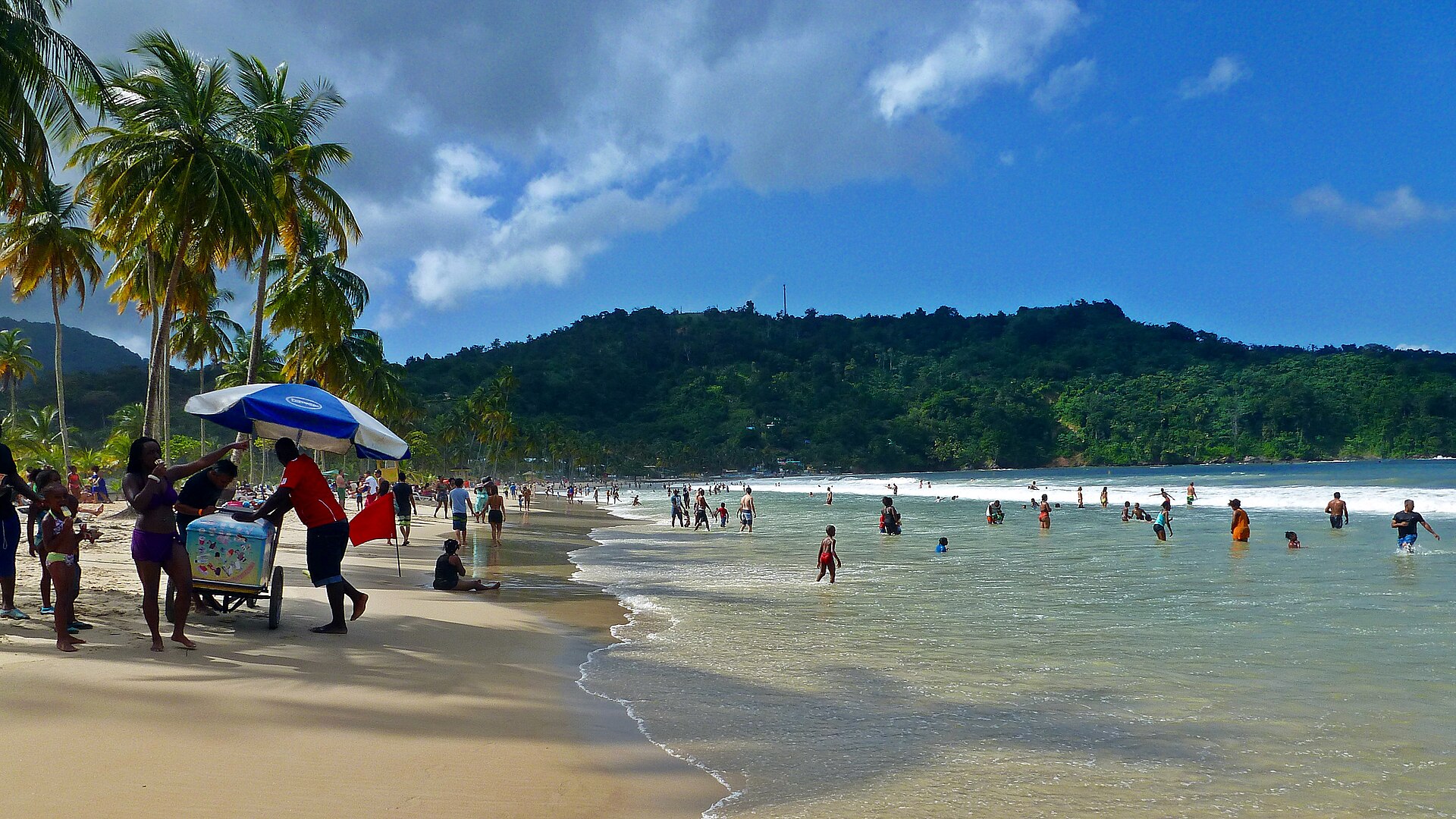
The road folds through the Northern Range before revealing Trinidad’s best-known bay. Pair the view with bake and shark, then return with a trusted driver before nightfall.
Kalamazadkhan · Wikimedia Commons · CC BY-SA 4.0 · croppedMost popular tours
The experiences worth crossing an island for.
Choose guided experiences where wildlife access, night travel, current or unfamiliar roads make local knowledge part of the value.
Caroni sunset birding
Glide through mangrove channels before scarlet ibises return to roost in blazing red flocks. Book a known guide and arrange a direct hotel transfer.
Buccoo Reef & Nylon Pool
Take a small glass-bottom boat from Pigeon Point or Store Bay for reef viewing, snorkeling and the famous shallow offshore pool.
Main Ridge with a naturalist
Walk Gilpin Trace or another current route for white-tailed sabrewings, blue-backed manakins, forest ecology and a much better chance of seeing what untrained eyes miss.
Little Tobago & Speyside
Combine seabird habitat, reef views and northeast scenery. Sea conditions and current determine whether snorkeling or landing is appropriate.
Trinidad food tour
Taste doubles, roti, pholourie, corn soup, chow and Indo-Caribbean sweets with a guide who handles transportation and explains the communities behind the food.
Leatherback nesting beach
Authorized night tours visit Grande Rivière, Matura or Fishing Pond. Permits, darkness rules and trained guides protect both turtle and traveler.
Argyle Falls
Walk the forest path to Tobago’s tiered waterfall, then continue only where the guide and current water level make sense. Wet rock remains undefeated.
Pitch Lake & central Trinidad
See La Brea’s extraordinary asphalt lake with an authorized guide, ideally paired with Waterloo, central food stops or another southern attraction.
On & under the water
Tobago’s currents create the excitement—and set the rules.
Deep-sea fishing
Tobago is the easier visitor base for offshore fishing, with departures around Crown Point, Buccoo and Scarborough targeting mahi-mahi, wahoo, tuna, sailfish and blue marlin. Trinidad adds boats around Chaguaramas and the northwestern peninsula, but travel time and industrial maritime traffic make the experience less resort-like.
Best timing: Species move with currents and bait throughout the year; wahoo and mahi have cooler-season appeal, while tuna and billfish can reward longer trips. Confirm whether the charter fishes Tobago’s Atlantic side or Trinidad’s Gulf and offshore grounds.
Scuba diving
Speyside is Tobago’s signature dive region, with dramatic current, large sponges, schooling fish, turtles, rays and sites such as Japanese Gardens and Kelleston Drain, associated with an enormous brain-coral colony. The Sisters and northeast offshore sites can offer pelagic life when conditions cooperate.
Southwest sites around Mount Irvine, Buccoo and Crown Point offer easier profiles, coral gardens and better beginner logistics. Tobago is not a destination where every famous site suits every diver; ask the operator to match current, certification and recent activity.
Reef health
Reefs show real beauty alongside heat stress, bleaching, disease, runoff and storm damage. Choose operators that use moorings, limit contact and report current conditions honestly. No reef should be described as pristine by default.
Snorkeling
Arnos Vale, Pirate’s Bay, Castara, Englishman’s Bay and Pigeon Point can be rewarding in settled conditions. Buccoo Reef is the most popular boat outing; Speyside provides stronger coral structure but can involve current. Use a guide where boat traffic, surge or drift matters.
Sailing
Trinidad and Tobago is not a charter-sailing hub on the scale of the BVI or Antigua. Chaguaramas in Trinidad is a major yacht-service and hurricane-season center, while Tobago offers scenic bays but fewer facilities, exposed anchorages and clearance logistics that reward experienced cruisers.
Yachts should confirm current entry ports, advance reporting, customs, immigration and mooring rules before arrival. Provision and repair in Chaguaramas; treat Tobago as a weather-dependent cruising destination.
Surfing
Mount Irvine is Tobago’s famous reef break, strongest during north swells from roughly December through March. It can be fast, shallow and crowded; beginners should book a lesson and use the gentler section or another break chosen by the school. Sans Souci and other Trinidad north/east-coast breaks are more local, less consistent for visitors and require current access advice.
Culture, wildlife & trails
The country’s greatest luxury is biodiversity with a soundtrack.
Culture & food
African, Indian, Indigenous, European, Chinese, Syrian-Lebanese and Venezuelan influences meet here with unusual force. Steelpan, calypso, soca, chutney, tassa, Carnival mas, Hosay and Divali are living traditions.
Eat doubles for breakfast, roti and curry at lunch, bake and shark at Maracas, then callaloo, pelau, stewed meats, crab and dumpling, grilled fish, chow and coconut sweets. A guided food tour is especially valuable in Trinidad because the best bite may occupy a roadside stand with no useful relationship to your hotel map.
Wildlife
Trinidad’s South American connection supports red howler and capuchin monkeys, agouti, caiman, remarkable reptiles and more than 450 recorded bird species. Caroni’s scarlet ibis, Yerette’s hummingbirds and seasonal leatherback nesting are the visitor highlights. Tobago adds Main Ridge specialties, Little Tobago seabirds and reef life.
Trinidad trails
Choose guided walks in the Northern Range: the Asa Wright/Arima Valley area, Rio Seco, Paria, Avocat and other waterfall or coastal routes vary dramatically in difficulty and access. Rain can turn rivers and rock into hazards quickly. Do not follow a social-media pin into forest without a reputable local guide.
Tobago trails
Gilpin Trace in Main Ridge is the classic naturalist walk. Argyle Falls offers a more accessible outing near Roxborough, while trails around Speyside, Little Tobago and the north coast benefit from local interpretation. After heavy rain, water crossings and waterfall pools can become unsafe.
Leatherback turtles
Grande Rivière, Matura and Fishing Pond host nesting from roughly March through August. Join an authorized night tour, use no white flash or light, stay behind the turtle and never touch adults, hatchlings or eggs.
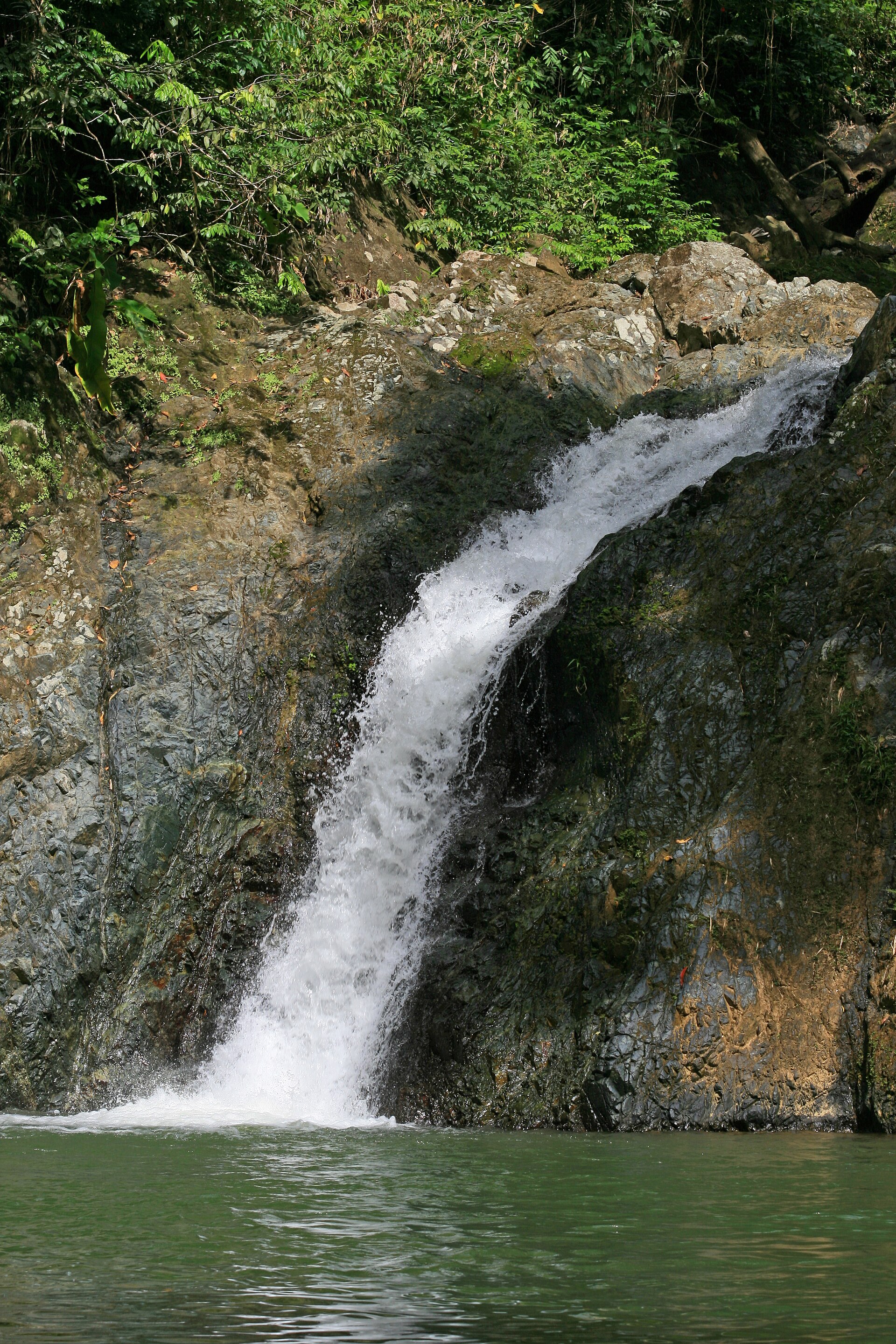
The lower cascade is the easy reward. Continue toward higher pools only with footwear, current local guidance and water levels that make the climb sensible.
cheesy42 · Wikimedia Commons · CC BY 2.0 · croppedThe annual calendar
Let culture shape the timing of your trip.
February or March · Trinidad
Trinidad Carnival
Panorama, J’ouvert, traditional characters, fetes and two days of street mas form the country’s defining visitor event.Easter Tuesday · Tobago
Buccoo Goat & Crab Race Festival
A beloved Tobago tradition pairing surprisingly serious goat racing with the world’s least aerodynamic crab jockeys.July–early August · Tobago
Tobago Heritage Festival
Village events preserve dance, storytelling, food, folk practice and community history across the island.Around August 1 · Trinidad
Emancipation celebrations
Processions, performances, lectures, fashion, food and the Emancipation Village center African heritage and liberation.October · Tobago
Blue Food Festival
Bloody Bay turns dasheen into savory dishes, sweets and drinks at one of the Caribbean’s most distinctive food events.October or November · Trinidad
Divali
Divali Nagar and illuminated communities such as Felicity celebrate the Festival of Lights with deyas, performances and Indo-Trinidadian food.Eat & sleep well
Come hungry. Then stay somewhere that shortens the ride home.
Doubles in Curepe, Debe or St. James; roti, saheena and aloo pie; Queen’s Park Savannah corn soup; Maracas bake and shark
Chaud, Buzo, Freebird, Aioli, Fanatic Kitchen Studio, Woodbrook and St. Clair restaurants—verify current hours and use door-to-door transport
Jemma’s Treehouse, Miss Trim’s, Sharon & Pheb’s, Store Bay crab-and-dumpling stalls, Castara kitchens and fresh fish in Charlotteville
Kariwak, Seahorse Inn, The Fish Pot, Café Coco, Brown Cow and resort dining around Mount Irvine or Crown Point
Hotel strategy
Let logistics choose half the room.
Best first split
Stay three nights at a reputable Port of Spain hotel with secure transport, then six or seven nights near Crown Point, Pigeon Point or Mount Irvine.
Best nature trip
Add a guided Trinidad nature lodge and finish in Castara or Speyside. Place the remote nights in the middle, not before a morning international flight.
Best quiet luxury
Choose an elegant west-coast Tobago villa or boutique resort, then hire a driver-naturalist for the long northeast day.
Safety
Visit with clear eyes, good planning and no improvising after dark.
As of July 2026, the U.S. State Department rates Trinidad and Tobago Level 3: Reconsider Travel because of crime, health and terrorism risks. A nationwide state of emergency declared March 2, 2026 remained part of the advisory; restrictions can change with little notice. Crime rates are lower in Tobago than Trinidad, but the national advisory covers both islands.
Trinidad: plan every transfer
Use a reputable hotel, known guide or authorized taxi for airport, dining and excursion transfers. Avoid walking in downtown Port of Spain or around Queen’s Park Savannah after dark. Do not enter Laventille, Beetham, Sea Lots, Cocorite, Piccadilly/Besson Street or other areas identified in current official restrictions. A GPS shortcut is not local knowledge.
Tobago: lower risk is not no risk
Use the same valuables discipline, lock villas and cars, avoid isolated beaches after dark and prearrange late transfers. Remote north-coast roads have limited lighting, phone coverage and emergency response. Tell the property where you are going before a long hike or dive day.
Carnival & nightlife
Attend organized events, travel in a group, keep drinks in sight, use minimal jewelry, carry only the cash you need and schedule the return ride before leaving. Avoid spontaneous rides and do not walk between venues because they look close on a map.
Road, beach & nature safety
Drive on the left. Night driving combines speed, poor lighting, pedestrians and unfamiliar roads. Many beaches lack lifeguards; Atlantic swell, rip currents and shore break can be serious. Use trained guides for turtle beaches, remote waterfalls, forest trails and current-heavy diving.
Money & belongings
Use ATMs inside banks, malls or secure hotel areas during daylight. Do not display cash, expensive jewelry or phones. Leave nothing visible in a car. If confronted in a robbery, official guidance says not to resist unless an attacker attempts to force you into a vehicle or remote place.
Emergency planning
Police: 999. Fire: 990. Ambulance: 811 or 990. Save the hotel, driver and travel-insurance numbers offline. Medical care is more limited in rural areas and on Tobago; insurance should include medical evacuation. Recheck the advisory immediately before travel.
Practical details
English-speaking and straightforward—provided the transport is arranged.
English is official. Trinidadian and Tobagonian Creoles shape everyday speech.
Carry Trinidad and Tobago dollars. U.S. dollars are not a dependable substitute everywhere.
Cards work at established hotels and restaurants; smaller vendors, taxis and rural businesses may require cash.
North American plugs usually fit. Confirm voltage for sensitive equipment at smaller properties.
Municipal and hotel water is usually chlorinated; outages, storage tanks and rural systems vary. Ask the property.
Roads range from multilane highways to steep, narrow Tobago lanes. Avoid unnecessary night driving.
Transportation
Taxis and hired drivers are the best choice for most Trinidad visitors. Rideshare availability and insurance status can change; use hotel-recommended services. Tobago is more manageable by rental car, but the north-coast road is slow and winding. Public buses and route taxis are inexpensive but not ideal for a first-time sightseeing itinerary.
Cards & cash
Use TTD for food stalls, small restaurants, taxis and attraction fees. Established hotels and dive shops generally accept major cards. Withdraw during daylight from a secure indoor ATM and keep a second payment method separate.
Health & vaccines
CDC recommends routine vaccines and commonly recommends hepatitis A; typhoid is advised for many travelers. Yellow-fever vaccine is recommended for travelers at least nine months old visiting densely forested areas of Trinidad, but not for travel limited to Tobago or airport/cruise transit. In March 2026, the Ministry of Health reported yellow-fever virus in a deceased red howler monkey but no human outbreak. Discuss the itinerary with a travel-health clinician.
Use strong mosquito protection against dengue and other mosquito-borne disease. Rural health care is limited, and serious trauma or dive illness may require transfer or evacuation.
Research desk
Official sources & live checks
Safety rules, ferry schedules, weather, trail access and event dates can change. Recheck these sources the week you travel.