Find your bearings
Two historic towns. One long island. More driving than the postcard admits.
St. Croix stretches roughly 27 miles east to west. Christiansted anchors the north-central coast, Frederiksted the west; the driest landscapes sit east, while rainforest and the calmest sunset beaches gather west.
Know the island
St. Croix is the USVI’s deepest destination.
St. Croix combines four dive personalities—wall, reef, wreck and pier—with two historic towns, serious food culture, agricultural traditions and landscapes that move from cactus-dry East End to a surprisingly lush northwest. It rewards travelers who rent a car and resist reducing the island to Buck Island alone.
A brief history
Indigenous peoples lived on St. Croix for millennia before European colonization. Spain, the Netherlands, England, France, the Knights of Malta and Denmark all claimed or controlled the island. Denmark purchased St. Croix in 1733 and expanded a sugar economy built through the enslavement of Africans.
On July 3, 1848, thousands gathered in Frederiksted and Governor-General Peter von Scholten declared emancipation. Labor exploitation continued, sparking the 1878 Fireburn rebellion led by women remembered as the Queens. The United States purchased the Danish West Indies in 1917; today Crucian identity carries African, Caribbean, European, Puerto Rican and continental influences.
What it is most known for
Buck Island’s underwater trail, Cane Bay Wall, Frederiksted Pier, Christiansted’s yellow fort and arcades, Cruzan rum, quelbe music, Crucian food, Point Udall and west-end sunsets.
Geography
St. Croix is separate from the St. Thomas–St. John cluster and geographically closer to Puerto Rico. The north shore meets the Puerto Rico Trench; the south is flatter and more agricultural; the East End is dry and windswept; the northwest rises into greener hills.
Plan your trip
Winter through late spring offers the easiest complete trip.
December–April
Drier weather, active restaurants and reliable dive operations. Book winter lodging and Buck Island trips early.
May–July
Warm seas, fewer visitors and lower rates. Rain and sargassum become less predictable, while July brings Emancipation events and active hurricane-season planning.
August–October
Heat, closures and peak hurricane exposure. Diving can be excellent between systems, but flexibility is not optional.
November
Rain and storm risk gradually ease, with seasonal businesses preparing for winter. Late month can offer a useful shoulder before holiday demand.
Is St. Croix hurricane-safe?
No. St. Croix lies inside the hurricane belt and has suffered severe storms, including Hugo in 1989 and Maria in 2017. Hurricane season runs June through November, with peak climatological risk late summer into fall. Use flexible reservations and coverage for named storms and evacuation.
How to get there
Fly directly when possible. Do not build the trip around a ferry that may not run.
Henry E. Rohlsen Airport · STX
St. Croix receives nonstop or connecting service from mainland U.S. gateways and San Juan. The airport lies west of center, roughly between Frederiksted and Christiansted.
St. Thomas ↔ St. Croix flight
Short regional flights are the most dependable way to combine St. Croix with St. Thomas or St. John. Compare baggage limits carefully if the trip includes dive gear.
St. Thomas ↔ St. Croix ferry
Passenger ferry service may operate on selected schedules, often around two hours, but should be verified before booking nonrefundable lodging. A 25-minute flight is usually the safer itinerary anchor.
Rent a car
The island is too large and dispersed for taxis alone to make a rich guide practical. Reserve an automatic car early, inspect it carefully and remember to drive on the left.
Choose your base
Christiansted for the first trip. Cane Bay for the dive trip. Frederiksted for the exhale.
Best first stay · history · food · Buck Island
Christiansted & Gallows Bay
Christiansted is the strongest all-around base: a walkable historic core, the largest restaurant selection, harbor excursions and easy Buck Island departures. It is more town than beach resort, so choose a waterfront hotel or pair it with a rental car.
- Nearby
- Fort Christiansvaern, boardwalk, Protestant Cay, Buck Island boats
- Consider
- Company House, King Christian, Caravelle, Hotel on the Cay, nearby villas
Best for resort ease · golf · quiet
East End & the Buccaneer
The drier East End combines breezy hills, manicured resort beaches, golf and easy access to Point Udall. It feels spacious and refined, but nightlife and independent dining thin out away from Christiansted.
- Nearby
- Mermaid Beach, Shoys Beach, Point Udall, Green Cay, Buck Island
- Consider
- The Buccaneer, Tamarind Reef, Grapetree Bay, East End villas
Best for scuba diving · scenery · active travelers
North Shore & Cane Bay
Cane Bay and the North Shore put the wall, shore diving, horseback rides, rainforest drives and casual beach bars near the room. The coast is less polished than a conventional resort zone and a car is essential.
- Nearby
- Cane Bay Wall, Salt River, Annaly Bay, rainforest, dive shops
- Consider
- Carambola Beach Resort, Waves at Cane Bay, North Shore villas
Best for sunsets · calm water · local pace
Frederiksted & the West End
Frederiksted offers pastel streets, Fort Frederik, pier diving and the island’s most reliable sunset beaches. It is quieter than Christiansted except when a cruise ship or event arrives; restaurant choice and hotel inventory are smaller.
- Nearby
- Frederiksted Pier, Rainbow Beach, Sandy Point, rainforest
- Consider
- The Fred, Cottages by the Sea, Sand Castle on the Beach, west-end villas
Beaches worth building a day around
The island’s beach personality changes every fifteen miles.
West-end water is often the calmest; the North Shore pairs beaches with diving; the East End is breezier and more manicured around resorts. Sandy Point follows seasonal wildlife hours.
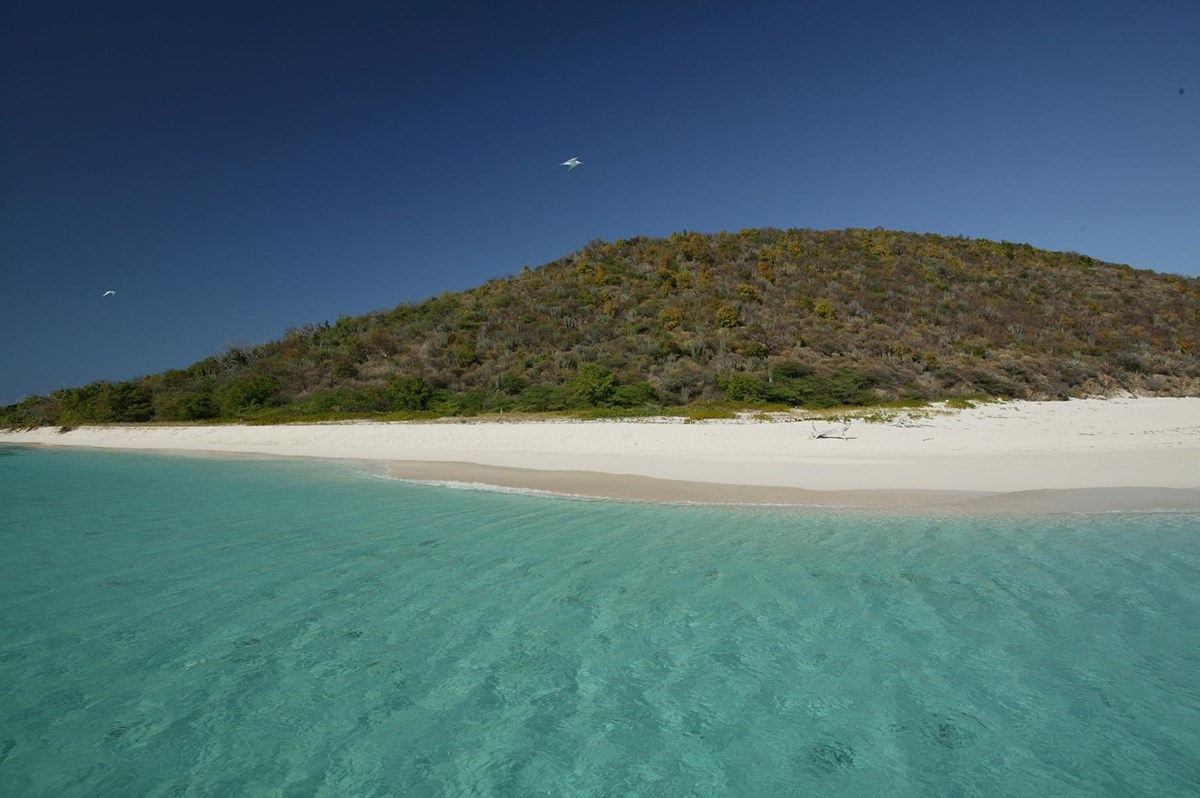
Turtle Beach · Buck Island
A dazzling strip of pale sand and clear water inside Buck Island Reef National Monument. Access is by approved boat trip or private vessel following park rules. There are no vendors; the reef, trail and island are the experience.
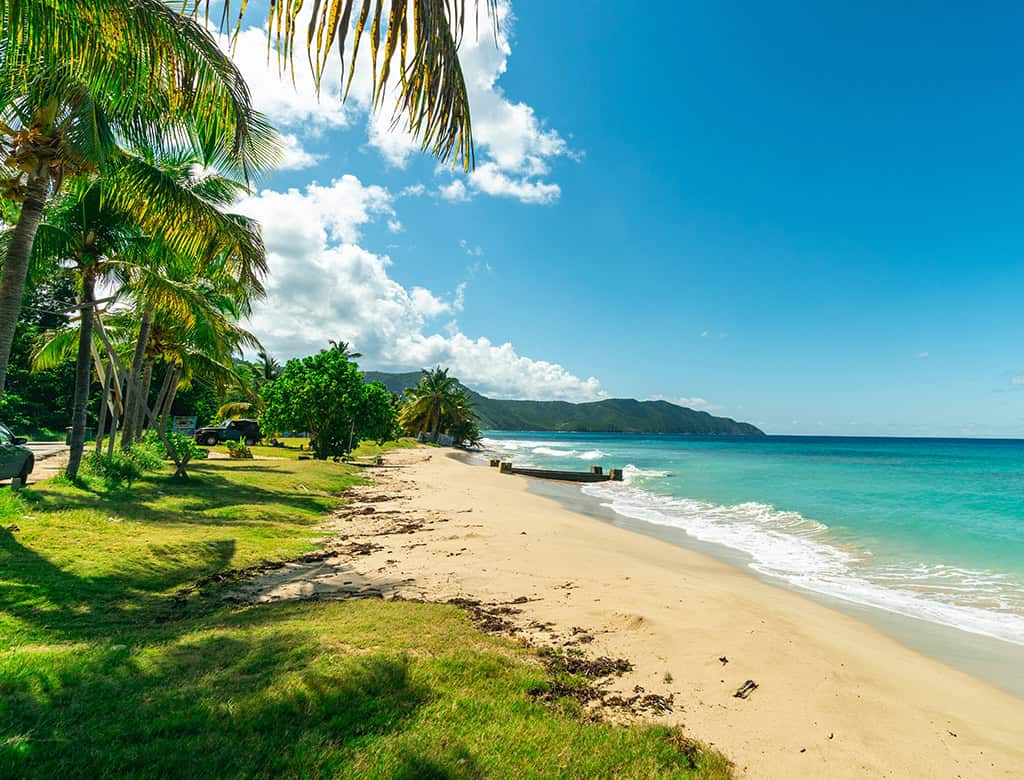
Cane Bay Beach
The North Shore’s signature diver’s beach, with coral in shallow water and the famous wall offshore. Shore entries, swell and the swim to the drop-off require local judgment; use a guide if you do not know the site.
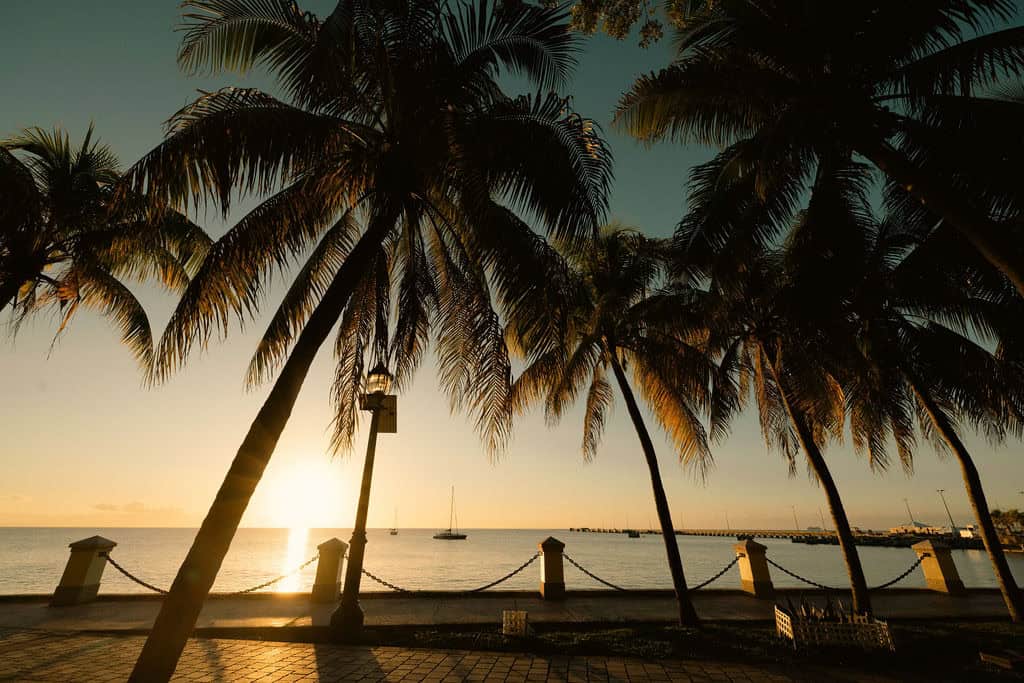
Frederiksted Beach & Pier
Calm west-coast water, history and one of the Caribbean’s most distinctive pier dives share a compact waterfront. Diving is prohibited when cruise ships are docked, and water shoes help on rockier entries.
Rainbow Beach
A sociable west-end beach with calm-water days, rentals, music, food and an excellent sunset. Come early for tranquility or later for the livelier beach-bar version.
Mermaid Beach
A manicured, public-access resort beach at the Buccaneer with calm swimming, rentals and lunch nearby. Confirm current parking, day-use and facility policies before arriving.
Sandy Point
A vast, seasonal wildlife-refuge beach of rare scale and beauty. Access closes for turtle nesting and remains tightly controlled; verify the refuge calendar and obey every closure.
Shoys Beach
A quieter East End curve reached through a residential area. It suits an unhurried swim and walk when conditions are calm; facilities are minimal.
The west coast is the most useful fallback.
Reviewed July 27, 2026
Exposed East End and south-shore beaches generally face the greatest sargassum risk, while Frederiksted and many west-coast options are often clearer. Cane Bay and north-shore coves vary with wind and current. Conditions can reverse quickly.
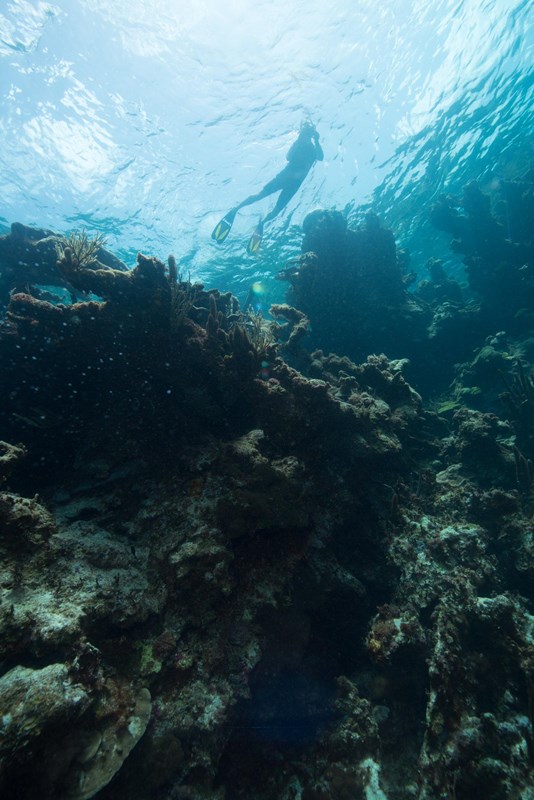
Buck Island’s protected elkhorn barrier reef is one of St. Croix’s defining natural systems.
National Park ServiceThe experiences that define the island
St. Croix’s most worthwhile tours.
The island’s best guided days reveal the reef, wall, food and history that are difficult to understand from a beach chair alone.
Buck Island snorkel & hike
Choose an authorized concessioner and a half- or full-day trip that includes the underwater trail, Turtle Beach and enough time to understand the protected reef.
Cane Bay wall dive
Descend where the shelf falls dramatically into the Puerto Rico Trench. Boat dives simplify the approach; experienced divers can compare guided shore options when swell permits.
Frederiksted pier night dive
Sponges, seahorses, crustaceans and hunting tarpon make the pier exceptional after dark. Check the cruise calendar and book a guide familiar with current access.
Salt River bioluminescent kayak
Paddle the bay after dark with a low-impact operator. Brightness varies with moon, weather and plankton; honest guides will not promise a special effect on command.
Christiansted food & history walk
Connect Danish architecture, Free Gut, market traditions and Crucian cooking through a locally guided walk.
Rainforest & west-end drive
Link estate roads, Mount Pellier’s beer-drinking pigs, Frederiksted, beaches and historic sites with a rental car or local guide.
Estate & rum history
Compare Estate Whim’s plantation interpretation with Cruzan Rum or Mutiny Island Vodka. Center enslaved labor and agricultural history.
Horseback ride
North Shore and west-end operators offer beach and trail rides. Ask about group size, horse welfare, helmets, heat policies and swimming practices.
On & under the water
Wall, reef, wreck and pier: few islands offer all four this coherently.
Deep-sea fishing
St. Croix offers serious offshore access from Christiansted, Green Cay Marina and Frederiksted. The island sits close to deep drop-offs where charters pursue blue marlin, wahoo, mahi-mahi, tuna and sailfish. It has fewer boats than St. Thomas but is a legitimate fishing destination in its own right.
Best timing: Blue marlin receives most attention in warmer months, wahoo in winter and mahi in spring. West-end departures and north-shore grounds can feel very different, so let weather shape the launch point.
Scuba diving
Cane Bay Wall: the shelf begins shallow before dropping dramatically into deep blue, with sponges, reef fish, turtles and occasional sharks. Frederiksted Pier: macro life, colorful pilings and one of the Caribbean’s great night dives. Butler Bay: wrecks for different certifications. Salt River: walls, canyons and moored boat sites. Buck Island: protected, shallow reef diving at designated moorings.
Shore diving is possible, but surge, entry conditions and navigation make local orientation valuable. Pier access closes when cruise ships are docked. Ask operators what they have observed recently.
Reef health & animals
Expect turtles, rays, barracuda, tarpon, seahorses, reef sharks, schooling fish and abundant sponges. Elkhorn coral at Buck Island remains significant but is vulnerable to heat stress, bleaching, disease and storms. Follow mooring rules, perfect buoyancy and never touch coral or marine animals.
Snorkeling
Buck Island’s guided underwater trail is the marquee experience. Cane Bay, Frederiksted Pier, Protestant Cay, Mermaid Beach and calm west-coast coves offer easier shore options. Stay away from pier traffic and never enter below a cruise vessel or in an active boat channel.
Sailing
Christiansted Harbor and Green Cay Marina support Buck Island sails, sunset trips and private charters. St. Croix is more exposed and less naturally suited to easy line-of-sight bareboating than the northern Virgins. There is no Moorings or Sunsail base, so sailing remains an excursion.
Surfing
Cane Bay, Judith’s Fancy and selected northwest or east-facing reef breaks can work with swell, but access, current, reef and local etiquette matter. St. Croix is not a dependable beginner surf destination; book a local guide or lesson when conditions allow.
Bring water, shade and respect for nesting habitat. Buck Island closes at night and allows no collecting, camping or improvised souvenir program.
National Park ServiceCulture & trails
Crucian culture gives the island depth far beyond its diving.
Culture
Quelbe, quadrille, moko jumbies, oral history, agricultural traditions and a distinctive food vocabulary anchor Crucian identity. Look for fish and fungi, kallaloo, red grout, butter bread, pates, goat water, stewed oxtail and fresh local produce. The Crucian Christmas Festival and July 3 Emancipation observances are major cultural moments.
Christiansted National Historic Site, Estate Whim and Fort Frederik tell connected stories of commerce, enslavement, resistance and emancipation. Visit Free Gut and local museums with context; pastel masonry alone is a very shallow history lesson.
Hiking & nature
Jack and Isaac Bays: dry East End trails to protected beaches. Buck Island: a moderately strenuous ridge trail to the overlook. Annaly Bay tide pools: a difficult, hot route where sea state can make the pools dangerous—go guided and turn back readily. Hams Bluff: rugged west-end terrain and lighthouse views with variable trail condition.
Sandy Point protects leatherback, green and hawksbill turtle nesting. Seasonal closure is the feature, not an inconvenience to negotiate around.
Eat & sleep well
St. Croix may be the USVI’s most satisfying island to eat through.
Savant, Too.Chez, Hamilton’s, Ama at Cane Bay, Galangal, Duggan’s Reef and changing chef-led rooms
La Reine Chicken Shack, Harvey’s, Singh’s Fast Food, Twin City Coffee House, roadside pates and food fairs
Polly’s at the Pier, Ci Bo Ne, Louie & Nacho’s, Rhythms at Rainbow Beach and west-end beach bars
Leatherback Brewing, Ziggy’s, Off the Wall, The Landing, Goat Soup & Whiskey and resort beach lunches
Hotel strategy
Pick the coast that matches the trip, then compare the room.
Historic & walkable
Company House, King Christian, Caravelle and Hotel on the Cay suit travelers who want Christiansted outside the door.
Beach resort
The Buccaneer is the island’s most complete classic resort; Carambola brings a secluded North Shore setting; Tamarind Reef and Grapetree Bay offer smaller resort bases.
West-end character
The Fred, Sand Castle on the Beach and Cottages by the Sea place sunsets, Frederiksted and pier diving close by.
Practical details
Bring a car, cash for the small places and enough time to cross the island slowly.
English is official; Crucian speech and Spanish are common.
ATMs are concentrated around towns and shopping areas.
Carry cash for vendors, tips, taxis and occasional outages.
Mainland U.S. devices need no adapter.
Cisterns are common; treatment and plumbing determine drinking guidance.
Most cars are left-hand drive. Rural roads can be rough and dark.
Transportation
A rental car is the best default. Distances are manageable, but two-lane roads, animals, potholes and left-side traffic keep speeds low. Taxis work for airport transfers and planned evenings; VITRAN is useful locally but does not replace a sightseeing plan.
Safety
Use normal precautions in town and at isolated beaches, especially after dark. Leave nothing visible in a car. Currents, heat, surf, cliff edges and dive incidents are more likely to disrupt an active itinerary than dramatic crime headlines.
Health & vaccines
Routine vaccines and mosquito protection are the basics; review CDC advice for dengue and other current issues. St. Croix has a hospital and clinics, but serious trauma, cardiac care or decompression needs may require evacuation. Divers should carry appropriate insurance.
Mineral sunscreen
USVI law prohibits oxybenzone, octinoxate and octocrylene. Use non-nano zinc oxide or titanium dioxide and physical sun protection.
Research desk
Official sources & live checks
Buck Island permits, pier closures, refuge access, ferry schedules and sea conditions change. Check these close to travel.